Mon–Fri 8am–5pm · Christchurch, Dorset 01202 117005 info@electricalexchange.co.uk
General Electrical Work

House Rewire & Rewiring Services

Complete and partial rewires by our own electricians, from free assessment to Electrical Installation Certificate.

  • MCS Certified
  • NAPIT Registered
  • TrustMark
  • OZEV Approved
Approved installer for
Wiring & Rewiring

What a house rewire covers, full or partial

A house rewire replaces the fixed wiring in a home: the cables hidden in walls, floors and ceilings, the sockets, switches and lights they feed, and often the consumer unit they all run from. Our team handles complete wiring and rewiring projects, ensuring safety and efficiency in your electrical systems, alongside the repairs, lighting and inspections that are part of our wider electrical work. Every job is carried out by our own in-house team, never subcontracted labour.

A full rewire replaces every circuit in the house. A partial rewire replaces specific circuits only, such as the kitchen, one floor or the lighting, and suits a home where the rest of the wiring is newer and still in good condition. Whichever it is, new work must not leave the rest of the installation less safe than it was, so it pays to know the condition of whatever is staying.

New wiring should be designed to the current edition of the wiring regulations, BS 7671:2018+A4:2026. The IET says the transition period for BS 7671:2018+A2:2022 ended on 15 October 2026, so new installation work should no longer reference it.

Signs To Look For

Signs your house may need rewiring

  • CableBlack rubber, lead or fabric cableElectrical Safety First says rubber-insulated cable was phased out in the 1960s, and lead or fabric-covered cable is older still and may well need replacing.
  • ColoursRed and black coresFixed wiring with red and black cores predates brown and blue, which became compulsory for installations started after 31 March 2006.
  • EarthingNo earth at the lightsOlder lighting circuits may have no earth conductor at the fittings and switches, which matters as soon as a metal fitting or switch plate goes up.
  • HeatScorch marks or a burning smellBrown, discoloured or scorched sockets and switches point to overheating, and a burning smell you can't trace can mean an electrical fault.
  • FusesA fuse box from another eraElectrical Safety First says a fuse box with a wooden back, cast-iron switches or a mixture of both will need replacing.
  • ReportAn EICR that recommends itA condition report codes every defect it finds and tells you whether repairs will do or the wiring as a whole has had its day.
Older Wiring

What the warning signs mean

Age on its own is a clue rather than a verdict. The wiring regulations aren't retrospective, so a circuit put in to an older edition can stay in use if it's still sound. What the cable is made of tells you more. Rubber insulation turns brittle, and BASEC, the British Approvals Service for Cables, warned in 2006 that it can fall away when handled, particularly when switches or sockets are replaced, letting the conductors touch and risking a fire or short circuit.

Before 1966, lighting circuits didn't have to carry an earth conductor to every point. Put a metal light fitting or switch plate on one of them and the risk of electric shock under fault conditions can go up, which is why an electrician may recommend rewiring the whole lighting circuit rather than altering one point. Round-pin sockets, round light switches and sockets mounted in skirting boards are on Electrical Safety First's list of items that may need replacing too.

Some signs can't wait for a plan. A socket that's scorched, hot to the touch, buzzing or smelling of burning points to a dangerous fault: stop using it and call an electrician straight away. Urgent faults like these are what our 24/7 emergency response is for. A breaker or RCD that trips again and again needs investigating too. If there's a fire, get out, stay out and call 999.

Inspection First

Let an EICR make the case

The clearest answer comes from an Electrical Installation Condition Report. The inspector checks the earthing and bonding, the consumer unit, the type and condition of the wiring, and whether sockets that could supply equipment outdoors have RCD protection. Each defect gets a code: C1 where danger is present, C2 where it's potentially dangerous, C3 where improvement is recommended, and FI where further investigation is advised. If anything dangerous or potentially dangerous turns up, the overall condition is recorded as unsatisfactory.

That report is the evidence a decision rests on, because it will identify whether remedial work or a rewire is recommended. Electrical Safety First advises an inspection every 10 years for an owner-occupied home and every five for a rented one. If yours is due, start with a full inspection of your wiring; we carry them out with a full written report.

Don't confuse the report with the certificate you get after new work. The IET's model forms keep the two apart: the Electrical Installation Certificate is issued for new work, while an existing installation is checked with a condition report.

The Work

First fix, second fix and making good

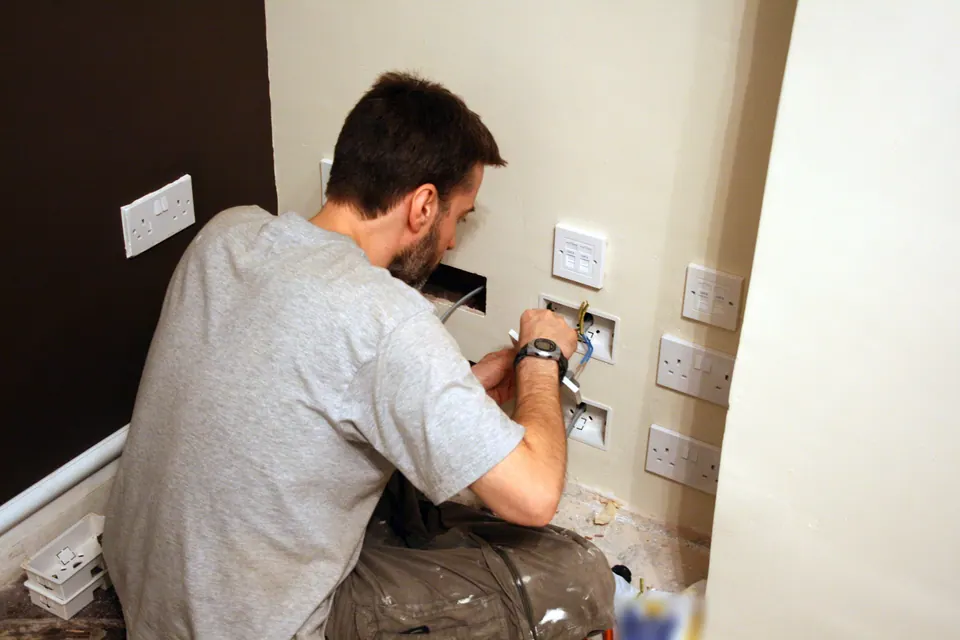
A rewire happens in two stages. First fix is the hidden part: new cables run under floors, through walls and across ceilings to a back box for each socket, switch and light, so floorboards come up, ceilings are opened and channels are chased into the plaster. Second fix comes after plastering, when the sockets, switches and lights are fitted, everything is connected and the circuits are made live.

Since the cables are buried at first fix, decide where every socket, switch and light should go before work starts. Small extras such as under-cabinet or bedside lighting are easy to plan in from the start and costly to add later. Bathrooms have their own rules on what can go where around a bath or shower, so settle the bathroom zones at the same stage.

Making good comes last: filling the chases, patching plaster and ceilings, refixing boards. It isn't always part of an electrician's price, so check whether a quote includes it, and book the plasterer and decorator around it.

Plan Ahead

Planning a rewire around decorating, a kitchen or an extension

Get the order right and the mess only happens once. A rewire lifts floors and chases walls, so it belongs before new plaster, flooring and paint, not after them; plan to decorate when the electrics are finished. With a new kitchen or an extension, the rewire joins the builder's programme: the electrical first fix goes in alongside the carpentry and plumbing first fix, ahead of the plasterer.

A kitchen refit can bring new circuits with it. Approved Document P's own example is a built-in cooker, which isn't notifiable unless a new cooker circuit is needed, and any new circuit is. Designing those circuits into the rewire avoids adding them separately later.

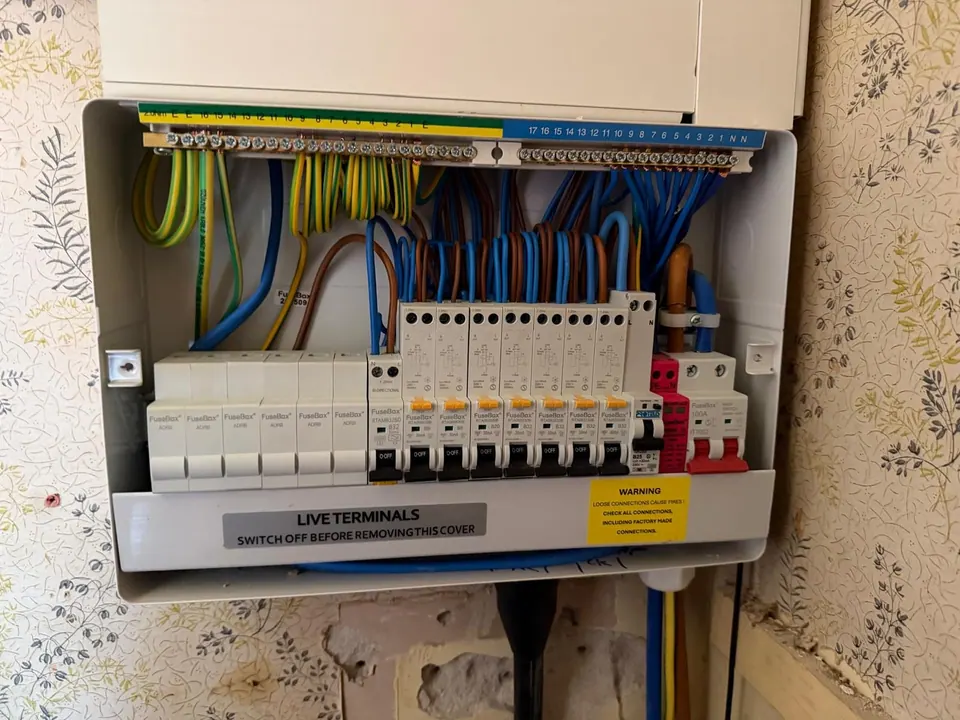
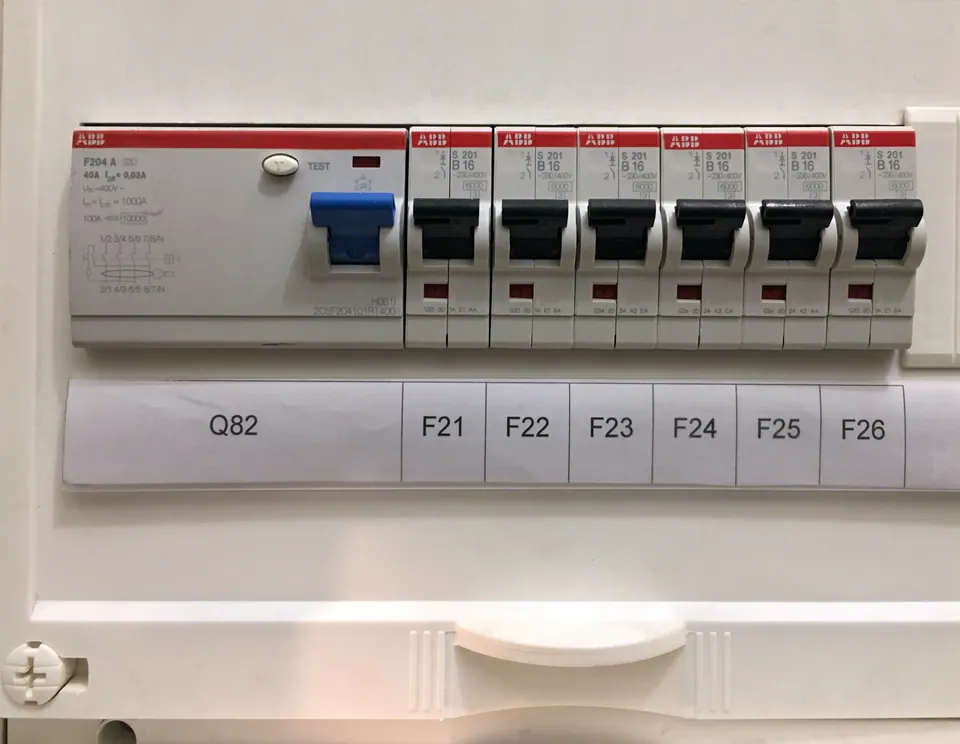
It's also the natural moment to look at the consumer unit. Older units may have no RCD or circuit breakers. Electrical Safety First says that doesn't necessarily make them unsafe, though it suggests considering RCDs to improve safety. Consumer unit upgrades are one of our most common jobs, bringing older fuse boxes up to modern safety standards with RCD/RCBO protection. Fitting a new consumer unit as part of the rewire means the circuits and the board that protects them are planned together. Once it's in, the notes that come with your installation certificate ask you to test each RCD every six months by pressing its 'T' or 'Test' button, and to seek expert advice if it doesn't switch off.

Part P & Certificates

Part P and the certificate you should get

In England, a full rewire is notifiable building work under Part P of the Building Regulations. Approved Document P (2013 edition) lists three notifiable kinds of job: installing a new circuit, replacing a consumer unit, and any addition or alteration to circuits in a special location, such as the space around a bath or shower. Whether a partial rewire is notifiable depends on which of those it includes; repairs, replacements and maintenance anywhere, and additions or alterations outside special locations, are not.

Notifiable work is certified in one of three ways: self-certification by an installer registered with a competent person scheme, a registered third-party certifier who inspects and tests the work, or a building control body notified before work begins. On the first route, the installer or their scheme must give the occupier a Building Regulations compliance certificate within 30 days of the work being completed. If it hasn't arrived by then, GOV.UK says to contact the scheme operator.

You should also be handed an Electrical Installation Certificate, the BS 7671 record that the work was designed, built, inspected and tested to the standard. Keep the original safe and show it to anyone who works on the wiring later; if you sell, it shows the new owner the installation met BS 7671 when the certificate was issued. It also states the longest interval recommended before the next inspection, and our guide to how long an EICR lasts covers the checks after that.

The Rewiring Process

Steps in a house rewire

Request a quote
  1. SURVEY 1

    Free assessment and quote

    We look over the wiring and consumer unit you have now, agree whether a full or partial rewire makes sense, and flag anything that needs bringing up to current regulations before giving you a detailed quote.

  2. FIRST FIX 2

    New cables and back boxes

    Our electricians lift the floors and chase the walls the new routes need, run the cables and fix a back box at every planned point, ready for the plasterer.

  3. SECOND FIX 3

    Fittings and connections

    Once the plastering is finished, the faceplates and light fittings go on and each new circuit is connected at the consumer unit.

  4. SIGN-OFF 4

    Testing and certificates

    Every circuit is inspected and tested to BS 7671. You receive the Electrical Installation Certificate, and notifiable work is notified under Part P so that a Building Regulations certificate follows.

Recent Work

Recent Electrical Installations

Photographed by our team, on the job.

  • Consumer unit upgradeA new FuseBox consumer unit, cover off for testing.See the gallery
Glowing reviews

What our customers say

5.0 on Google from 23 reviews

Reviews 1–2 of 11

Rewire & lighting

We have multiple jobs and works completed by Adam and the team and could not be happier with the work conducted, this has included a rewire of our property and most recently new lights fitted to the entrance of our house set on a PIR brilliant work and to a very high standard.

Jon K.Google review
Consumer unit & rewiring

Installed new consumer unit in old house and corrected many faults worked tirelessly for 4 days straight rewiring where necessary, changing sockets earthing system.

Michelle B.Google review
Garden lighting

Full garden lighting project was completed by Electrical Exchange. Installation of armoured cable, outdoor sockets, down lights, up lights, tree lights and rope lighting around patio. … I would call Adam a perfectionist with his neat and tidy workmanship.

Adam P.Google review
EV charger & consumer unit

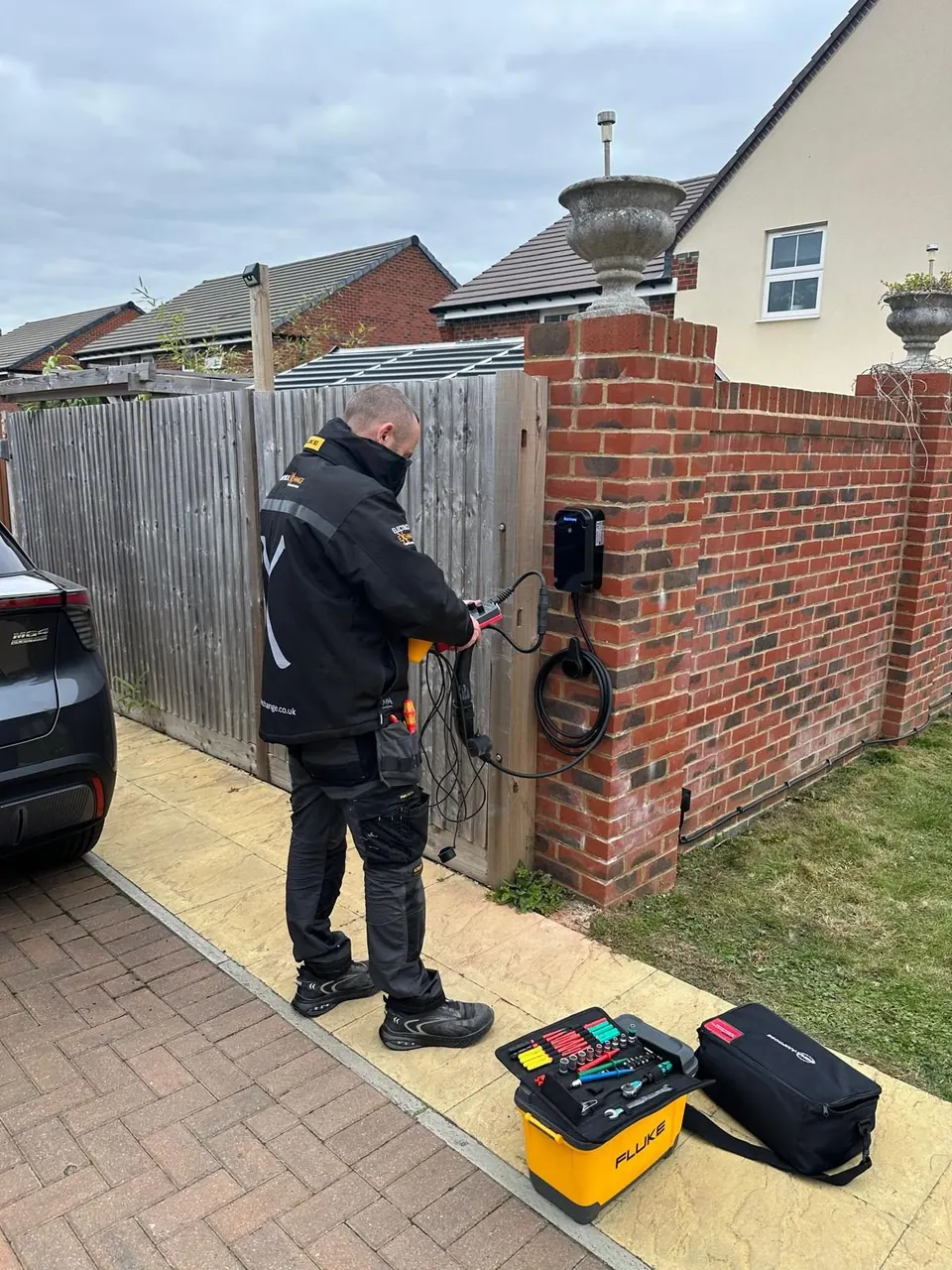
Installed my EV charger and replaced the consumer unit to a very high standard. Professional, tidy, punctual, and took the time to explain everything clearly.

Mihai C.Google review
Electrical work

Adam from Electrical Exchange was punctual, professional and completed our electrical work to a high standard. He was friendly and explained everything clearly and he left everything clean and tidy.

Jane B.Google review
Sub-board for air con

Installed a sub-board for an air con unit I was installing…Prompt & polite, works clean & tidy.. highly recommend Adam and his team

Mark C.Google review
Electrical work

I have them as my go to people for various needs around my old outdated Victorian house which has needed that more modern touch.

Sharon D.Google review

Adam and his team were great. He was on time, tidy and did the job well. There was a problem (not of his making) that he persisted with and managed to solve.

Nick P.Google review

Great company and excellent service from Adam

John B.Google review

5 Star service good prices and efficient working practises

Clive T.Google review

Reliable service competitive prices hard working peoplie, Amazing service👍🏽

Kahira D.Google review
Help & Answers

House Rewiring: What To Know

A starting point - get in touch if your question isn't answered here. See every answer

Yes, though it makes the job harder and can add to the cost. Which? notes that an occupied house takes longer to rewire than an empty one, and you should expect spells without power in some rooms. Homebuilding & Renovating says it's possible to live in one room while the work goes on around you, with furniture dust-covered.

Not because of the colours alone. When brown and blue took over from red and black for fixed wiring between 2004 and 2006, the IEE (now the IET) said existing installations would not need rewiring or re-marking. The old colours simply date a circuit, so it's the cable's tested condition that decides.

For five years, yes. GOV.UK guidance for England, published 1 November 2025, says a completely rewired home should have an Electrical Installation Certificate, which a landlord can give to tenants, and to the council if asked. No further check or report is then needed until five years after it was issued, provided other duties are met.

Possibly. The Leasehold Advisory Service says that, depending on your lease, you may need your landlord's permission before making alterations, and it lists changes affecting electrical wiring among them. If the lease requires written consent, get it before work starts: planning permission or building regulations approval doesn't stand in for it.

Ask the seller for a recent Electrical Installation Condition Report. Electrical Safety First points out that a standard home survey doesn't cover electrical safety, and if there's no report, suggests getting an inspection before you agree a price, as a full rewire can be expensive. A label in the consumer unit may show when the wiring was last tested.

Rather talk it through?

Speak to the team who'd do the work - no sales reps, no pressure.

01202 117005 Request a FREE Home Survey
More From Us

Other Services

Choose a service for how it works and the questions people ask us.

All services
Get a Free Quote Today

Planning a house rewire? Talk it through with our electricians

Or call 01202 117005 · Mon–Fri 8am–5pm