We have multiple jobs and works completed by Adam and the team and could not be happier with the work conducted, this has included a rewire of our property and most recently new lights fitted to the entrance of our house set on a PIR brilliant work and to a very high standard.
EICR Certificates for Landlords and Homeowners
An EICR certificate for homes you live in, let, buy or sell, with every observation coded in a written report.
- MCS Certified
- NAPIT Registered
- TrustMark
- OZEV Approved
What an EICR is, and what it isn't
An EICR, short for Electrical Installation Condition Report, is the written result of an inspection and test of a property's fixed electrics: the wiring, the consumer unit, the sockets and light fittings, and anything wired in permanently, such as an electric shower or an extractor fan. It records what was found, gives each problem a code that shows how urgent it is, and recommends a date for the next inspection.
It's often called an EICR certificate, and the name has stuck, but strictly it's a report on an installation that already exists. Certificates come with new work: an Electrical Installation Certificate (EIC) after a new installation or a major alteration, and a minor works certificate for smaller jobs, such as adding a socket to an existing circuit. We carry out EICRs and general inspections alongside the repairs, rewires and lighting jobs our electricians take on, with the same aim each time: to identify and resolve potential hazards.
Inspections are measured against BS 7671, the IET Wiring Regulations. The previous edition was withdrawn on 15 October 2026, so the standard now is BS 7671:2018+A4:2026, known as Amendment 4, which the IET describes as the current edition.
What the inspection looks for, and what it leaves out
The inspection is there to find out whether anything is overloaded, whether there are electric shock risks or fire hazards, whether any work is defective, and whether earthing or bonding is lacking: the two safeguards built into an installation to prevent shocks. Electrical Safety First's list of checks also picks out ageing equipment, from a fuse box with a wooden back or cast-iron switches to round-pin sockets, round light switches, fabric-covered flex hanging from ceiling roses, and black switches and sockets set into skirting boards. The inspection also checks that sockets which might power portable equipment outdoors have RCD protection.
Then there's the cable. Cable coated in black rubber was phased out in the 1960s, and cable covered in lead or fabric is older still. Electrical Safety First says it may well need replacing, and that's where rewiring the whole house comes into it.
Some things sit outside an EICR. Plug-in items, from the kettle to the television, generally count as appliances, not as part of the installation. Unless it's agreed beforehand, cables hidden in trunking or conduit, under floors, in roof spaces or within the fabric of the building aren't inspected, and the equipment isn't checked for safety alerts or product recalls.
C1, C2, C3, FI and LIM: what the codes on a report mean
- DangerC1: Danger presentThere is a risk of injury and immediate remedial action is necessary. Wherever practicable, it's made safe there and then.
- UrgentC2: Potentially dangerousThe safety of anyone using the installation may be at risk, so urgent remedial action is necessary.
- AdvisoryC3: Improvement recommendedAdvisory only: it doesn't stop a report being satisfactory, though acting on it can improve safety.
- InvestigateFI: Further investigationA potential issue the inspector can't put a code on until it has been looked into further, such as one that couldn't be fully checked.
- LimitationLIM: LimitationAn area that couldn't be inspected or tested, such as one behind a locked door. If a report is full of them, ask why.
Satisfactory or unsatisfactory, and what changed in 2026
Every report carries one overall verdict: satisfactory or unsatisfactory for continued use. On the IET's model report for Amendment 4, dated 15 April 2026, only a C1 or a C2 makes it unsatisfactory, while C3 and FI observations are advisory and should be given due consideration. On the 2022 form an FI was marked unsatisfactory as well, so an older report, or an older guide, may read differently.
If you let the property, treat an FI as a job rather than a footnote. GOV.UK's guidance on the rented-sector rules, published on 1 November 2025 before Amendment 4 arrived, still describes FI as further investigation required without delay, and says the landlord must make sure it is carried out.
Being older than the current rules isn't a failing in itself: the same model report notes that an installation designed to an earlier edition, which doesn't fully comply with the current one, is not necessarily unsafe or in need of upgrading. A C1 is different, because it can't wait: if it can't be made safe during the visit, it's a matter for an emergency call-out. If someone has had a shock and is unconscious, Electrical Safety First's advice is to call 999 immediately, and never to touch them while they're still in contact with the source.

Letting a home in England: inspections, copies and deadlines
The Electrical Safety Standards in the Private Rented Sector (England) Regulations 2020 require a landlord to have every electrical installation in a let home inspected and tested by a qualified person before the tenancy starts, then at intervals of no more than five years, or by any earlier date the last report sets. A 2025 amendment extended the duty to social landlords, and the Regulations' title now names both sectors. They apply wherever a tenant pays rent and lives there as their only or main home, shared houses included; lodgers sharing with the landlord or their family, leases of seven years or more, student halls, hostels and refuges are among the exceptions.
The report has deadlines of its own. A copy goes to each existing tenant within 28 days of the inspection, to a new tenant before they move in, to a prospective tenant within 28 days of asking for it in writing, and to the council within 7 days of a written request. Keep it until the next inspection, and pass it to whoever carries that one out. A change of tenant doesn't automatically mean a new test: a report that is still in date and calls for no further work covers a new tenancy too, and our guide to how long an EICR lasts goes through the other cases.
If you own the home, or you're buying or selling
No law requires an owner-occupier to have an EICR. Electrical Safety First recommends one every 10 years for a home you live in, compared with five for a rented home, and also when a property is being prepared for letting, before you sell, and before you buy a home someone has already lived in. The inspector can set a shorter gap: the report recommends the date of the next inspection and gives the reasons, taking the condition of the installation into account.
Selling doesn't legally need one either. The Law Society's notes on the TA6 Property Information Form, which sellers complete for buyers, say an EICR is not a legal requirement for a sale in England and Wales, although a buyer who intends to let will want to see a current one. The form also asks for any certificates for electrical installation work, which has had to follow the Building Regulations since 1 January 2005.
Whichever side you're on, hold on to the report. Its guidance for recipients says to keep the original somewhere safe and make it available to anyone who inspects or works on the installation later; when a home changes hands, it shows the new owner the condition of the electrics on the day it was issued. To book an inspection with us, let us know whether the home is lived in, let or on the market.
Putting it right: remedial work, confirmation and penalties
When a report on a let home calls for remedial or further investigative work, the landlord must have a qualified person carry it out within 28 days, counting from the date of the inspection, or sooner if the report says so. Within 28 days of the work being finished, written confirmation from that person goes to the tenant and the council, together with the report that asked for it; if the follow-up finds more, the same steps repeat. A council can serve a remedial notice, arrange the work itself and recover the cost, and impose a financial penalty of up to £40,000.
Where the answer is a new consumer unit, replacing the fuse board is notifiable building work under Part P of the Building Regulations, so it needs Building Regulations sign-off as well as its own BS 7671 certificate. GOV.UK accepts that some jobs can't fit the 28 days for practical reasons, such as an energy supplier needing to fit an isolator before a consumer unit can be changed, provided the landlord can show all reasonable steps were taken and keeps a record.
In any home, the report's guidance asks for an RCD to be tested every six months with its button marked T or Test. It should switch the supply off, and is then switched back on; if it doesn't switch off, seek expert advice.
What happens before, during and after the visit
- BEFORE THE VISIT 1
Agree what's covered
We agree the extent with you first: the whole installation or just part of it, such as a garage, and any limits on access. Whatever's agreed is recorded in the report.
- INSPECTION 2
A careful look first
We look over the consumer unit, sockets, switches and fittings for wear, damage, signs of overheating and DIY alterations, and check the earthing and bonding.
- TESTING 3
Testing, circuit by circuit
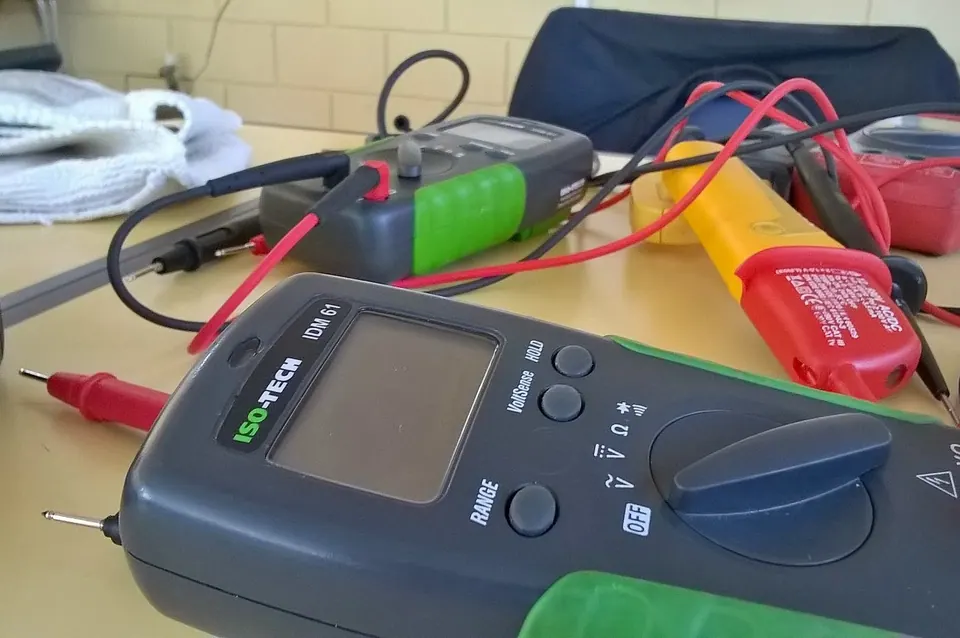
Parts of the installation are isolated for tests such as continuity, insulation resistance and polarity, alongside earth fault loop impedance and RCD tests, so expect the power to be off for parts of the visit.
- THE REPORT 4
Your written report
You receive the full written report, with each observation coded, the overall result and the recommended date for the next inspection. If it finds hazards, we can quote to put them right.
Recent Electrical Installations
Photographed by our team, on the job.

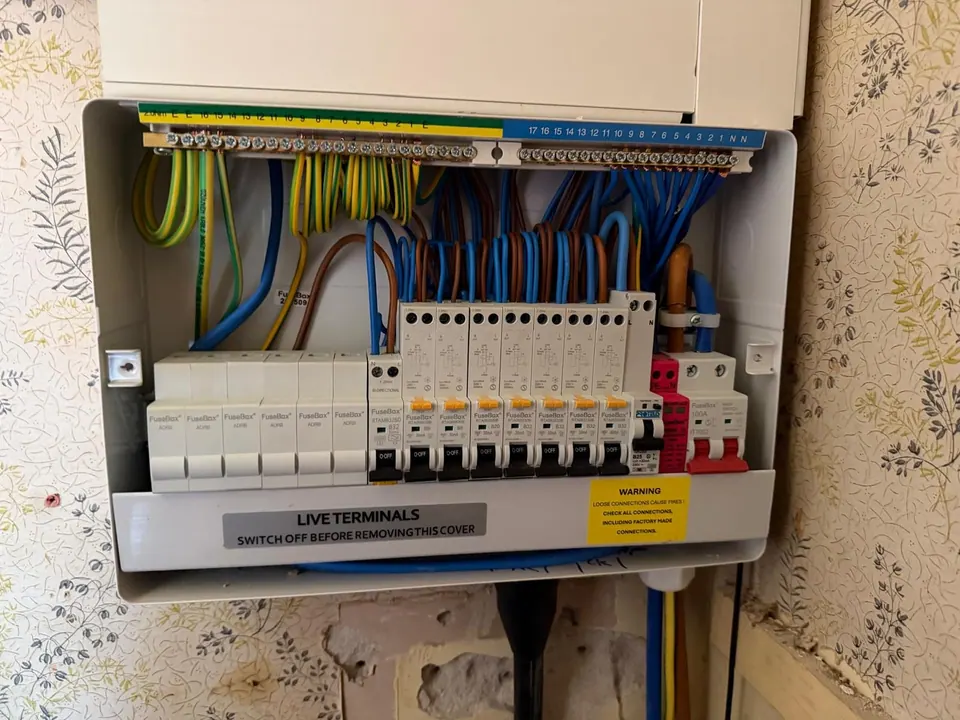
Consumer unit upgradeA new FuseBox consumer unit, cover off for testing.See the gallery
What our customers say
5.0 on Google from 23 reviews
Reviews 1–2 of 11
Installed new consumer unit in old house and corrected many faults worked tirelessly for 4 days straight rewiring where necessary, changing sockets earthing system.
Full garden lighting project was completed by Electrical Exchange. Installation of armoured cable, outdoor sockets, down lights, up lights, tree lights and rope lighting around patio. … I would call Adam a perfectionist with his neat and tidy workmanship.
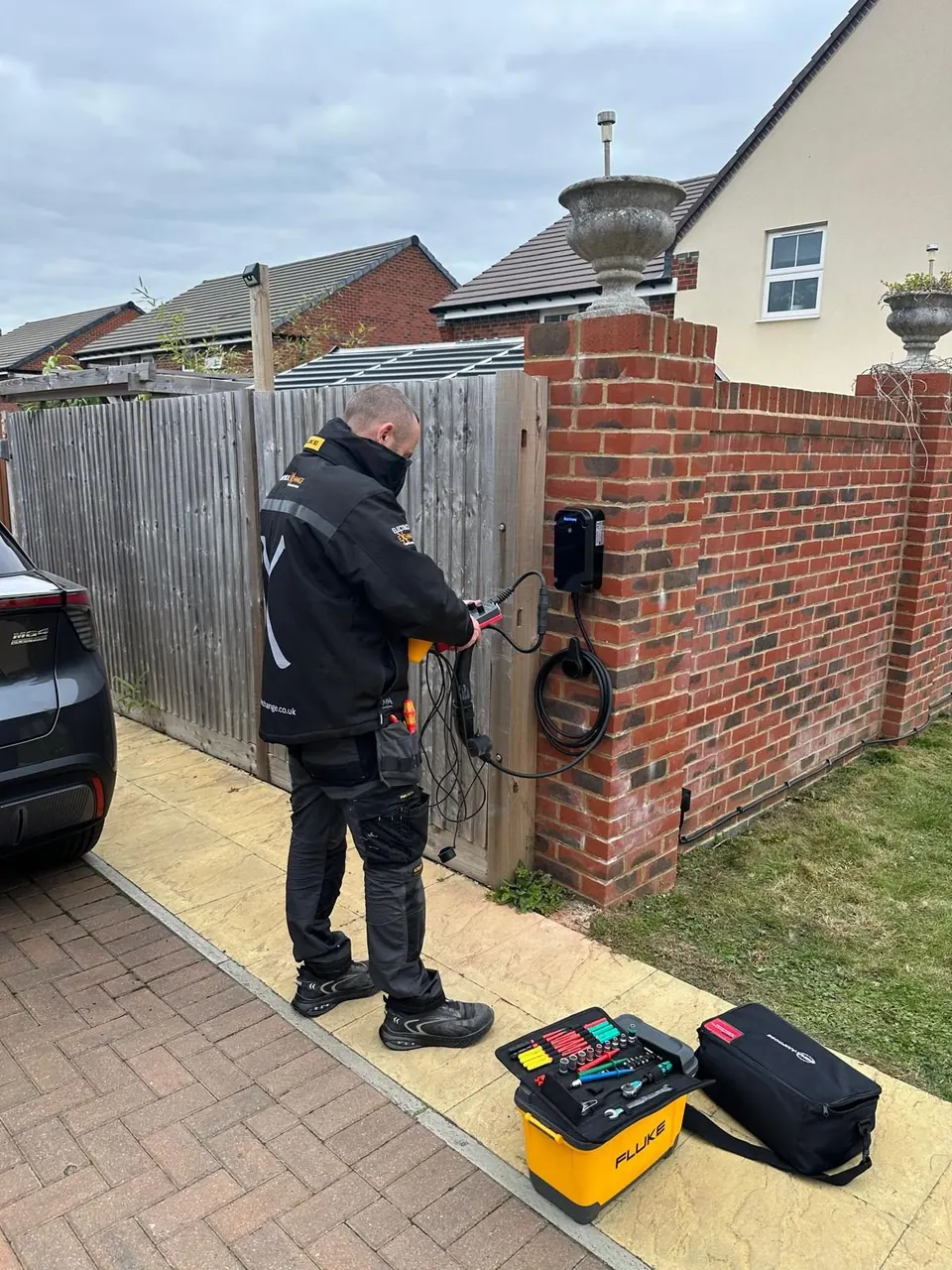
Installed my EV charger and replaced the consumer unit to a very high standard. Professional, tidy, punctual, and took the time to explain everything clearly.
Adam from Electrical Exchange was punctual, professional and completed our electrical work to a high standard. He was friendly and explained everything clearly and he left everything clean and tidy.
Installed a sub-board for an air con unit I was installing…Prompt & polite, works clean & tidy.. highly recommend Adam and his team
I have them as my go to people for various needs around my old outdated Victorian house which has needed that more modern touch.
Adam and his team were great. He was on time, tidy and did the job well. There was a problem (not of his making) that he persisted with and managed to solve.
Great company and excellent service from Adam
5 Star service good prices and efficient working practises
Reliable service competitive prices hard working peoplie, Amazing service👍🏽
EICR Certificates: What To Know
A starting point - get in touch if your question isn't answered here. See every answer
For landlords, yes. In England, private and social landlords must have the installation inspected and tested before a tenancy begins and at least every five years after that. Owner-occupiers have no legal duty, and the Law Society confirms a sale doesn't require one, though Electrical Safety First still recommends a check every decade if you live there.
Not necessarily. An inspection can be based on a sample of sockets, switches and fittings, with the extent settled before the visit and written into the report. If you want every point tested, say so when you book, and afterwards look for LIM entries, which flag areas the inspector couldn't get to or test.
Ask for it. Tenants are entitled to see it: the landlord must give you a copy before you move in, or within 28 days if you're thinking of renting and ask in writing. Buyers can raise it through their solicitor, as the seller's TA6 form has a question on the EICR.
No. A plug-in item is an appliance, outside the fixed installation, and appliance testing is a separate job. Social landlords must now have the equipment they supply, such as cookers, fridges or microwaves, checked by a qualified person at least every five years, with a separate record of the results.
Not necessarily. GOV.UK lists a satisfactory EICR as one acceptable form of written confirmation, alongside an Electrical Installation Certificate, a Minor Electrical Installation Works Certificate or other appropriate certification from whoever did the work. What matters is that the confirmation and the original report reach the tenant and the council within 28 days of completion.
Rather talk it through?
Speak to the team who'd do the work - no sales reps, no pressure.
01202 117005 Request a FREE Home SurveyGuides from the team
Electrical Certificates When Selling a House: What Buyers Ask For (2026)No law requires an EICR to sell your home in England, but buyers ask for certificates for past electrical work. Which ones, and what if they're missing?24 October 2026
How long does an EICR last? 5 years, 10 years or sooner (2026)An EICR lasts up to 5 years for a rented home in England, or less if the report says so. Homeowners are advised to have one at least every 10 years.23 October 2026
Can a handyman do electrical work? What the law allows in England (2026)A handyman can do some electrical work in England, but new circuits, consumer unit changes and work near a bath or shower are notifiable under Part P.24 October 2026
Electricians near you
Based in Christchurch, covering Dorset and Hampshire. Pick your town for local detail, or see the map.
- Electricians in Christchurchour base
- Electricians in Highcliffe≈ 1.6 miles from our unit
- Electrical work in New Milton≈ 4 miles from our unit
- Electrical work in Bournemouth≈ 6 miles from our unit
- Electrical work in Ferndown≈ 8 miles from our unit
- Electrical work in Ringwood≈ 8 miles from our unit
- Electrical work in Lymington≈ 9 miles from our unit
- Electricians in Poole≈ 10 miles from our unit
- Electrical work in Wimborne≈ 11 miles from our unit
- Electrical work in Fordingbridge≈ 13 miles from our unit
- Electricians in Dorsetevery town we cover
- Every area we coverthe coverage map
Other Services
Choose a service for how it works and the questions people ask us.