We have multiple jobs and works completed by Adam and the team and could not be happier with the work conducted, this has included a rewire of our property and most recently new lights fitted to the entrance of our house set on a PIR brilliant work and to a very high standard.
Emergency Electrician
A burning smell, a hot socket or a switch that keeps tripping: what to do first, and who to call.
- MCS Certified
- NAPIT Registered
- TrustMark
- OZEV Approved
When an Electrical Fault Can't Wait
You need an emergency electrician when a fault puts your home, or the people in it, at risk: a smell of burning near a socket, scorch marks on a plug, sparks, water reaching a light fitting, or a breaker that trips again the moment you reset it. We offer 24/7 emergency response for urgent electrical issues. If anyone is hurt or in danger, call 999 first.
These are fire risks as much as faults. Home Office fire safety guidance, last updated in 2022, says faulty electrics, meaning appliances, wiring and overloaded sockets, cause around 4,000 fires in the home every year. Not every warning sign is an emergency, so the signs below are the ones that are, followed by what to do while you wait and when a different number, 105, is the right one to ring.
The safety advice below comes from Electrical Safety First, the Energy Networks Association, the network operators, Ofgem and government guidance, each named where it applies. Emergency call-outs sit alongside the everyday repairs, rewiring and inspections we carry out.
We're here to help · Call us on 01202 117005

Signs That Need an Electrician Now
- SmellBurning or Fishy SmellsA smell of hot plastic or burning near a socket or appliance is a danger sign, and Electrical Safety First warns that a fishy smell can be plastic burning on a plug socket.
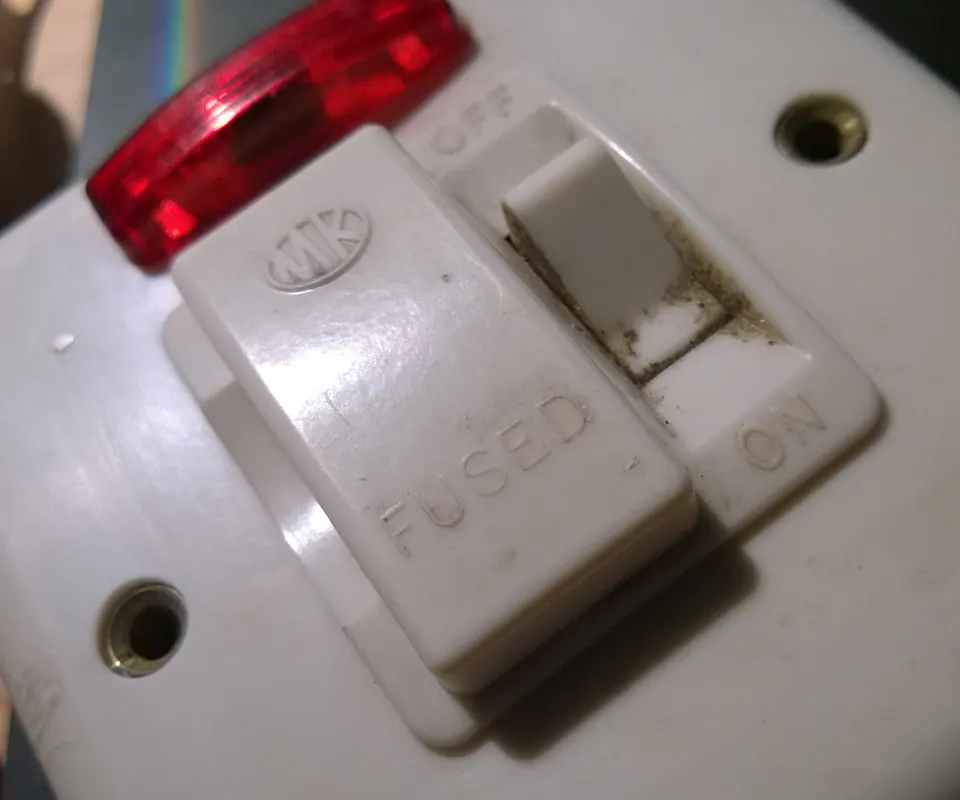
- HeatA Plug or Socket Too Hot to TouchToo hot to touch is a warning sign. Electrical Safety First says a plug or socket that feels hot should be checked by a competent electrician, so stop using it until then.
- ScorchingScorch Marks or YellowingBlackening around a socket or plug, or a socket turning yellow, points to overheating and, as Electrical Safety First puts it, a possible risk of fire.
- SparksSparks, Smoke or CracklingSparks or smoke from a plug or appliance are a danger sign, and so is a buzzing or crackling sound, known as arcing, from a socket or switch.
- WaterWater Near ElectricsWater from a leak reaching a light fitting, sockets or the consumer unit makes the electrics dangerous. Keep well away from the wet area.
- TrippingA Breaker That Trips Straight BackA breaker or RCD that trips again as soon as it's reset is pointing to a likely fault, in an appliance or the circuit wiring. Leave it off and call us.
What to Do First, Safely
Your consumer unit, still often called the fuse box, has a main switch, and turning the mains off there cuts the supply to your circuits. With a socket scorching or a fitting sparking, that stops power reaching the fault, provided you can get to the consumer unit safely. Electrical Safety First's flood advice sets the limits: switch off at the fuse box only if it's safe to, and don't touch the box at all if it looks wet or damaged, or shows signs of arcing or overheating.
Then keep everyone back. Treat exposed wiring as live, because it may still be, and leave anything that has been wet unplugged and unused until it has been checked. Don't keep resetting a switch that has tripped either: it cut the power because it detected a problem. If the trouble is one appliance and its plug and socket look normal, the charity's advice is to unplug it and contact the retailer, manufacturer or a qualified repair technician.
When everyone is safe, get in touch, and leave things switched off until the fault has been looked at.
Power Cut or a Fault in Your Home?
When the lights go out, first work out whether it's just you. National Grid's advice is to speak to a neighbour or, at night, look at the street lights; you'll soon know. If your neighbours still have power, the Energy Networks Association says your trip switch may have activated, which points to a fault in your own installation. If nothing has tripped and the power stays off, National Grid's advice is to call your network operator.
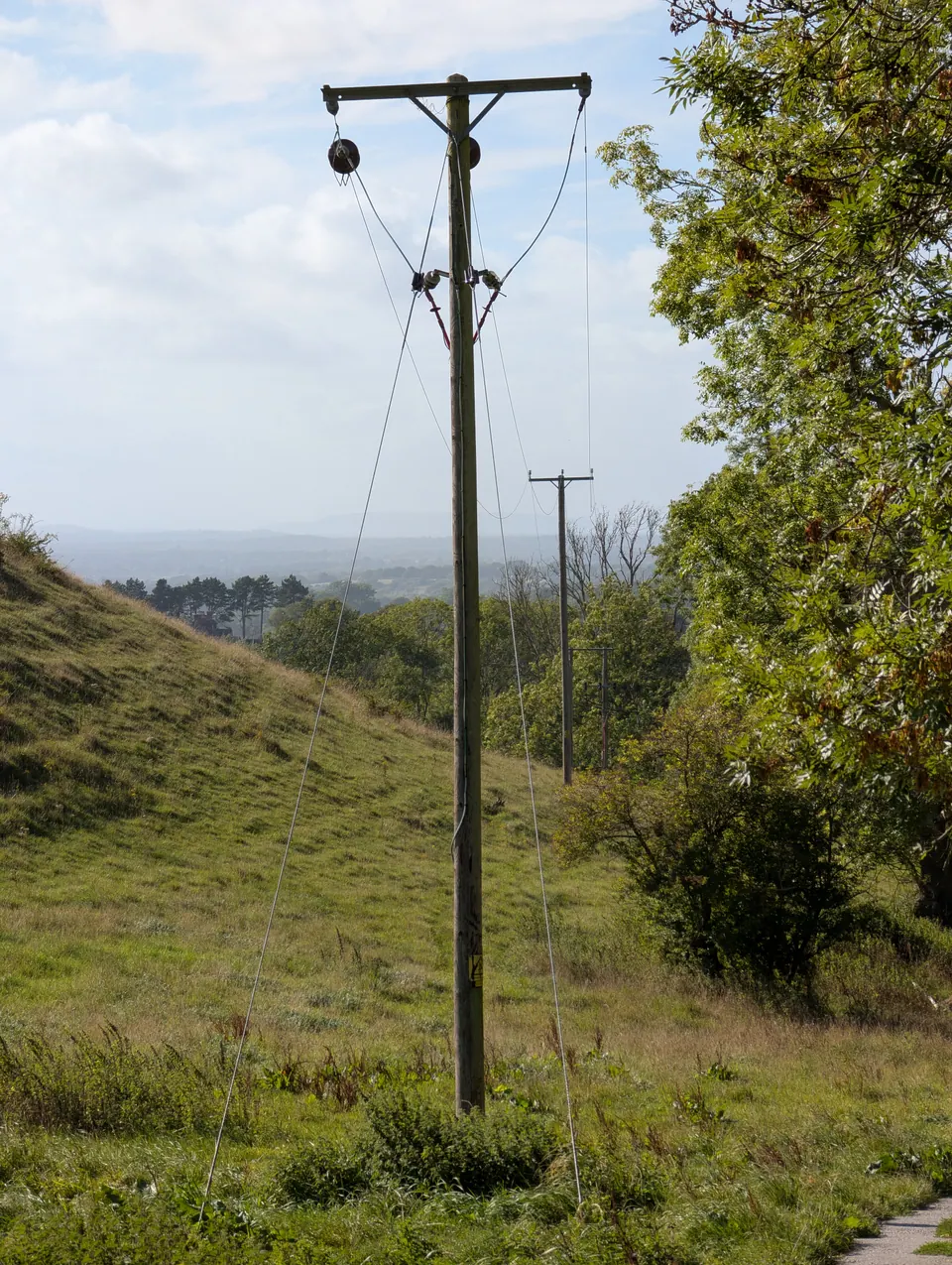
If the street is dark too, it's a power cut, and your local network operator is responsible for fixing it, not an electrician. Reporting it online is the quickest route, and 105 is a free number that connects you to your network operator. The cut-out, which holds the main fuse on the incoming cable and usually sits next to the meter, is network equipment too: if a black substance around it is hot or smells, SSEN, one of the network operators, says to call 105. If a faulty meter has cut your supply, Ofgem's advice is to contact your energy supplier instead.
If anyone in your home relies on electricity for medical equipment, join the Priority Services Register, a free service you sign up to through your network operator or energy supplier that brings extra help in a power cut. Lots of households are eligible, the government says, including those with children under 5. For the rest of what to check while the power is off, see our step-by-step power cut guide.
When to Call 999 Instead
An electrician makes a fault safe; danger to life is a job for the emergency services. If there's fire or smoke, Home Office guidance is not to tackle it yourself but to get out, stay out and call 999 once you're clear of the building. If a power line is down, keep as far back as you can, because electricity can jump through the air; dial 999 if anyone is at risk, then report the line on 105.
For an electric shock, Electrical Safety First says never to touch the person while they're still in contact with the electricity. Turn the supply off by unplugging the appliance or switching the mains off at the consumer unit, and call 999 immediately if they're unconscious. The effects of a shock may not show straight away, so keep an eye on someone who seems fine. If your landline is down in a power cut, the government's advice is to try 999 or 112 from a mobile.
An RCD in the consumer unit limits how long current can flow through the body, though Electrical Safety First points out it can't make anyone absolutely safe. Without one, the charity's advice is plug-in RCDs at the sockets, and an inspection will tell you whether the board needs replacing with a modern consumer unit.
When Water Gets Into the Electrics
Water and electricity are a lethal combination, in the words of the Electrical Safety Council, the charity behind Electrical Safety First, and flood water can damage sockets, appliances and wiring alike. Its flood advice is blunt about what not to do: don't switch on lights or appliances in the affected rooms, don't go near exposed wires, and don't attempt repairs or temporary connections yourself.
What happens next depends on the water. Where the damage is minor and the water was clean, from a burst pipe or tank, the charity says an electrician may only need to dry out cables and replace the affected sockets, switches and plugs. Where flood damage is major or the water was contaminated, rewiring is likely, and we explain how a rewire works separately. If equipment is being replaced anyway, ask whether the consumer unit and sockets can go above any expected flood level.
Tell your insurer, and your landlord if you rent, before repairs start, and photograph the damage. Once the power is off, and only if it's safe, unplug damaged appliances and move portable ones out of the wet area. Electricity and gas should stay off until professional advice says it's safe to turn them back on.
Finding Out Whether It Was a One-Off
Once the urgent fault is fixed, it's worth asking whether it was a one-off. Think back over any quieter warnings: lights that flicker or bulbs that keep blowing, which Electrical Safety First links to loose connections in the wiring, or sockets and switches that are cracked or discoloured.
An electrical installation condition report answers the bigger question. It comes from inspecting and testing the installation, and records any damage, deterioration, defects or dangerous conditions, along with anything short of the present-day safety standard that might give rise to danger. Electrical Safety First recommends one at least every 10 years in a home you own, and every five years or at each change of occupancy, whichever is sooner, in a rented one. After water damage, it's the report the charity suggests asking for, because it shows the condition of the wiring and what needs repair.
Some prevention is simple. The charity's fire tips include keeping clothes, paper and cleaning products away from the consumer unit, the meter and the service head (the cut-out fuse), particularly under the stairs, which may be your escape route; not overloading sockets or extension leads, especially with kettles, irons and heaters; and having a working smoke alarm on each floor.
What Happens on an Emergency Call-Out
- YOUR CALL 1
Tell Us What's Happening
Ring us and describe what you can see, hear or smell, what has stopped working and anything you've already switched off.
- ON ARRIVAL 2
Make It Safe
Our electrician's first job is to make the fault safe, isolating the affected circuit, or the whole installation if need be, before anything is opened up.
- FAULT-FINDING 3
Find the Fault
With the danger contained, testing traces the cause, whether that's a failed socket or switch, a damaged cable, a faulty appliance or the consumer unit itself.
- REPAIR OR ADVICE 4
Repair It or Explain What's Needed
If the fault can be put right on the visit, we repair it. If it needs bigger work, such as a new consumer unit or rewiring, we explain what's needed and why, so you can decide what happens next.
Recent Electrical Installations
Photographed by our team, on the job.

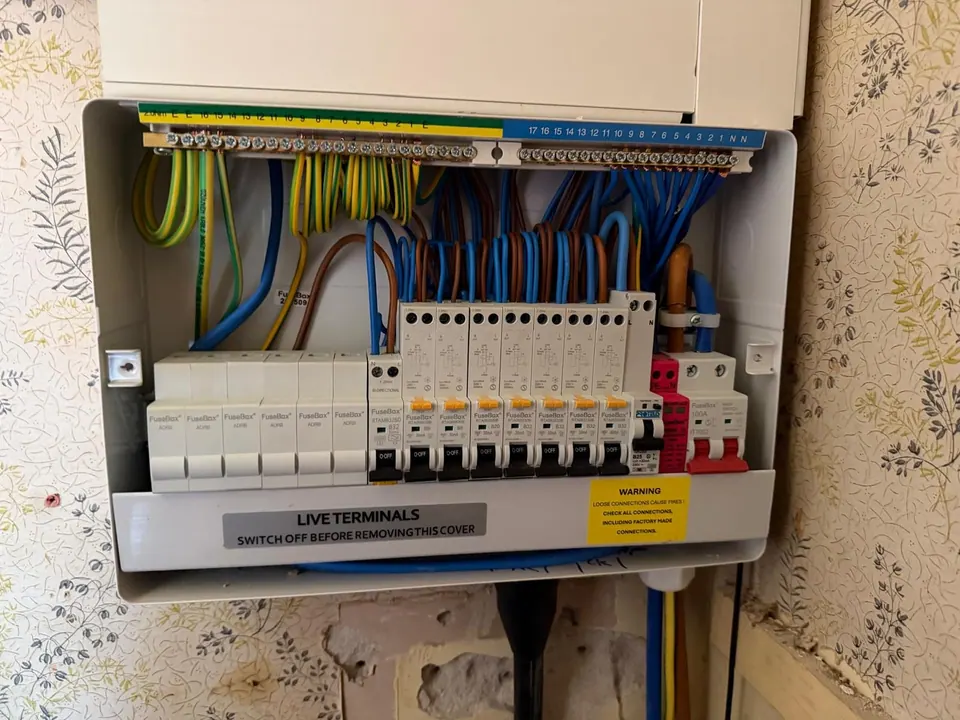
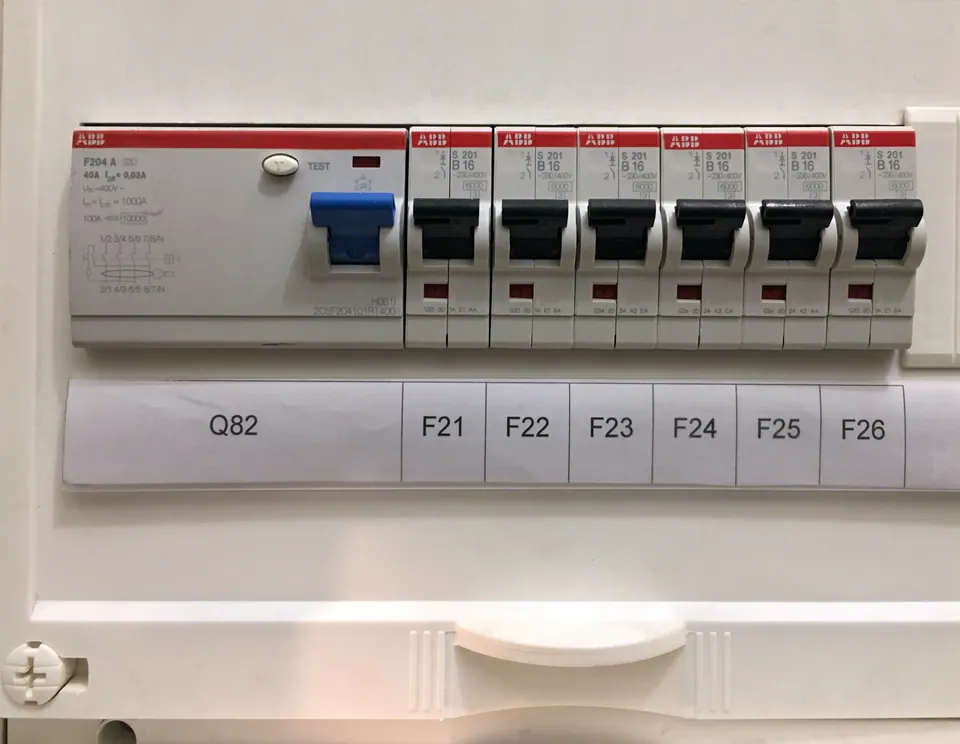
Consumer unit upgradeA new FuseBox consumer unit, cover off for testing.See the gallery
What our customers say
5.0 on Google from 23 reviews
Reviews 1–2 of 11
Installed new consumer unit in old house and corrected many faults worked tirelessly for 4 days straight rewiring where necessary, changing sockets earthing system.
Full garden lighting project was completed by Electrical Exchange. Installation of armoured cable, outdoor sockets, down lights, up lights, tree lights and rope lighting around patio. … I would call Adam a perfectionist with his neat and tidy workmanship.
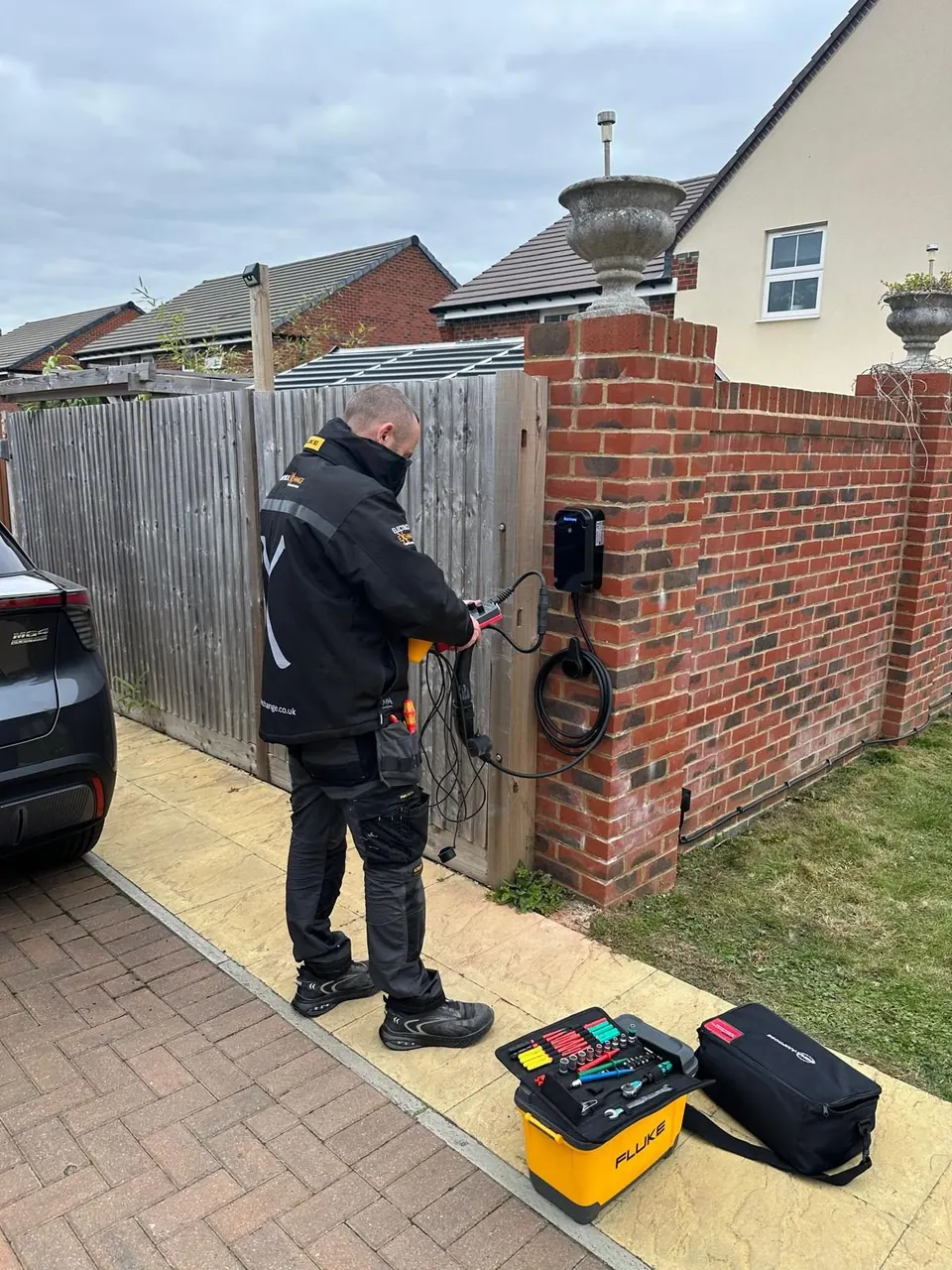
Installed my EV charger and replaced the consumer unit to a very high standard. Professional, tidy, punctual, and took the time to explain everything clearly.
Adam from Electrical Exchange was punctual, professional and completed our electrical work to a high standard. He was friendly and explained everything clearly and he left everything clean and tidy.
Installed a sub-board for an air con unit I was installing…Prompt & polite, works clean & tidy.. highly recommend Adam and his team
I have them as my go to people for various needs around my old outdated Victorian house which has needed that more modern touch.
Adam and his team were great. He was on time, tidy and did the job well. There was a problem (not of his making) that he persisted with and managed to solve.
Great company and excellent service from Adam
5 Star service good prices and efficient working practises
Reliable service competitive prices hard working peoplie, Amazing service👍🏽
Emergency Electrician: What To Know
A starting point - get in touch if your question isn't answered here. See every answer
We'll confirm timing when you call, based on where you are. Until then, keep people away from the fault and leave off anything that has tripped or been switched off. If anything is burning, or anyone has been hurt, call 999 before you call us.
No. A breaker or RCD trips because it has detected a problem, and National Grid's power cut guidance says to unplug things before putting a tripped switch back on. If it keeps tripping, Electrical Safety First says there's likely to be a fault, with a particular appliance or the wiring itself, that needs investigating by an electrician.
Only when the fault is in your own wiring. If the power has gone along the street as well, or nothing has tripped, start with the network operator: report it online or call 105, which is free. Supply lost because of a faulty meter is a matter for your energy supplier.
Deal with any danger first, with a 999 call if someone could be hurt, then tell your landlord as soon as you can. Electrical Safety First notes that the Landlord and Tenant Act 1985 requires landlords of properties with short leases to keep the electrical wiring in repair and in proper working order.
You should get one. Approved Document P (2013 edition) says even non-notifiable work, which includes repairs, should be inspected, tested and certificated in accordance with BS 7671, now in its 2018 edition with Amendment 4 (2026). Replacing a consumer unit, adding a circuit or changing circuits around a bath or shower is notifiable too, needing building regulations sign-off.
Rather talk it through?
Speak to the team who'd do the work - no sales reps, no pressure.
01202 117005 Request a FREE Home SurveyGuides from the team
Power cut in Bournemouth, Poole or Christchurch? Who to call first (2026)Check whether it's just your home, then report it to SSEN, the local network operator, not your supplier.23 October 2026
Can a handyman do electrical work? What the law allows in England (2026)A handyman can do some electrical work in England, but new circuits, consumer unit changes and work near a bath or shower are notifiable under Part P.24 October 2026
AFDDs explained: does your home need an arc fault detection device? (2026)An AFDD cuts a circuit off when it detects dangerous arcing. BS 7671 requires them in HMOs and a few other buildings, and recommends them in other homes.23 October 2026
Electricians near you
Based in Christchurch, covering Dorset and Hampshire. Pick your town for local detail, or see the map.
- Electricians in Christchurchour base
- Electricians in Highcliffe≈ 1.6 miles from our unit
- Electrical work in New Milton≈ 4 miles from our unit
- Electrical work in Bournemouth≈ 6 miles from our unit
- Electrical work in Ferndown≈ 8 miles from our unit
- Electrical work in Ringwood≈ 8 miles from our unit
- Electrical work in Lymington≈ 9 miles from our unit
- Electricians in Poole≈ 10 miles from our unit
- Electrical work in Wimborne≈ 11 miles from our unit
- Electrical work in Fordingbridge≈ 13 miles from our unit
- Electricians in Dorsetevery town we cover
- Every area we coverthe coverage map
Other Services
Choose a service for how it works and the questions people ask us.