Bathroom electrical zones 0, 1 and 2 explained (2026)
Bathroom zones: zone 0 is inside the bath or tray, zone 1 is above it to 2.25 m and zone 2 a 0.6 m band around it. Plus IP ratings, sockets and RCDs.
Electrical ExchangePublished · Updated · 8 min read


The quick answer
Bathroom electrical zones are the spaces around a bath or shower where the IET Wiring Regulations (BS 7671, Section 701) limit what can be fitted. Zone 0 is inside the bath or shower tray: only fixed, IPX7-rated equipment at no more than 12 V AC or 30 V DC. Zone 1 is the space above it, up to 2.25 m from the floor or the highest fixed shower head if that's higher, and needs IPX4. Zone 2 is a 0.6 m band around zone 1, also IPX4. Beyond that you're outside the zones, but an ordinary socket must be at least 2.5 m from zone 1, and every bathroom circuit needs 30 mA RCD protection.
Bathroom electrical zones decide what can be fitted where in a room with a bath or shower, and how well protected against water it must be. If you’re planning a new bathroom, adding a shower or wondering whether the light above your bath is allowed, the zones are the place to start. They exist because wet skin lowers the body’s resistance, which is why Electrical Safety First warns that an electric shock in a bathroom can be more severe.
Here’s what each zone allows, and the protection and paperwork that go with bathroom work in England.
Bathroom electrical zones at a glance
| Zone | Where it is | Minimum IP rating | What can go there |
|---|---|---|---|
| Zone 0 | Inside the bath or shower tray | IPX7 | Only fixed equipment made for zone 0, at 12 V AC or 30 V DC at most |
| Zone 1 | Above the bath or tray, up to 2.25 m from the floor, or the highest fixed shower head if that’s higher | IPX4 | Fixed electric showers, shower pumps, whirlpool units, fans, towel rails, water heaters and lights the maker says suit zone 1 |
| Zone 2 | A band 0.6 m out from zone 1, to the same height | IPX4 | Equipment rated IPX4, shaver supply units away from direct spray, and switches and sockets on SELV circuits |
| Outside the zones | The rest of the room | No zone rating, but equipment must suit where it’s fitted | Switches and other accessories on 30 mA RCD-protected circuits, with ordinary sockets at least 2.5 m from zone 1 |
IPX4 means protection against splashing water from any direction; IPX7 means protection against temporary immersion.
Where the bathroom zone rules come from
The zones are set out in Section 701 of BS 7671, the IET Wiring Regulations. The current version, BS 7671:2018+A4:2026, was published on 15 April 2026, and the previous version was withdrawn on 15 October 2026. Amendment 4’s headline changes were elsewhere, including battery storage, Power over Ethernet and medical locations. BS 7671 isn’t law in itself, but Electrical Safety First notes it’s widely used to show compliance with the Building Regulations.
Older guides can mislead: zone 3 disappeared with the 17th edition, BS 7671:2008.
Zone 0: inside the bath or shower tray
Zone 0 is the inside of the bath tub or shower tray. Equipment can go here only if it’s fixed, permanently connected, rated at least IPX7, made for zone 0 and run at safety extra-low voltage (SELV) of no more than 12 V AC or 30 V DC, with its source outside the zones. Nothing at mains voltage is allowed.
Zone 1: above the bath or shower, up to 2.25 m
Zone 1 is the space directly above the bath or tray, up to 2.25 m from the floor or the highest fixed shower head if that’s higher. The space under the bath counts as zone 1 if you can reach it without a tool; behind a panel that needs a tool to remove, it’s outside the zones.
Only the kinds of equipment in the table can go here, and they must be fixed, permanently connected, rated at least IPX4 and suitable for zone 1 by the maker’s instructions. The only switches allowed are SELV switches of no more than 12 V AC or 30 V DC.
Good to know Zone 1 and zone 2 both stop at 2.25 m above the floor, or at the highest fixed shower head if that sits higher.
Zone 2: the 0.6 m band around zone 1
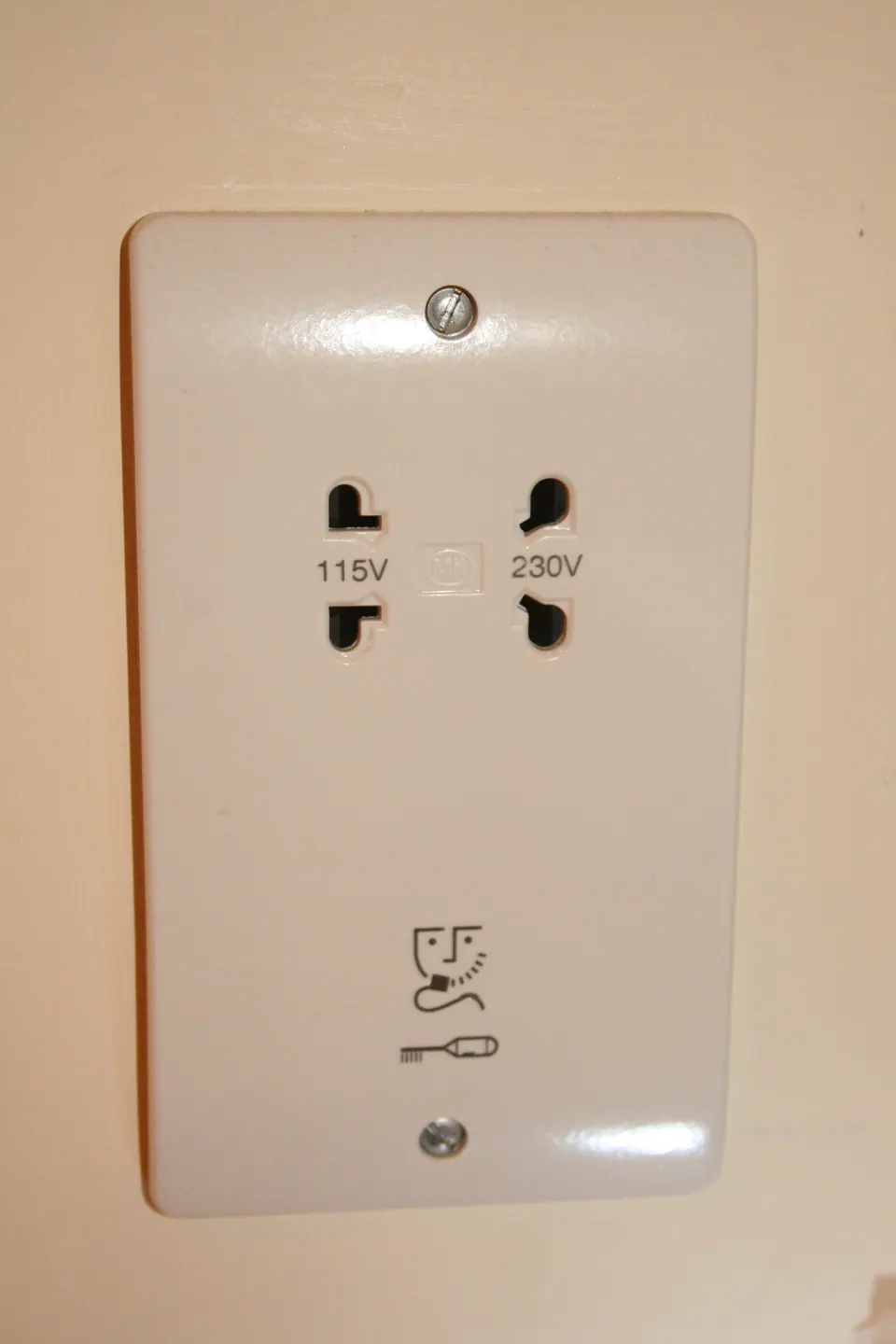
Zone 2 reaches 0.6 m out horizontally from the edge of zone 1, to the same height. It allows any equipment rated at least IPX4, a shaver supply unit to BS EN 61558-2-5 where direct spray from the shower is unlikely, and SELV switches and sockets. A standard mains switch or socket can’t go here.
Walk-in showers and wet rooms
With no tray, the zones are measured from the shower itself. Zone 1 reaches 1.2 m horizontally from the centre point of the fixed water outlet on the wall or ceiling, zone 0 is the floor area within that distance up to 10 cm high, and there is no zone 2. The Wiring Regulations Advisory Group’s guidance, published by Electrical Safety First, adds that the 1.2 m runs from the end of the rigid pipe, whether the head is fixed or on a hose.
Sockets in a bathroom: the 2.5 m rule
Outside the zones the general rules apply, with one exception: an ordinary socket-outlet can’t be fitted within 2.5 m horizontally of the boundary of zone 1. Only SELV sockets and shaver supply units to BS EN 61558-2-5 can go closer, and a 13 A socket in a bathroom needs 30 mA RCD protection.
You’ll still see 3 m quoted, and it used to be right: it came in with the 17th edition in 2008, and the IET’s FAQ still gave 3 m in September 2019. Amendment 2, published on 28 March 2022, cut it to 2.5 m. Approved Document P, the government’s Part P guidance, dates from 2013 and its bathroom diagram still shows 3 m. In a bathroom too small for that, Electrical Safety First says not to bring in an extension lead instead.
Good to know The socket distance is now 2.5 m from the edge of zone 1, so a guide quoting 3 m is working from the rules before Amendment 2 (2022).
Bathroom lights, switches and extractor fans
Mains-voltage lights can go in zone 1, above the bath or shower, if they’re rated at least IPX4 and the maker says they suit that zone. Electrical Safety First prefers enclosed ceiling lights to hanging ones, and says a light that isn’t enclosed should be out of reach of someone using, or still wet from, the bath or shower. The IET’s 2019 guidance allows the cord of a pull-cord switch in zones 1 and 2 and recommends them for bathrooms; a plate switch belongs outside the zones.
Extractor fans rated IPX4 can go in zone 1 or 2, or outside the zones. A fixed fan needs a readily identifiable means of isolation for maintenance, and the same IET guidance puts the isolator for a fan with an overrun timer outside zones 0, 1 and 2. For airflow, Approved Document F (the 2021 edition, and the 2026 edition that takes effect on 24 March 2027) sets a minimum intermittent extract rate of 15 litres a second for a bathroom.
RCD protection on every bathroom circuit
Every low-voltage circuit serving a bathroom needs additional protection from a 30 mA RCD, and so does any circuit passing through zone 1 or 2 on its way elsewhere. That covers the lights, an electric shower and a heated towel rail as much as a socket. An RCD switches a circuit off when it detects current leaking, and Electrical Safety First says it can disconnect in as little as 40 milliseconds.
The rule arrived with the 17th edition in 2008, so a bathroom wired to earlier rules may lack it on some circuits. Consumer unit upgrades are one of our most common jobs, bringing older fuse boxes up to modern safety standards with RCD/RCBO protection. Our guide to what an AFDD protects against covers a different kind of protection.
Good to know A bathroom’s lights, shower and towel rail need 30 mA RCD protection just as much as a socket does.
Supplementary bonding, and when it can be left out
Bonding links metal parts so that, in a fault, touching two at once carries less risk of a shock. In a bathroom, supplementary bonding can be left out if the building has main protective bonding and all three of these are true:
- every final circuit in the room meets the requirements for automatic disconnection,
- every final circuit in the room has 30 mA RCD protection,
- all extraneous-conductive-parts in the room, such as metal pipework, are effectively connected to the main bonding.
If any one isn’t met, supplementary bonding is needed, and the Wiring Regulations Advisory Group confirms that includes a new non-electrical radiator in an existing bathroom. An electrical installation condition report checks the adequacy of earthing and bonding, and our guide to how long an EICR lasts explains when you’re due one.
Is bathroom electrical work notifiable under Part P?
In England, Part P of the Building Regulations makes three kinds of home electrical work notifiable: a new circuit, a replacement consumer unit, and any addition or alteration to existing circuits in a “special location”. Around a bath or shower, that’s the space within 0.6 m of the bath or tray edge, or 1.2 m of the shower head where there’s no tray, from the floor to 2.25 m, or to the shower head if that’s higher.
| Bathroom job | Notifiable in England? |
|---|---|
| A new circuit, such as one for a first electric shower | Yes |
| Replacing the consumer unit | Yes |
| Adding to or altering a circuit inside the special location | Yes |
| Adding a light or switch beyond the special location, on an existing circuit | No |
| Replacing a fan, light or switch like for like | No |
Notifiable work is self-certified by an electrician registered with a competent person scheme, signed off by a registered third-party certifier, or notified to a building control body, such as the council, before work starts. In Bournemouth, Christchurch and Poole that’s BCP Council, which lists extra power or lighting points and alterations to existing circuits as not needing approval, “except around baths and showers”. Non-notifiable work should still be designed, installed and tested to BS 7671, and councils can take enforcement action if it’s unsafe.
Getting bathroom electrics done safely
Electrical Safety First’s advice is to use a registered electrician for any electrical installation work. If an extractor fan smells of burning, buzzes or crackles, switch it off and call an electrician. If someone has had an electric shock, don’t touch them while they’re still in contact with the supply: switch off at the consumer unit if you can, and call 999 immediately if they’re unconscious.
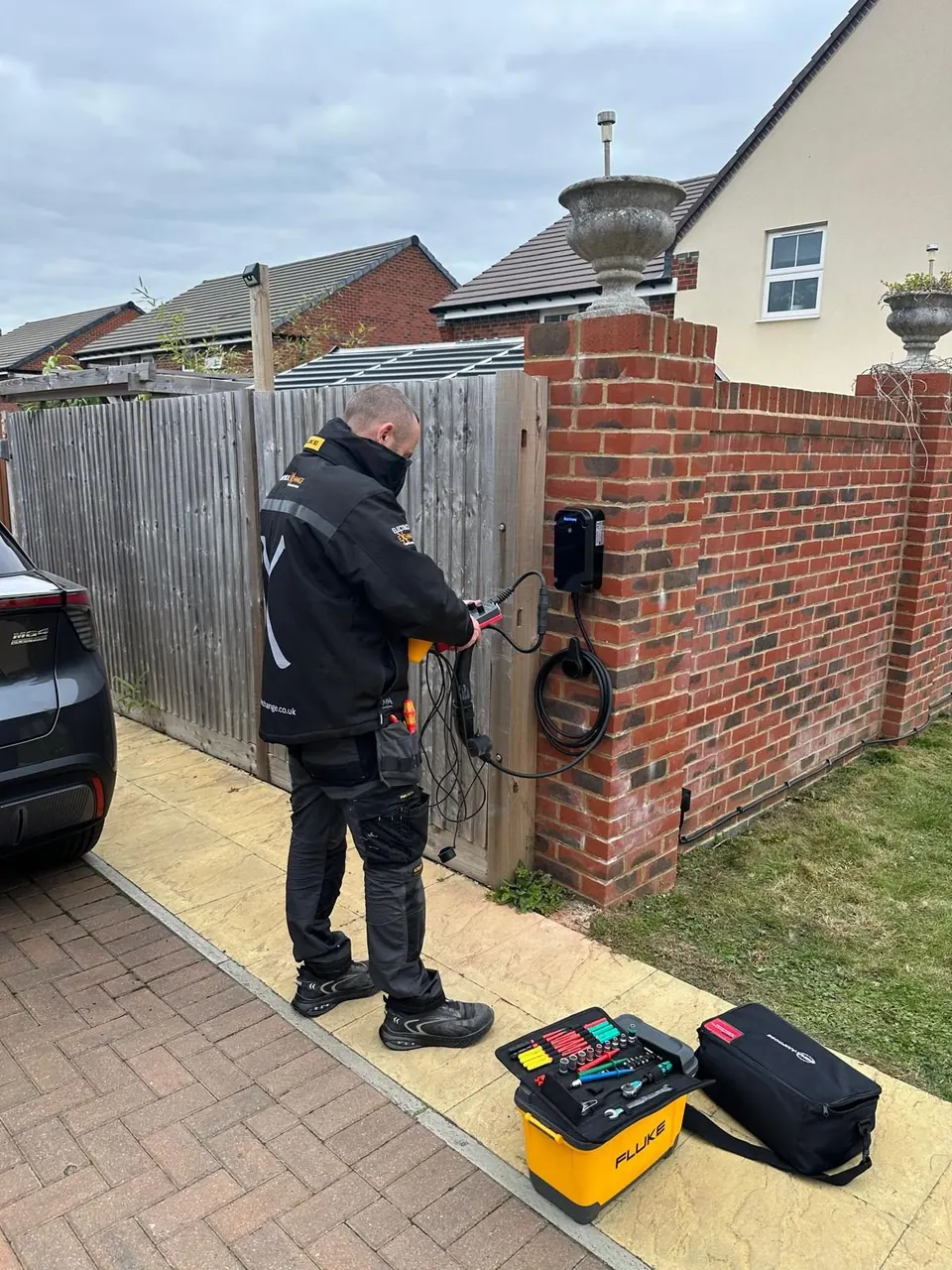
Our electrical services cover repairs, wiring and rewiring, lighting installation, inspections and circuit breakers, all carried out by our own in-house team. We cover Dorset and Hampshire from our Christchurch base, including rewires, repairs and inspections for Poole homes, and offer 24/7 emergency response for urgent electrical issues. Planning work inside the bathroom zones? Ask us for a free assessment: we’ll flag anything that needs bringing up to current regulations, then give you a detailed, fixed quote.
Questions we're often asked
- What IP rating do bathroom lights need?
- It depends where the light goes. Over the bath or shower up to 2.25 m (or a higher fixed shower head), or within 0.6 m of that space, the minimum is IPX4. Inside the bath or tray only IPX7 extra-low-voltage equipment is allowed. Higher up or further away the zone ratings stop, though the fitting must still suit the room.
- Can you have a plug socket in a bathroom in the UK?
- Yes, if the room has the space. A standard 13 A socket must be 2.5 m or more from zone 1, measured horizontally, and on a circuit with 30 mA RCD protection. Shaver supply units and SELV sockets are the exceptions, and both can go in zone 2.
- Is there still a zone 3 in a bathroom?
- No. Zone 3 went when the 17th edition of the wiring regulations, BS 7671:2008, came in, alongside the requirement for RCD protection on all bathroom circuits. Today there are zones 0, 1 and 2, and the rest of the room is outside the zones. A diagram still showing zone 3 is working from pre-2008 rules.
- Do I need an electrician to fit a bathroom extractor fan?
- Electrical Safety First says to use a registered electrician to select, fit and replace one. A fan that needs a new circuit, or new wiring within 0.6 m of the bath or shower tray and below 2.25 m (or a higher fixed shower head), is notifiable under Part P in England. Swapping a fan on its existing cable isn't.
- Can an electric shower go in zone 1?
- Yes. It's one of the few things zone 1 allows, as long as it's fixed, permanently connected, rated IPX4 or better and suitable for that zone by its maker's instructions. Electrical Safety First adds that it must be supplied on its own circuit and fitted by a registered competent electrician.