Can you add a battery to existing solar panels?
Yes, you can add a battery to existing solar panels. What's involved, AC- or DC-coupled, the grid paperwork, and when fitting one later makes sense.
Electrical ExchangePublished · Updated · 7 min read


The quick answer
Yes, you can add a battery to existing solar panels, including a system another installer fitted. The battery can connect alongside your existing solar inverter (AC-coupled), or through a hybrid inverter that runs both the panels and the battery (DC-coupled). We check your inverter, where the battery can sit, your consumer unit and the grid paperwork, then install the battery and its inverter as a single system.
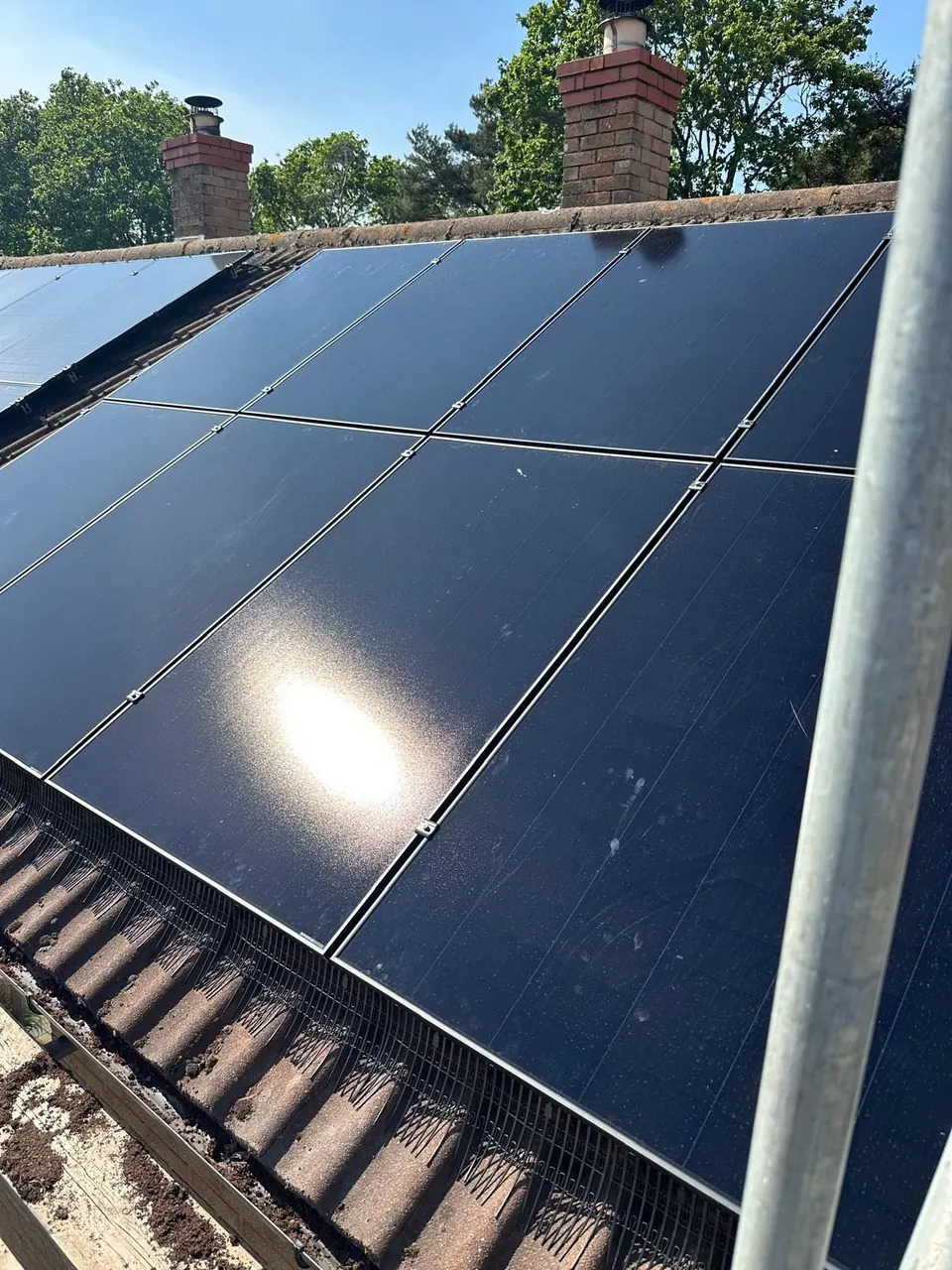
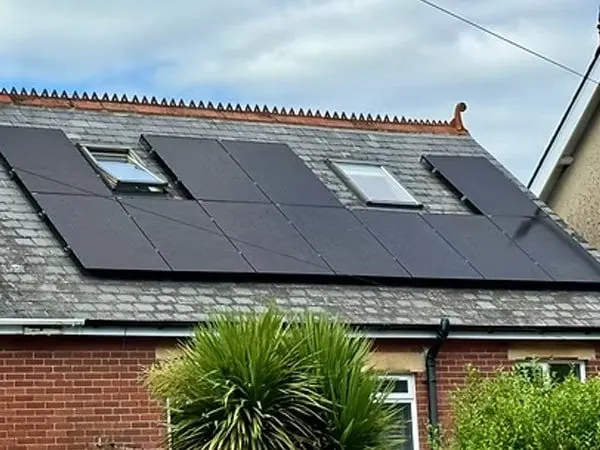
If you already have solar panels, a battery is the natural next thing to look at. The good news is that you can add a battery to existing solar panels whether we fitted them or someone else did. We regularly retrofit batteries to existing solar installations, and we design every new system so a battery can be added later on.
Here’s what a battery adds to the panels you already have, the two ways it can be connected, what we check first, and how a retrofit compares with fitting a battery alongside new panels.
What a battery adds to existing solar panels
Solar panels make most of their electricity in the middle of the day, which isn’t always when a household uses the most. Without a battery, whatever your home isn’t using at that moment goes out to the grid.
With a battery, the day works differently:
- Daytime: your panels run the house first, and the surplus charges the battery instead of going straight to the grid.
- Evening: once the sun goes down, the battery takes over and runs the house on stored solar.
- When it runs low: the grid tops you up, just as it would without a battery.
A battery never works alone. It’s paired with an inverter that converts the stored energy into usable power for your home, so on every solar battery storage installation we install and configure the two together as a single system.
A battery can also charge from the grid during cheaper off-peak periods and discharge during peak-rate hours, which helps in winter, when the panels make less.
Two ways to add a battery to existing solar
There are two ways a battery can join a solar system, and which suits yours depends on the inverter you already have and how the panels are wired.
- AC-coupled. The battery connects on the AC side of your system, through its own inverter, so your existing solar inverter can stay in place. Fox ESS, whose batteries and inverters we fit, describes AC coupling as “perfect for retrofits, integrating seamlessly with existing solar systems”.
- DC-coupled. A hybrid inverter connects to both the panels and the battery, so the battery stores energy directly from the panels. Fox ESS describes this as “ideal for new installations”.
| AC-coupled | DC-coupled (hybrid inverter) | |
|---|---|---|
| How the battery connects | Through its own inverter, on the AC side | Through one hybrid inverter that also runs the panels |
| Your existing solar inverter | Can stay in place | The panels connect to the hybrid inverter |
| What Fox ESS suggests it for | Retrofits, alongside existing solar systems | New installations, storing energy directly from the panels |
Some hybrid inverters are sold battery ready. Fox ESS says its H1-G2 hybrid inverter can be installed now, without batteries, with storage added later “with no system redesign”. It’s one way a new system can be built so a battery is easy to add down the line. Our page on the Fox ESS batteries and inverters we install sets out the range.
Fitting a battery now or adding it later
Our answer to “now or later?” is always the same: either works. Adding a battery at the same time as your panels is usually more cost-effective, because some of the labour and access costs are shared, but we design every system so a battery can be retrofitted later on if that suits your budget better.
| Battery fitted with new panels | Battery added to existing panels | |
|---|---|---|
| Visits | One installation | A separate retrofit visit |
| Cost | Usually more cost-effective, as some labour and access costs are shared | A separate visit, so those costs aren’t shared |
| Design | Designed, installed and commissioned as one system | Designed around the inverter and wiring you already have |
| Sizing | Based on the survey and your usage | Can draw on your real generation pattern |
| Grid paperwork | One route for the whole system | The battery adds to what’s already connected, which can mean a G99 application |
Fit a battery with your panels if:
- you already know you want one,
- you’d like the whole system designed, installed and commissioned in one go,
- you want to share the labour and access costs of a single installation.
Add a battery to your existing solar panels if:
- your budget suits panels first and a battery later,
- you’d like to see your generation pattern before choosing a battery,
- your household is changing, with an electric car, working from home or a heat pump on the way.
Plenty of our customers start with panels alone and add a battery once they’ve seen their generation pattern. Real figures show how much you’re exporting, and so how much a battery would have to work with.
Ready to talk it through? Arrange a free battery survey with our own team and we’ll check your existing inverter, your consumer unit and where a battery could sit.
What we check before adding a battery
A retrofit starts with a free survey, like any other job. We look at:
- your existing system, including the inverter, to work out whether the battery will be AC- or DC-coupled,
- where the battery will sit, whether that’s a garage, indoors or an outside wall,
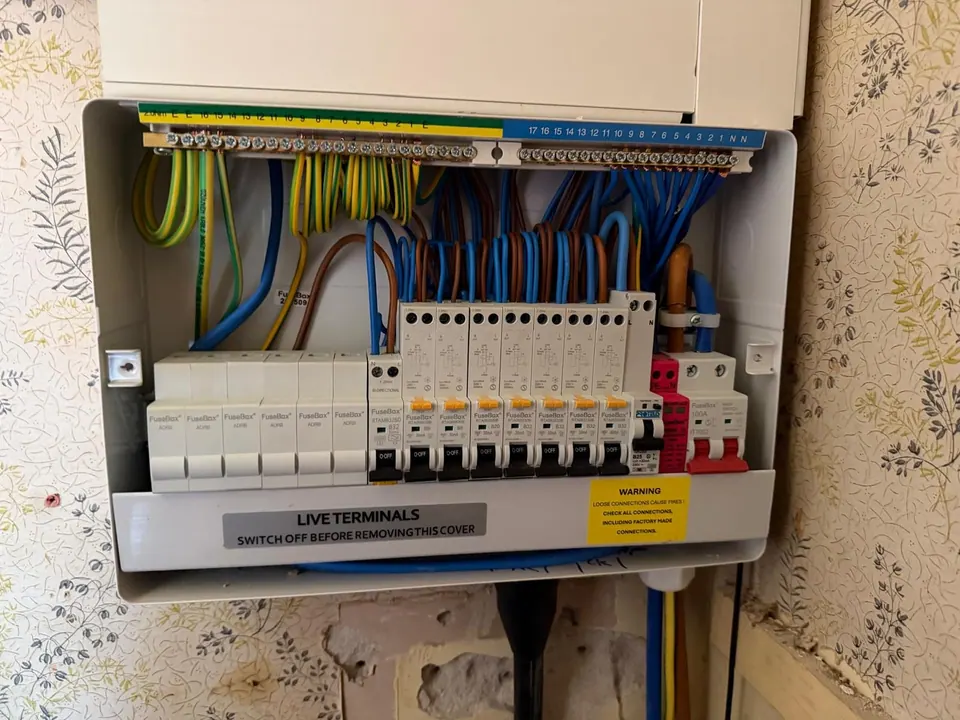
- your consumer unit, and whether anything needs updating,
- the grid connection, which is the part most people don’t expect.
Where a battery goes depends more on the property than the town. Some of Christchurch’s town-centre homes, dating from before the 1870s expansion that gave the wider area its later housing, don’t always have the garage or utility space that’s more common further out. For battery storage in Christchurch, where the unit sits is usually the first thing we work out on site. It’s the same story for battery storage installations in Poole: the location is worked out at the survey rather than assumed from the address.
Adding a battery and the grid: G98 or G99
Every solar or battery system connected to the grid goes through one of two connection routes set out by the Energy Networks Association (ENA). Under G98, a small system is installed and the local Distribution Network Operator (DNO) is notified within 28 days of commissioning. Under G99, an application goes to the DNO first, and the system can only be connected once the DNO has approved it.
The route depends on the total capacity of everything generating at your home, and the ENA counts batteries as well as panels. The G98 limit is 16 amps per phase in total, which is 3.68 kW on a single-phase supply. Solar and a battery together are likely to come to more than that, so a battery added to existing panels can need a G99 application even if the panels went in under G98. DNOs do run a fast-track application for some home-scale storage, depending on the total connected generation.
We handle all DNO notifications or applications required for your installation as standard, so there’s nothing for you to fill in. Our guide to G98 vs G99 explains both routes in more detail.
Battery first, panels later?
That can work too. You don’t need a full solar array to benefit from battery storage, because a battery can also run on cheaper off-peak electricity from the grid.
A battery or a diverter?
A battery isn’t the only way to use more of your own solar. A diverter sends surplus to your immersion heater as hot water instead, and our guide to what a solar diverter does compares the two. If you’re still deciding on panels, start with how many solar panels a home needs.
Which battery?
We install a range of leading battery brands, Fox ESS and Sunsynk among them, and recommend the right one for your property, budget and usage patterns. The photo above shows a Fox ESS inverter and battery fitted in a garage, and we’ve fitted another Fox ESS system on an outside wall, so you can see how little room one takes.
Ready to add a battery to your existing solar?
If you want to add a battery to existing solar panels, the first step is a free survey. We’ll check your inverter, your consumer unit and where the battery could go, then give you a detailed, fixed quote, with no hidden extras. Book your free home survey.
Questions we're often asked
- Can you add a battery to solar panels another company fitted?
- Yes. We regularly retrofit batteries to systems we didn't originally install. The survey is where we look at the existing inverter and wiring, so the battery and its inverter can be designed to work with what's already on your roof.
- Can I have a battery without solar panels?
- Yes. A home battery doesn't need panels to be useful: it can charge from the grid when off-peak electricity is cheap and run the house during peak-rate hours. If you add solar later, the survey looks at how the panels will work with the battery you already have.
- Will a battery keep my power on during a power cut?
- It can, but not every system does. Some battery systems support backup power during an outage, depending on the model and how the system is configured. If keeping the lights on in a cut matters to you, tell us at the survey and we'll talk you through the options.
- Where does the battery go?
- Usually in a garage, indoors or on an outside wall. Modern units are compact, but the right spot depends on the property rather than the address, so it's confirmed on site at your free survey before any work is agreed.
- Do I need to tell the DNO about a new battery?
- Yes, but you won't have to do it yourself. A battery goes through G98 or G99 like any generation, and because the ENA counts it alongside your panels, a retrofit can move onto G99, with approval needed before it's connected. We handle all DNO notifications or applications as standard.