How many solar panels do I need?
How many solar panels do I need? Most homes fit 10 to 16. How roof size, direction, pitch, shading and your electricity use decide the number for yours.
Electrical ExchangePublished · Updated · 7 min read


The quick answer
Most homes need somewhere between 10 and 16 solar panels. How many you need comes down to two things: how much usable roof you have, which depends on its size, the way it faces, its pitch and any shading, and how much electricity your household uses. We size each system to your usage, up to what your roof can take, and confirm the exact number at a free on-site survey.
It’s one of the first questions people ask us when they start thinking about solar. How many solar panels you need depends on your roof and your household, and we confirm the number at a free on-site survey.
Here’s what goes into that number, how our homepage estimator works it out, and why the survey always has the final say.
How many solar panels you need: two questions decide it
Sizing a solar system means answering two questions at the same time:
- How many panels can your roof take? That’s down to space, shape, direction and shade.
- How many does your household need? That’s down to how much electricity you use, and when you use it.
We size each system to what your home actually uses, up to what your roof can take. That’s how we approach every solar panel installation across Dorset. There’s no standard package, and on a big roof the question is often how much of it your usage justifies, not whether solar makes sense at all.
What decides the number, at a glance
| What we look at | Why it matters | What it does to the panel count |
|---|---|---|
| Roof size and shape | Panels have to sit clear of roof windows, chimneys and vents | Sets the most panels the roof can hold |
| Which way it faces | South-facing roofs with minimal shading perform best | East or west roofs may need more panels for the same output |
| Pitch | The angle changes how squarely the panels face the sun | Factored into the layout and the design |
| Shading | Trees, chimneys and neighbouring buildings cut output | Panels are laid out with it in mind |
| How much electricity you use | Your bills show what your household gets through in a year | The main thing a system is sized to |
| What’s coming | An electric car, a heat pump or air conditioning adds to your use | Can justify more panels, if there’s room |
Roof size and shape
The usable area of a roof is usually smaller than it looks from the street. Panels have to sit clear of roof windows, chimneys and vents, and a roof broken up by dormers or hips has less unbroken space than a plain rectangle.
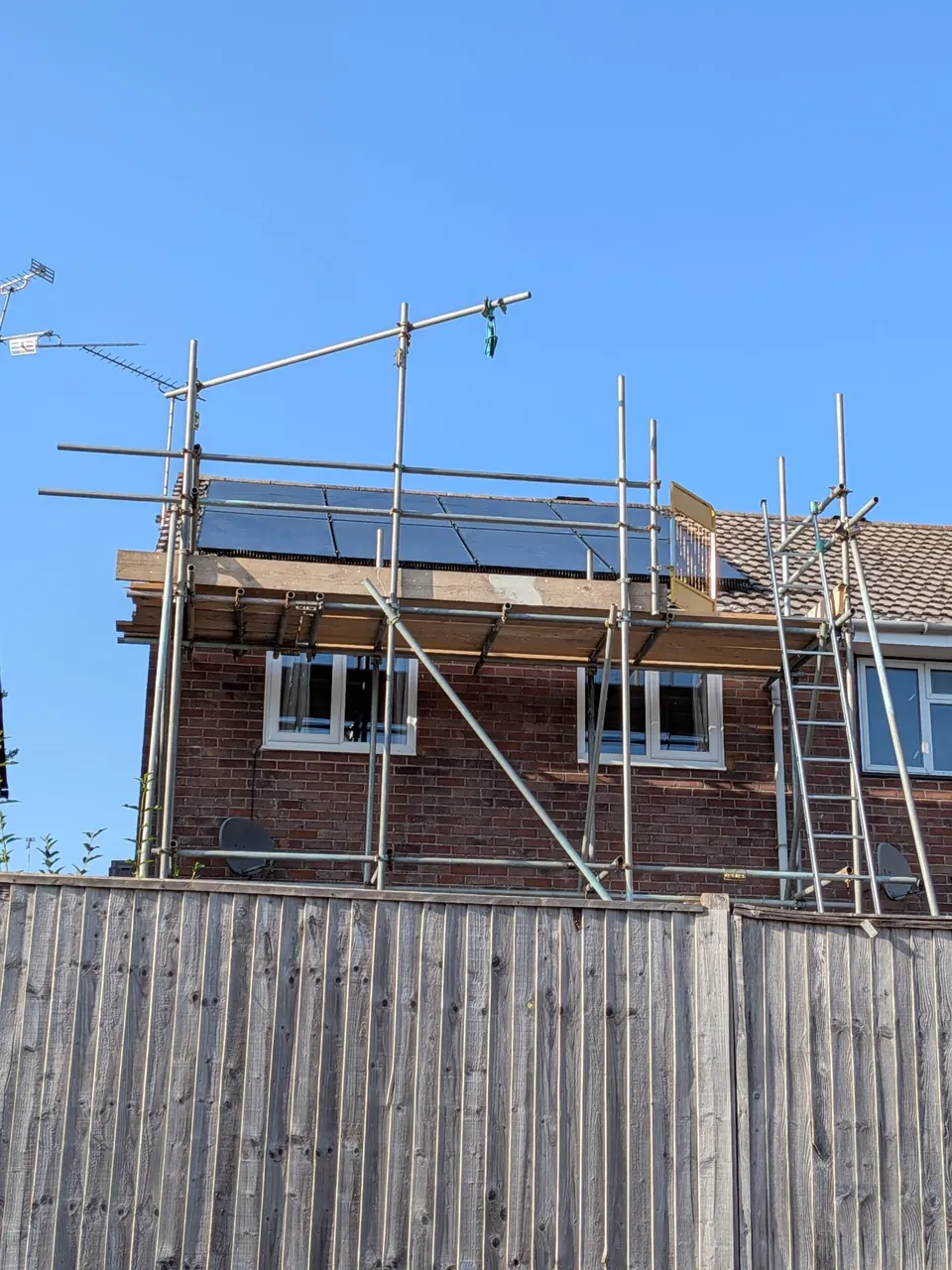
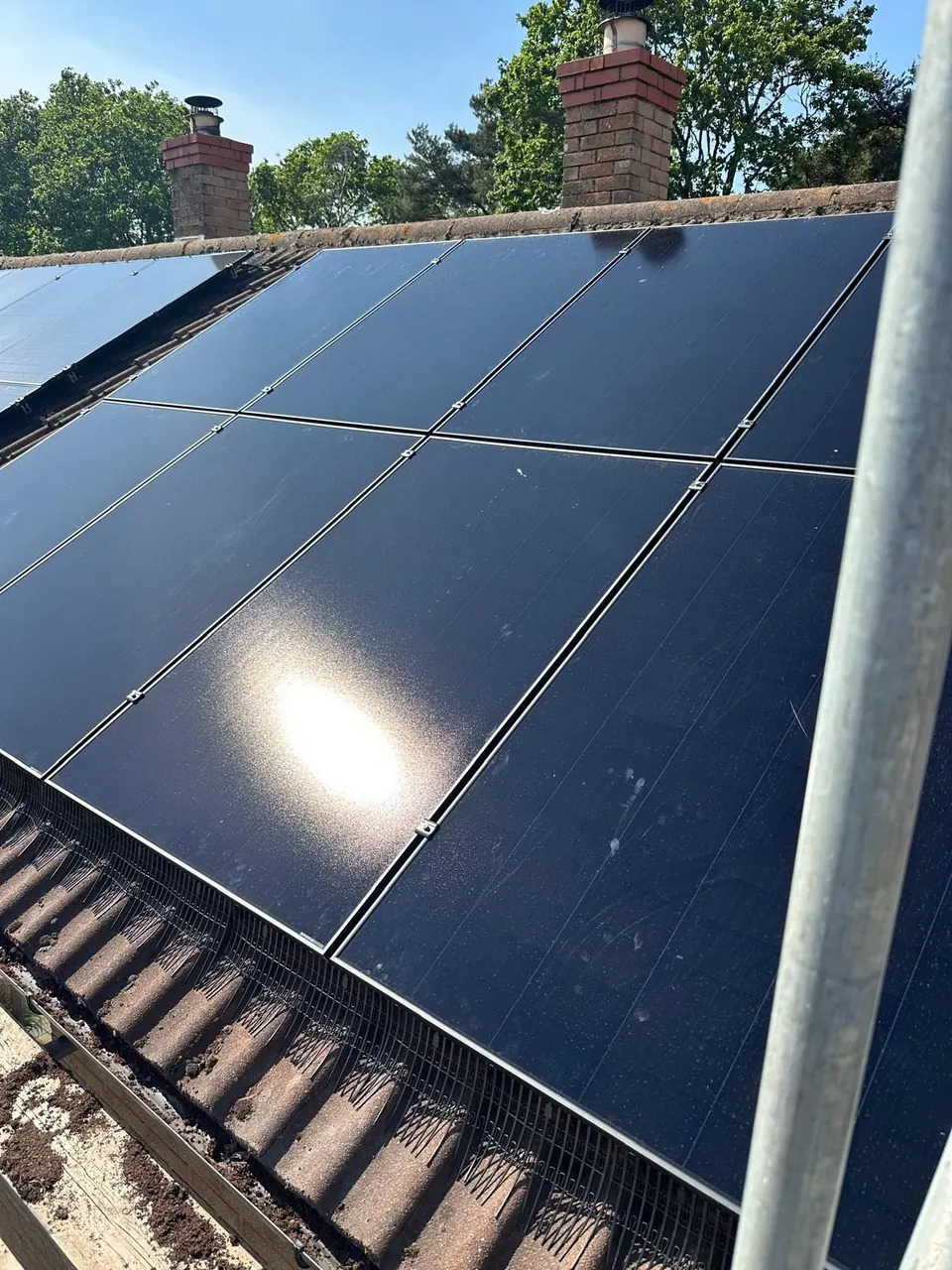
That doesn’t rule solar out. At a red-brick home in Christchurch, we fitted a full-width array around two existing roof windows. At the dormer bungalow in the photo above, we used two roof pitches, the main rear-facing slope and a smaller front-facing section, to make the most of a fairly complex roofline. Both are among our solar panel installations in Christchurch, close to our base on Airfield Way.
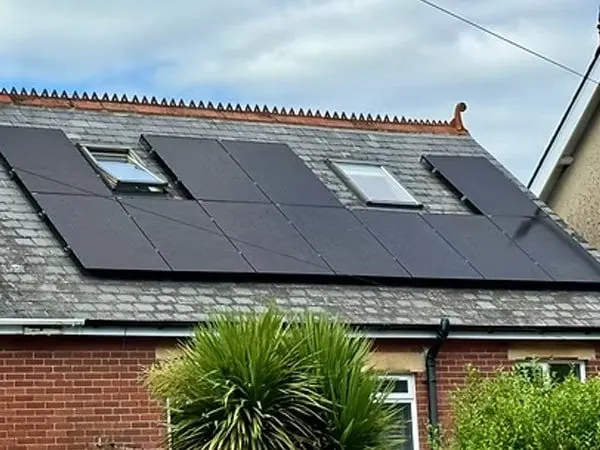
Bungalow roofs are often a simpler, larger single face that suits a bigger array. That’s typical of Highcliffe, where detached bungalows and chalet bungalows spread across much of the area in the post-war decades. You can read more about solar panel installation in Highcliffe, from those bungalows to the older homes nearer the coast. Older roofs can have irregular pitches or period features to work around.
Which way the roof faces
South-facing roofs with minimal shading perform best. East and west-facing roofs still work, as do most roof types and orientations, but each panel makes less electricity over a year than it would facing south.
So if your roof faces east or west, you may want more panels to make the same amount of electricity, as long as there’s room for them. Using two roof faces is another option, and it’s something we’ll look at on your survey.
Pitch
The angle of your roof affects how squarely the panels face the sun through the year. We check the pitch of each roof face on the survey and design around it.
Shading
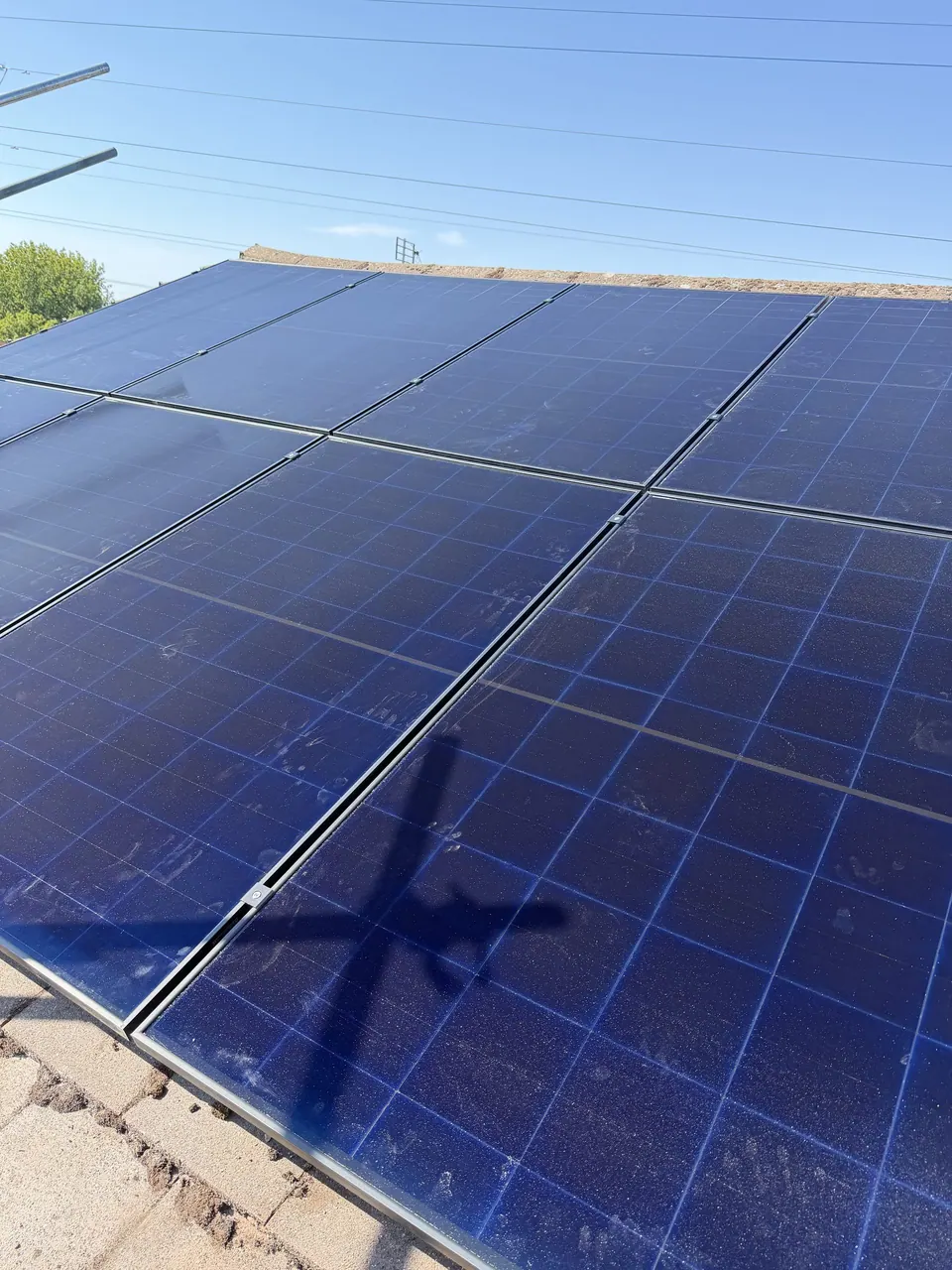
Shade from a tree, a chimney or a neighbouring building cuts what the panels in its shadow can produce. We look at what could shade your roof and lay the panels out with that in mind.
How much electricity you use
The roof sets the upper limit. Your usage decides how much of it is worth filling. We look at:
- How much you use: your bills show how much electricity your household gets through in a year.
- When you use it: a household that’s home in the day uses more of its solar as it’s generated.
- What’s coming: an electric car, a heat pump or air conditioning will all add to what you use, so tell us if any of them are on your list. We install air conditioning for Dorset homes as well, so we can size the panels with it in mind.
- Whether you’d add a battery: solar battery storage keeps surplus from the day for the evening, so more of what you generate gets used at home. We fit Christchurch home batteries and battery storage for Poole homes at the same time as the panels or later on.
Bigger homes can change the conversation. Some of the larger detached houses around Poole’s waterside have bigger roof faces and heavier electricity use than a typical semi, so the question becomes how much roof to use. Our Poole solar panel installations include one using Astronergy N7 bifacial panels.
Panel count isn’t the whole story
Panels come in different wattages, so we also talk about system size in kWp (kilowatts peak), the combined rating of all the panels. Two systems with the same number of panels can be different sizes if the panels are different.
Ready to talk it through? Book a free solar survey with our own team and we’ll measure up your roof, talk through your bills and work out how many panels make sense for your home.
How our estimator works out a panel count
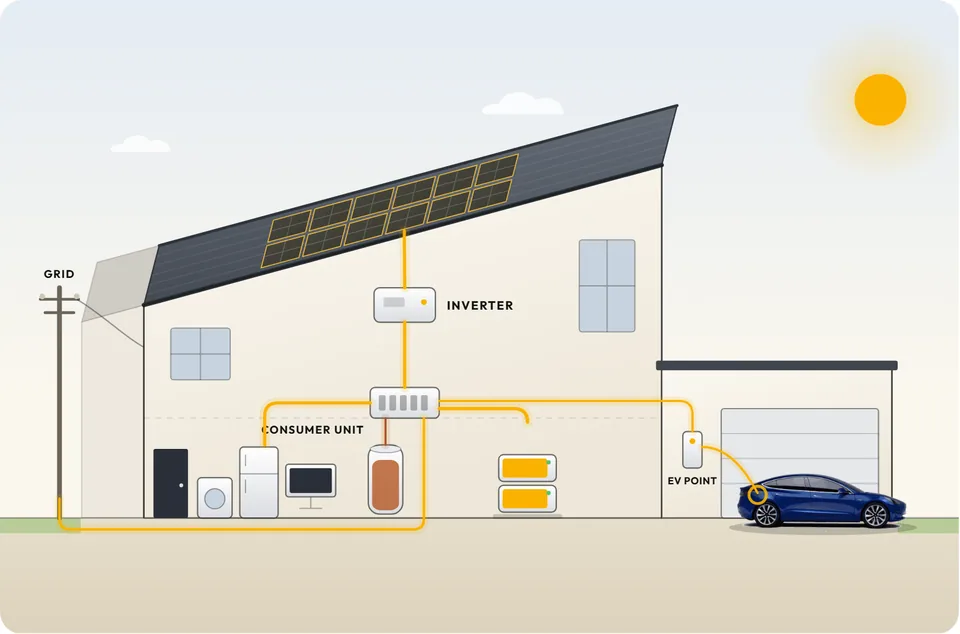
The home energy estimator on our homepage gives you a first picture before anyone visits. It sizes a system the same way we do: to your usage, up to what your roof can take. Here’s what each setting changes.
| Estimator setting | Changes the number of panels? | What it changes |
|---|---|---|
| Your home | Yes | A starting point for how much roof a home like yours usually has |
| Roof size | Yes | Scales that up or down, shown as “room for” a number of panels |
| Your electricity bill | Yes | A rough figure for your yearly use, the main thing the panels are sized to |
| Electric car miles a year | Yes | Adds part of the car’s charging to what the system covers |
| Which way your roof faces | Yes | How much each panel is expected to make in a year |
| Who’s home in the day? | No | How much of your solar you use as it’s generated |
| Battery | No | How much surplus is stored for the evening |
| How you heat your home | No | With gas or oil heating, a diverter heats your water from surplus sun |
A terrace usually has less room than a detached house or a bungalow, so the starting point differs from home to home. Facing east, west or north, each panel makes less in a year, so the estimator suggests more panels for the same usage, up to the room on your roof, and it never suggests more than will fit. “Recommended” in the battery setting picks a size to cover the evening share of your usage.
Change anything and the drawing and the figures follow. Underneath the results, “How we worked this out” lists the main assumptions the estimator uses.
Size decides the grid paperwork too
The size of a system also decides how it’s connected to the grid. A small system is installed and the local network operator is notified afterwards, while a larger one, and many systems that pair solar with a battery, needs the network operator’s approval before it’s connected. We handle that as standard, and our guide to G98 vs G99 explains the two routes.
Why the survey has the final say
The estimator can’t see your roof. It doesn’t know about the roof window, the chimney or the neighbour’s tree, and it works from typical prices and sunshine for a Dorset home rather than your own, which is why our solar panel systems in Dorset are always designed after a survey.
On the survey we check orientation, pitch and shading on your specific roof, look at how your household really uses electricity, and design the system from there. You then get a detailed, fixed quote setting out the panels, the system size and the products in it. Our guide to what happens at a solar panel survey walks through the visit, and if a battery is on your list, read about adding a battery to existing solar panels.
So, how many solar panels do you need?
For most homes, somewhere between 10 and 16. For yours, the honest answer comes once we’ve seen your roof and talked through how you use electricity. Book a free on-site survey and we’ll tell you exactly how many solar panels you need, and why.
Questions we're often asked
- Do solar panels still work on cloudy days?
- Yes. Panels generate electricity from daylight rather than direct sunshine, so they keep producing on overcast days. Output is naturally higher in summer than in winter, but a well-designed system works all year round in the UK.
- Will solar panels work on my roof?
- Most roof types and orientations can support solar, though south-facing roofs with minimal shading perform best. On your free survey we check the roof's pitch, orientation and shading, along with roof windows, chimneys and its condition, before we design anything.
- How much does a solar panel installation cost?
- It depends on your roof, your household's electricity use and the size of system that makes sense for your home, so we don't quote a price without seeing the property. After a free on-site survey you get a detailed, fixed quote, with no hidden extras and no pressure to sign on the spot.
- Does the estimator on your homepage give me a quote?
- No. It gives you a first picture using typical prices and sunshine for a Dorset home, so you can see how your bill, your roof and your plans change the system. A quote comes after a free on-site survey: a detailed, fixed quote for your own roof and usage.
- Can I add a battery later if I start with panels only?
- Yes. Adding a battery at the same time is usually more cost-effective, but we design every system so a battery can be retrofitted later if that suits your budget better. A battery doesn't change how many panels fit on your roof, but it does let you use more of what they generate.