What happens at a solar panel survey?
What happens at a free solar panel survey: who turns up, what we check on your roof, consumer unit and supply, and what goes into your fixed quote.
Electrical ExchangePublished · Updated · 7 min read


The quick answer
A solar panel survey is a free, no-obligation visit from our own team, the same people who design and install the system. We check your roof's orientation, pitch, shading, usable space, condition and access, look at your consumer unit and electricity supply, and ask how your household uses energy. Within 48 hours you get a detailed, fixed quote, with no hidden extras.
Every solar installation we take on starts the same way: with a free solar panel survey. It’s where we find out what your roof can take and what your household actually needs, and it’s what your fixed quote is built on.
There’s no obligation and no pushy sales, just an honest look at what your property needs. It’s the first step of all our solar panel installations across Dorset and Hampshire. Here’s what happens, from the moment we arrive to the quote that follows.
Who carries out your solar panel survey
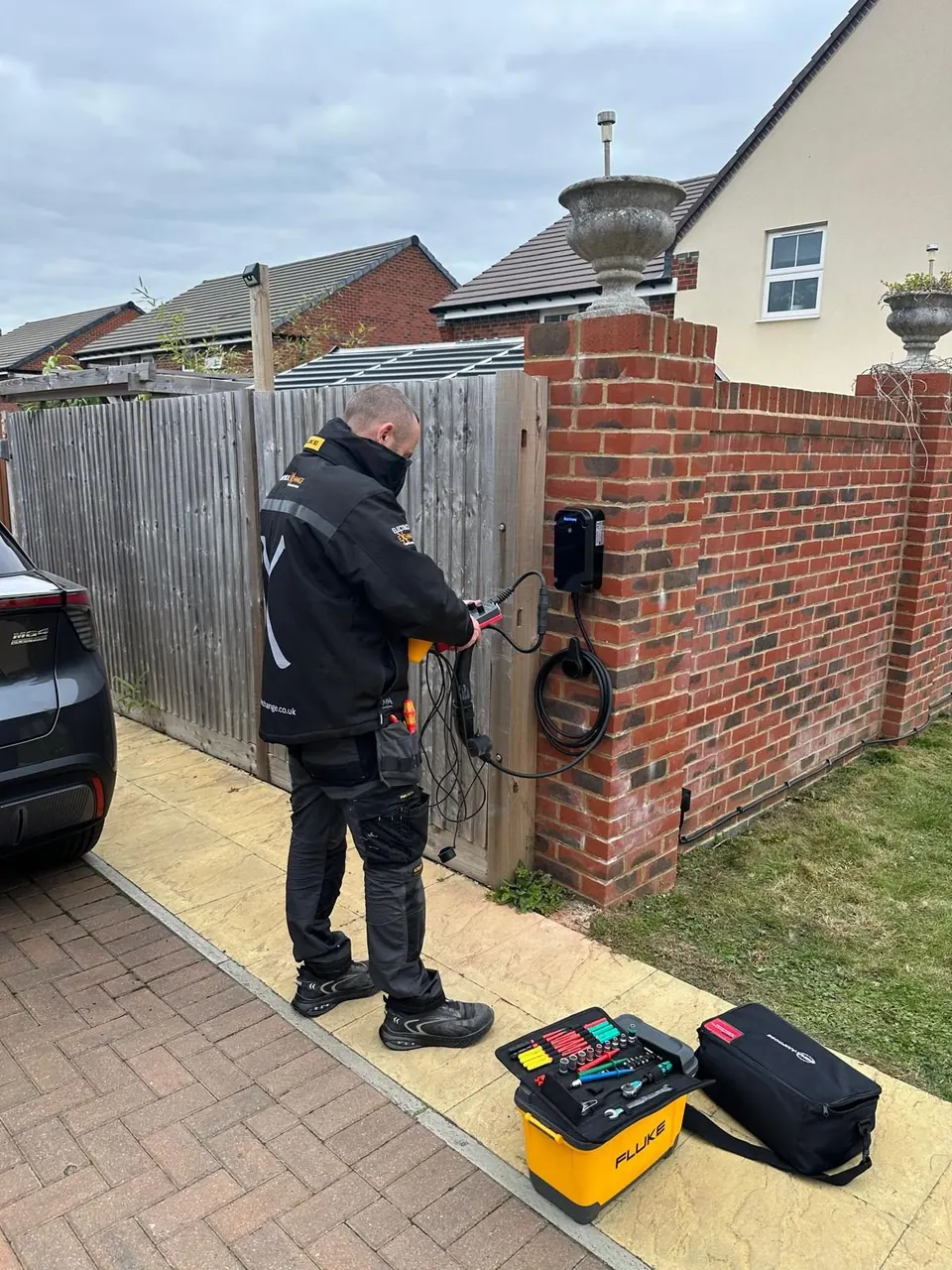
You won’t meet a sales rep. Your survey is carried out by our own in-house team: the same people who survey, design and install your system, and never a subcontractor.
That matters more than it sounds. The person looking at your roof and your consumer unit is the person who’ll be fitting the system, so what we tell you on the survey is what we deliver on installation day.
Day 1: what we check on a solar panel survey
We look at three things: the roof, your electrics and the way your household uses energy.
The roof
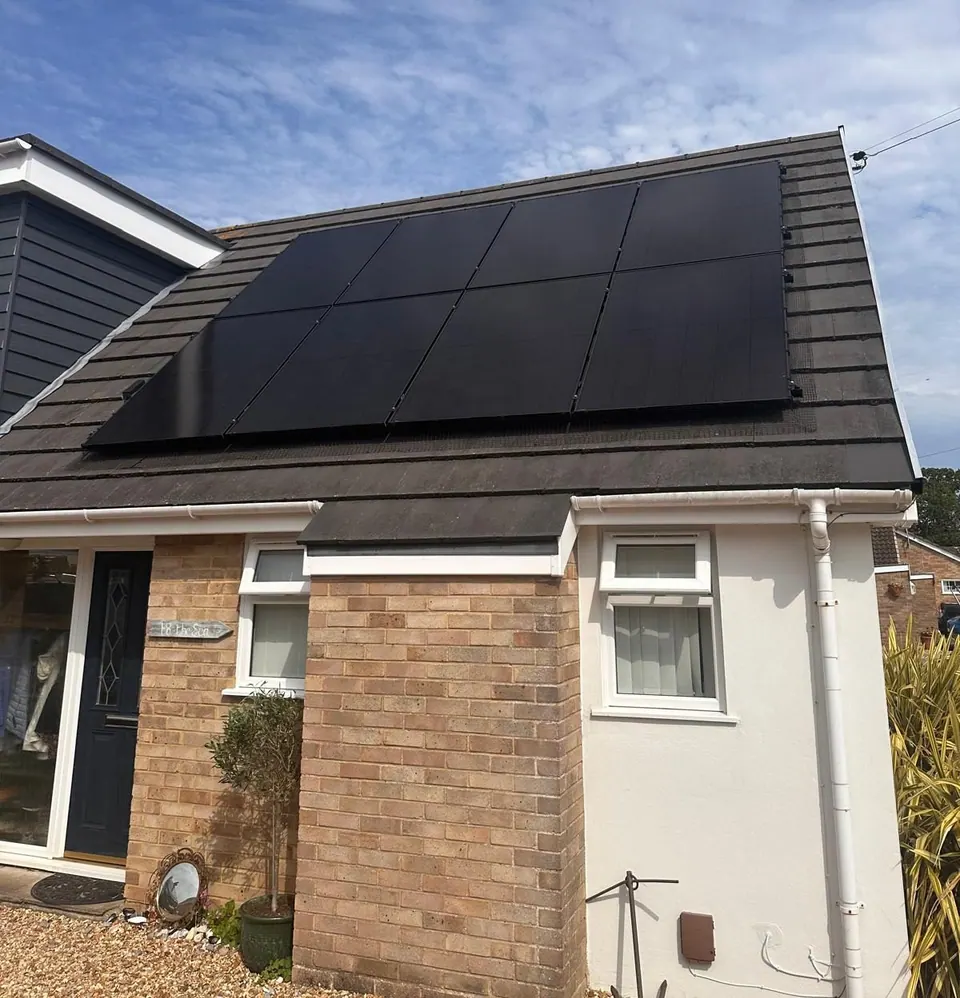
For solar panels, the roof decides a lot. We check:
- Orientation: which way each part of the roof faces. South-facing roofs with minimal shading perform best, but most roof types and orientations can support solar.
- Pitch: the angle of each roof face.
- Shading: trees, chimneys, dormers and neighbouring buildings that could put the panels in shade.
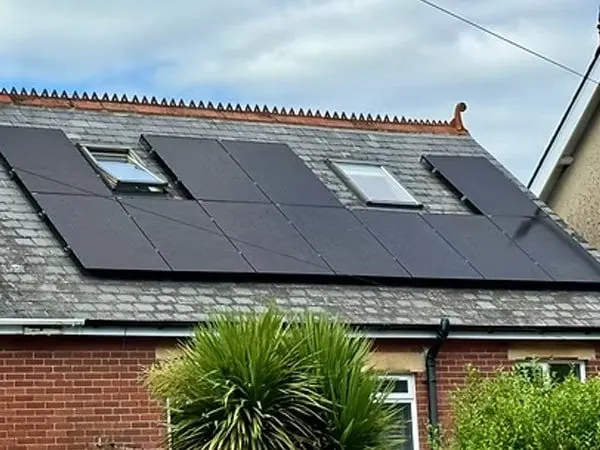
- Usable space: roof windows, chimneys, vents and more than one pitch all change how many panels fit and how they’re laid out.
- Condition and structure: on an older roof especially, we look at the roof itself before we confirm a layout.
- Access: whether scaffolding is needed to reach the roof safely. If it is, we factor it in on the survey, so it doesn’t turn up later as a surprise.
Your consumer unit
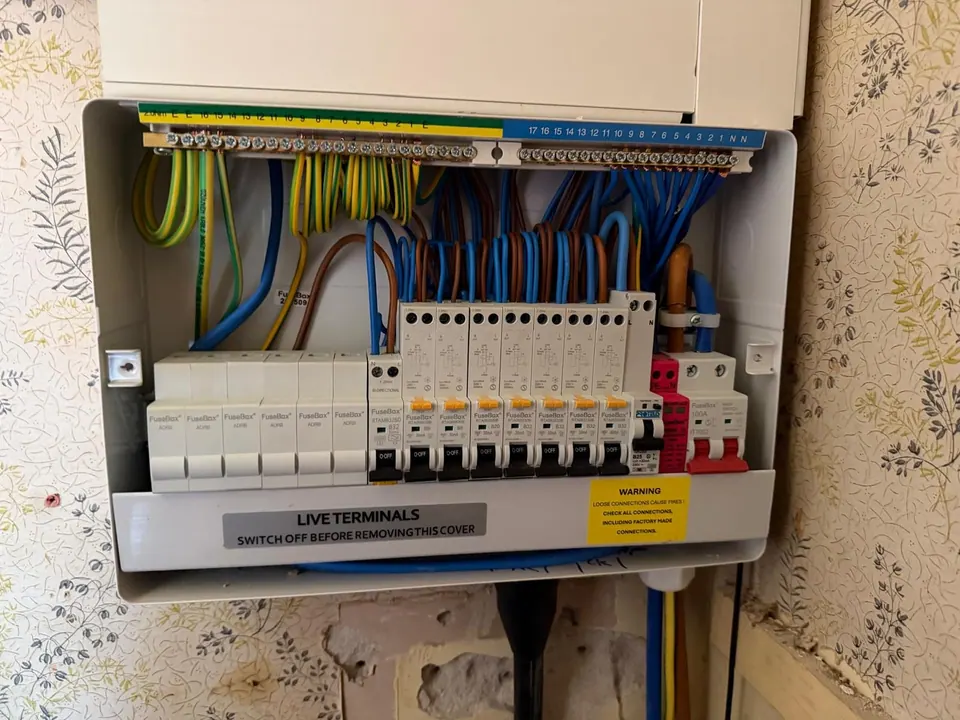
Your consumer unit, which many people still call the fuse box, is usually where a new solar or battery circuit joins your home’s wiring. So we look at its age and condition. If it needs bringing up to current regulations before anything new can be connected, we’ll tell you on the survey, and the upgrade goes into your quote. Consumer unit upgrades are one of the most common jobs for the electricians on our own team. The same electricians are behind our rewires and upgrades in Poole, Highcliffe electrical work and consumer unit upgrades in Christchurch.
Your supply
We also look at the electricity supply coming into the property: whether it’s single-phase or three-phase, and how much spare capacity it has. For solar and batteries, that feeds into the grid connection paperwork we handle for you. Our guide to G98 vs G99 explains how that works.
Where everything will go
The survey is also when we work out the practical layout:
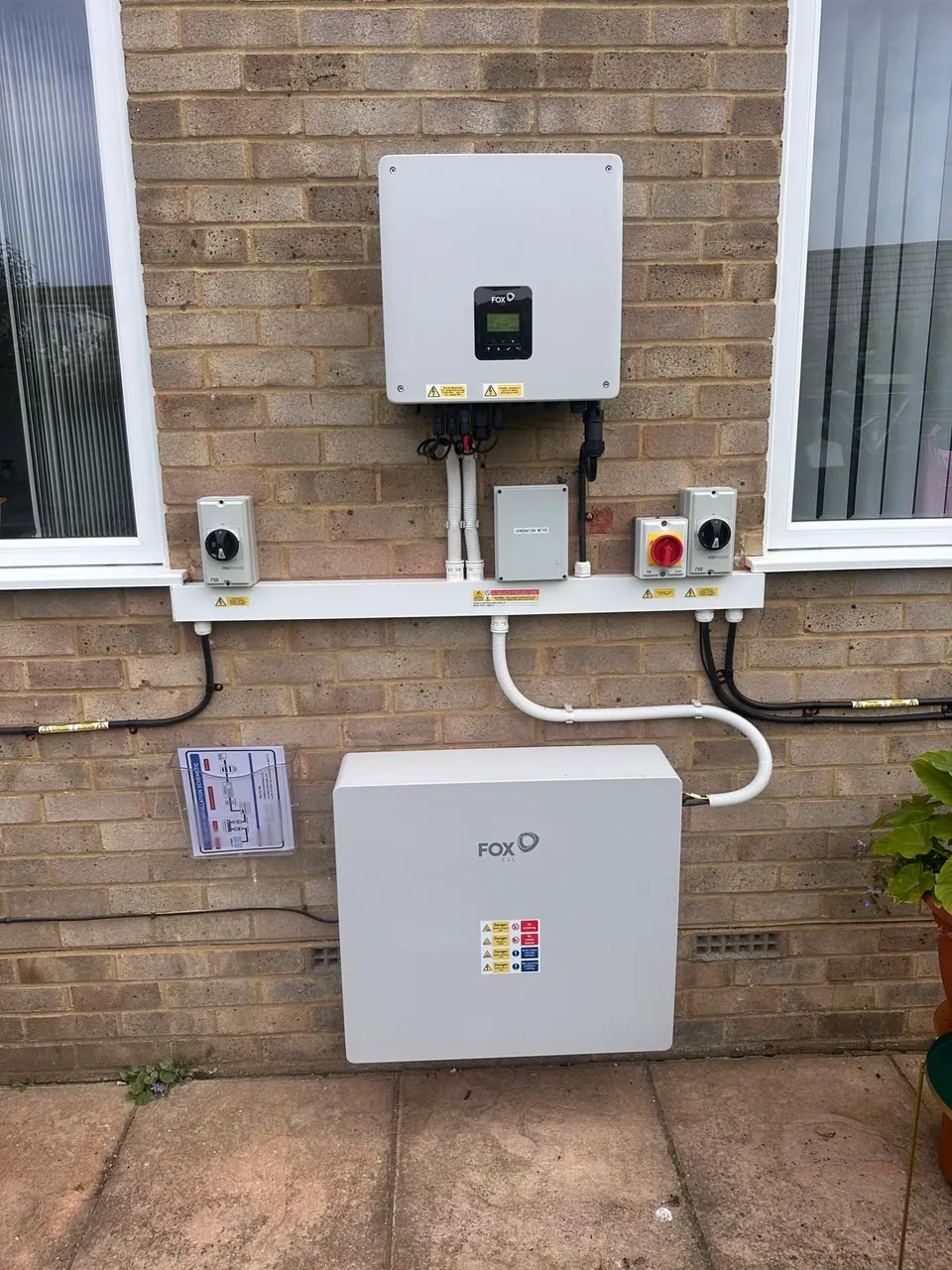
- where the inverter and any battery would sit, such as a garage, a utility room or an outside wall,
- the cable routes between the panels, the inverter and your consumer unit.
If battery storage alongside your panels is on your list, now or later, this is when we plan where it could go.
How you use energy
We’ll ask about your household: roughly what your electricity bills look like, who’s at home in the day, how you heat your water, and whether an electric car or a heat pump is on the horizon.
The more we know, the better we can size the system. A household that’s at home all day uses its solar differently from one that’s out at work, and that changes what’s worth fitting.
If your home is listed or in a conservation area, let us know. We’ll check what that means for your installation before we design anything.
What the survey checks, and how it shapes your quote
| What we check | Why it matters | How it shapes your quote |
|---|---|---|
| Orientation, pitch and shading | How much each panel can generate | The panel layout and the design |
| Usable roof space | Roof windows, chimneys and vents limit where panels go | How many panels fit |
| Roof condition and structure | Older roofs especially need checking | Confirmed before the layout is fixed |
| Access | Some roofs need scaffolding to reach safely | Scaffolding included if it’s needed |
| Consumer unit | It’s usually where new circuits join your wiring | Any upgrade included |
| Electricity supply | Single- or three-phase, and how much spare capacity | The grid connection route |
| Your usage and plans | What your household uses, and what’s coming | The size of the system |
What we find on local roofs
Every roof is different, and the towns we cover each have their own mix.
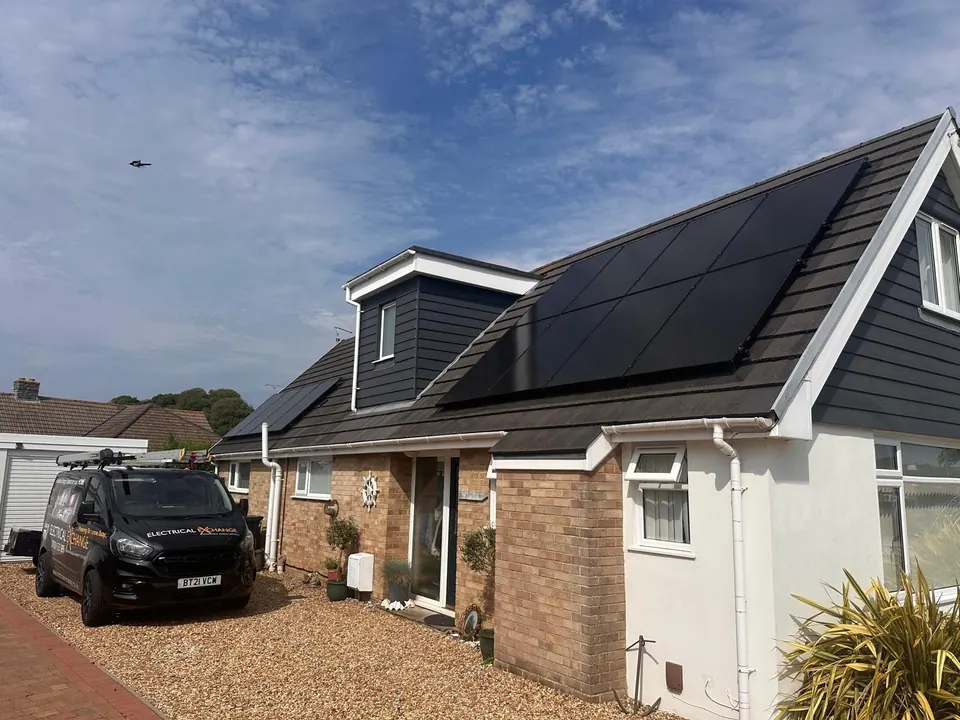
- Christchurch. The older streets around the Priory keep to a tighter, historic layout with a real mix of orientations and roof pitches, while housing built since the town’s 1870s expansion tends to have larger, more uniform roof faces that suit a bigger array. Our solar panels in Christchurch include a dormer bungalow with an array across two pitches.
- Highcliffe. Housing developed in layers: older estates and villas, homes from the 1920s and 30s nearer the coast, and the detached bungalows and chalet bungalows of the post-war decades. Two houses on the same road can need genuinely different mounting approaches, which is why our Highcliffe solar installations are sized at the survey, never from a standard package.
- Poole. From the harbourside up through Parkstone and Broadstone to Sandbanks and Canford Cliffs, a quote for a harbour-view apartment looks nothing like one for a semi further inland. Some larger waterside homes have bigger roof faces and heavier electricity use, so the question becomes how much roof to use. The photo above shows one of our jobs there; see our solar panel installation in Poole.
Ready to talk it through? Book your free solar panel survey and our own team will look at your roof, your consumer unit and your supply, then give you a fixed quote.
Within 48 hours: your design and fixed quote
Based on the survey, we design a system for your property, sized to your roof, your electrics and your usage. Within 48 hours you get a detailed, fixed quote, with no hidden extras and no pressure to sign on the spot.
It’s an itemised quote rather than a ballpark, and it covers:
- the system we’ve designed for you, and the products in it,
- the installation itself,
- scaffolding, if your roof needs it,
- any consumer unit work the survey turned up,
- the DNO notification or application your system needs, which we handle as standard,
- the product and workmanship warranties that apply to your system.
If you’d like to see how the number of panels is worked out, read how many solar panels a home needs.
Installation: usually 1–2 days
If you decide to go ahead, our own team carries out the installation, working from the design your survey produced. A solar installation usually takes one to two days: the mounting system, the panels, the DC wiring and the solar inverter.
Already have panels and want to add storage? The survey then looks at your existing system instead, as our guide to adding a battery to existing solar panels explains.
What the survey doesn’t do
A survey doesn’t commit you to anything. You get an honest look at what your property needs and a detailed, fixed quote to think over, and whether you go ahead, and when, is entirely up to you.
Ongoing: handover and support
When the work’s finished, the system is tested, commissioned and certified, and you receive a full handover pack. We talk you through your new system, hand over the paperwork, and stay on hand with technical support and guidance long after installation is signed off.
Before your solar panel survey
A few things make the survey quicker and the quote more accurate:
- a recent electricity bill, or your yearly usage from your supplier,
- clear access to your consumer unit,
- a list of anything you’re planning, such as an electric car, a heat pump or a battery later on.
Book your solar panel survey
We cover Dorset and Hampshire from our Christchurch base. Whether you’re weighing up panels, a battery or both, the first step is the same: a free solar panel survey with our own team. Book your survey and we’ll take it from there.
Questions we're often asked
- Is the solar panel survey really free?
- Yes. Every project starts with a free on-site consultation, with no obligation and no pushy sales, so we can assess your property and give you an accurate quote before any work begins. There's no pressure to sign on the spot, and the quote is yours to think over.
- Who carries out the survey?
- Our own in-house team. There are no sales reps, and we never use subcontractors: the people who assess your property are the same people who install and sign off the work, so if anything needs looking at later, you'll be dealing with people who know your system.
- What should I have ready?
- A recent electricity bill, or your yearly usage from your supplier, is the most useful thing to have to hand. Clear access to your consumer unit helps too, along with a list of anything you're planning, such as an electric car, a heat pump or a battery.
- Do you cover my area?
- We cover Dorset and Hampshire from our base at Aerodrome Studios on Airfield Way in Christchurch, including Bournemouth, Poole and Highcliffe. Get in touch and we'll confirm a survey time based on where you are.
- What if my roof isn't right for solar?
- Most roof types and orientations can support solar, and the survey is how we find out for certain. If panels aren't the right fit, a battery can still be worth having on its own, because it can charge from the grid during cheap off-peak periods and discharge during peak-rate hours.