Do You Need a New Consumer Unit for an EV Charger? (2026)
Often not. A charger needs its own circuit and RCD, which many boards can give. See when an old board, a Type AC RCD or the main fuse means more work.
Electrical ExchangePublished · Updated · 8 min read


The quick answer
Often not. An EV charger needs a circuit of its own with its own RCD protection: a Type A RCD where the charger has 6 mA DC fault detection built in, as most do, or a Type B RCD (or a Type A with a separate 6 mA DC detecting device) where it doesn't (BS 7671, Regulation 722.531.3.101). A board with a spare way and room for that can usually stay. A full board, an older Type AC RCD in front of the spare way, or rewireable fuses with no RCDs usually mean a small separate consumer unit for the charger, or a new board. Your main fuse, your total demand and your earthing are checked either way.
Do you need a new consumer unit for an EV charger? Often not. A charger needs a circuit of its own with its own RCD protection, so the question is whether your board can give it those safely. A modern board with a spare way usually can. A full board, an old fuse box or a spare way behind an older Type AC RCD usually can’t, and then it’s a small separate unit for the charger or a new board.
We’re electricians based in Christchurch. The rules here are BS 7671:2018+A4:2026, the IET Wiring Regulations, which new work has had to meet since 15 October 2026.
Can your consumer unit take an EV charger as it is?
It depends on what’s in the board and what sits in front of the spare way. Section 722 of BS 7671, which covers EV charging, supplies each charge point individually from its own final circuit (Regulation 722.533.101), so a charger can’t share a circuit with sockets. Your supply and earthing decide the rest.
| What we find | Can the charger go on it? | What usually happens |
|---|---|---|
| A spare way with room for the charger’s own RCD | Usually, yes | A new circuit from that way |
| A spare way behind an RCD shared with other circuits | Only with its own RCD added | A suitable RCBO, if the board takes one, or a separate unit |
| An older Type AC RCD in front of the spare way | Not as it stands | A separate unit or a new board |
| No spare way left | Not without more space | A separate unit or a new board |
| Rewireable fuses, no RCDs | Not without adding RCD protection | A separate unit or a new board |
| A plastic board from before 2016 | Yes, with a suitable spare way | Plastic alone isn’t a reason to replace it |
The RCD an EV charger circuit needs
Regulation 722.531.3.101 asks for individual protection by an RCD of at least Type A, tripping at no more than 30 mA, plus protection against DC fault currents above 6 mA, unless the circuit uses electrical separation. The DC protection can be in the charger or in the installation. Where the charger lacks it, BEAMA’s March 2025 guide lists the options: a Type B RCD, or a Type A or Type F RCD paired with a residual direct current detecting device (RDC-DD).
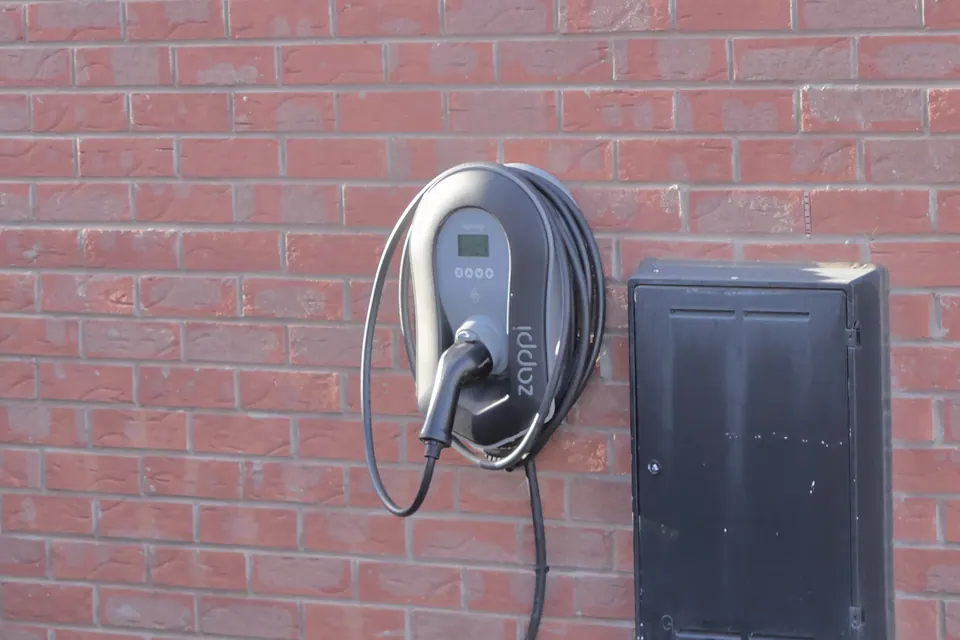
Hager, the switchgear maker, says most charger makers build a 6 mA DC detecting device in, so a Type A RCD is the usual choice at the board. The Fast Amps Alpha7, one of the chargers we fit, lists integrated 30 mA AC and 6 mA DC earth fault protection. The RCD must also disconnect all live conductors, neutral included (Regulation 722.531.3.1), which is why Hager says a single-module RCBO shouldn’t be used.
Why a spare way behind an old RCD often won’t do
Older boards often have one or two RCDs, each covering a row of circuits, and some are Type AC. Hager warns that DC from a car could blind an upstream Type AC RCD, leaving every circuit it covers without residual current protection. BEAMA says a Type AC RCD shouldn’t be fitted upstream of a Type A, F or B RCD, as DC of any size may impair it. Amendment 4 (2026) adds a note to Regulation 531.3.3 that RCDs in series should all suit the residual currents their loads can produce, and Electrical Safety First’s coding guide (Issue 7.4, August 2026) marks a Type AC RCD where a Type A is required as C3, improvement recommended.
Good to know A spare way only helps if the charger can have its own suitable RCD there, with no older Type AC RCD in front of it.
Old fuse boxes and rewireable fuses
Old isn’t automatically unsafe. Electrical Safety First’s guide to replacing a consumer unit (Issue 5.2, September 2026) says a unit need not be replaced simply because it has rewireable fuses or no RCD, as there may be other ways to provide that protection.
An old fuse box seldom has a spare way, let alone room for the right RCD. Before any new circuit, Regulation 132.16 also needs existing equipment, including the network operator’s, to be adequate for the extra load, with adequate earthing and bonding. On an older installation, an electrical installation condition report is a sensible first step.
In England, a new circuit and a replacement consumer unit are both notifiable under Part P of the Building Regulations (regulation 12(6A)), and Electrical Safety First says a home charge point must be installed by a competent electrician qualified to fit them, so it isn’t DIY work.
Plastic consumer units and the metal-case rule
Since 1 January 2016, Regulation 421.1.201 has required consumer units in homes to have a non-combustible enclosure, with steel as the example. It came with Amendment 3 to the 17th Edition (2015), after fire investigators reported more fires in plastic consumer units, almost always from poor connections.
It isn’t retrospective. The IET’s answer is that adding a new circuit doesn’t mean swapping a plastic board for metal, provided there’s a spare way, and Electrical Safety First codes a plastic board C3 only under a wooden staircase or on the sole escape route. Anything new is different: a replacement board, or an extra unit for the charger inside the house or in an attached or nearby garage, must be non-combustible. The IET says the rule isn’t intended for a unit mounted outdoors on an outside wall.
Good to know A plastic board with a suitable spare way can take a charger circuit; it’s a new or extra unit indoors that has to be non-combustible.
Surge protection when a charger goes in
Since Amendment 2 (2022), corrected in May 2023, Regulation 443.4.1 has required surge protection where a surge could cause serious injury or loss of life, or significant financial or data loss. Otherwise, the IET says, the default is to fit surge protection devices (SPDs) unless the owner declares them unnecessary and accepts the risk, recorded on the Electrical Installation Certificate. The IET also lists EV charging among the technologies making switching surges more likely in homes. If the board has no room, an SPD can go in an enclosure beside it.
A separate small consumer unit for the charger
Where the main board is full, behind a Type AC RCD or too old to extend, a small separate unit for the charger can be neater. In its simplest form it’s a one-way unit, a double-pole main switch and one outgoing way, holding the charger’s own RCD protection. Hager describes the same idea: with no space for the new Type A RCD in the board, it can go closer to the charger.
It doesn’t make the old board any newer, and indoors it must be non-combustible. If the board is due for renewal anyway, replacing the consumer unit is the alternative, and Electrical Safety First’s guide says a new board with spare capacity for EV charging and other future circuits should be considered where practical.
Your main fuse, maximum demand and the network operator
A typical home charger draws up to 32 A for hours: the Fast Amps Alpha7 is rated at 7.4 kW and 32 A. Added to your home’s maximum demand, that decides the route with the network operator, as the Energy Networks Association (ENA) sets out:
| With the charger added | Route | Timing |
|---|---|---|
| Maximum demand 60 A or less per phase, adequate supply, no safety concerns | Connect and notify | Report within 28 days |
| New maximum demand of 60 A to 100 A | Apply before installing | Operator replies within 10 working days |
| Already over 60 A, no supply issues, and a fail-safe load limiter holds the total to 60 A | Connect and notify | Report within 28 days |
| Looped supply, unknown cut-out rating or a cut-out concern | Contact the operator first | Before any work |
BS 7671 lets load curtailment count towards maximum demand (Regulation 722.311.201), and Amendment 4’s redrafted Regulation 536.4.202 protects the board itself, and any RCD inside it, from overload.
Around Christchurch the operator is SSEN (Scottish and Southern Electricity Networks). It asks for photos of the cut-out, fuse and meter, wants any upgrade finished before the charger goes in, and asks that the cut-out isn’t opened unless you’re authorised. A bigger main fuse, say 60 A to 100 A, is a load increase request, and the ENA says network operators will provide what a home needs to decarbonise for free, up to a 23 kVA cable. We handle the DNO notifications or applications as standard; our guide to what a looped supply means for a charger covers shared service cables.
Earthing: PME, earth rods and built-in protection
A PME earth is provided through the network’s PEN conductor, which does the job of both neutral and protective earth. If it breaks, the IET says affected installations can see up to 230 V to earth. So Regulation 722.411.4.1 rules out a PME earth for a charge point used to charge a car outdoors unless one of its methods is used: an earth rod of low enough resistance, a device that disconnects the car from the supply and from earth if a PEN fault pushes the voltage above 70 V, or a qualifying three-phase installation. That device can be built into the charger, and the Fast Amps Alpha7 lists PEN fault detection.
Grant-funded home chargers have to be installed to BS 7671 and the IET Code of Practice for EV charging too, the government’s specifications say; see government chargepoint grants for who can claim, and the wider rules every home charger has to meet for the rest.
Good to know On a PME supply, the charger needs an earth rod or PEN fault protection, which some chargers build in.
So, do you need a new consumer unit for an EV charger?
Only if your board can’t give the charger its own circuit and its own suitable RCD, or the installation can’t safely take the load. A full board, an older Type AC RCD or a fuse box with rewireable fuses usually means a separate unit or a new board.
Every home EV charger installation we carry out starts with a free survey of your parking, your existing consumer unit and your supply capacity, then a detailed, fixed quote including any consumer unit upgrade. Our qualified electricians install the charger, wiring and any upgrade needed, and most homes are done in a single visit. It’s the same process for our EV charger surveys across Christchurch, near our base on Airfield Way, as anywhere in Dorset and Hampshire. To see where yours stands, book a free survey and we’ll check your consumer unit for an EV charger before anything is agreed.
Questions we're often asked
- Can I connect an EV charger to my consumer unit myself?
- No. In England a new circuit is notifiable work under Part P, and the charger circuit has to be designed, tested and recorded against BS 7671. Electrical Safety First's advice is to have a qualified electrician fit a home charge point, and the local network operator has to be told about it too.
- Does a 7kW charger mean I need a 100 amp main fuse?
- Not necessarily. What counts is your home's total maximum demand once the charger is added. At 60 A or less, with no concerns about the supply, it can usually be fitted and reported afterwards. Above that the network operator assesses it first, and a load limiting device can sometimes hold demand within 60 A.
- Can an EV charger share a circuit with my garage sockets?
- No. BS 7671 supplies each charge point individually from its own final circuit, with its own overcurrent protection and its own RCD protection, so it can't be added to a socket circuit or a garage supply. Two charge points mean two separate circuits.
- Does a separate consumer unit for the charger have to be metal?
- Indoors, yes. The non-combustible rule for homes covers small one-way units and garage units as well as main boards, including those in a garage attached to or close to the house. The IET says it isn't intended for a unit mounted outdoors on the outside wall of a building.
- What is a Type B RCD, and when is one needed?
- It's an RCD that detects smooth DC fault current as well as AC and pulsating DC. A charge point can use one where the charger lacks 6 mA DC detection, or a Type A RCD with a separate DC detecting device. Where the charger has that detection built in, a Type A RCD is the usual choice instead.