EV charger regulations in 2026: the smart charge point rules explained
EV charger regulations explained: the smart charge point rules every new home charger meets, plus Part S, wiring, DNO and planning rules in October 2026.
Electrical ExchangePublished · Updated · 8 min read


The quick answer
The main EV charger regulations for homes are the Electric Vehicles (Smart Charge Points) Regulations 2021, in force since 30 June 2022 for chargers sold in Great Britain. A new home charger must be smart, come set to charge outside weekday peaks (8am to 11am and 4pm to 10pm), add a random delay of up to 10 minutes that you can cancel, and, since 30 December 2022, meet security rules. Its circuit is wired to BS 7671, the network operator is told, and in England most chargers on a driveway need no planning application. A replacement law has been consulted on but isn't in force.
EV charger regulations for homes in Great Britain come down to one main law and a handful of rules around it. Since 30 June 2022, the Electric Vehicles (Smart Charge Points) Regulations 2021 have set what a home charger sold here must do: charge smartly, default to off-peak hours, add a short random delay and, from 30 December 2022, meet security rules. Around them sit building regulations, wiring rules, network operator paperwork and, in England, planning limits. Here’s where each stands in October 2026.
EV charger regulations at a glance
| Rule | What it covers | Status, October 2026 |
|---|---|---|
| Smart Charge Points Regulations 2021 | Home and workplace chargers sold in Great Britain | Since 30 June 2022; security rules since 30 December 2022 |
| Building Regulations Part S (England) | New homes, some conversions and renovations | Since 15 June 2022; under review |
| BS 7671, Section 722 | The charger’s circuit | Amendment 4, the only current edition since 15 October 2026 |
| Permitted development (England) | Wall chargers and pedestals | Changed 21 October 2026 |
| Energy Smart Appliances Regulations | Would replace the 2021 rules | Proposed, not yet made |
The smart charging rules exclude public chargers and rapid ones of 50kW or more.
What the smart charge point rules require
The 2021 regulations cover chargers for cars and vans sold for home or workplace use in England, Scotland and Wales, not Northern Ireland. They apply at the point of sale, so a new charger must be able to:
- send and receive information, and change when or how fast it charges in response to a signal,
- keep those smart functions if you switch energy supplier,
- carry on charging if it loses its network connection,
- show you the electricity used and the charging time for the past 12 months, accurate to within 10%,
- refuse settings that would put anyone’s health or safety at risk.
It must come with a statement of compliance, and its technical file is available on request.
Default off-peak hours, and how you change them
A new charger comes with default charging hours outside peak hours, which the regulations define as 8am to 11am and 4pm to 10pm on weekdays, so weekends have no peak hours at all.
On first use you must be offered the choice to accept the default hours, remove them or set your own; you can change them later, and override them whenever you need the car charged now. A charger sold with a demand side response agreement can follow that agreement instead.
Good to know The default hours only have to avoid weekday peaks, and you can accept, change, remove or override them.
The randomised delay: why charging can start a few minutes late
To stop chargers all switching on together, a new charger adds a random delay whenever charging starts or its rate changes: up to 600 seconds, ten minutes, by default, which you can cancel. It must be capable of up to 1,800 seconds, adjustable remotely. The delay doesn’t apply once overridden, where an equivalent delay has already run, or during demand side response.
According to its installer guide, myenergi’s zappi charger skips the delay when charging from surplus solar or wind: useful if you’re planning solar PV alongside a charger.
Security rules since 30 December 2022
Chargers sold from 30 December 2022 must also meet a security schedule, which government guidance describes as consistent with the cyber security standard ETSI EN 303 645. Among other things, a charger must:
- use a password unique to it or set by you, never a shared default,
- check for security updates, and verify each one before installing it,
- encrypt what it sends, and tell you if anyone tries to breach its tamper-protection boundary,
- come with details of how long software updates will be provided.
What’s in force today, and what’s only proposed
On 23 October 2026, the 2021 regulations are still the law, unamended on legislation.gov.uk. Three changes are in the pipeline:
| Proposal | Where it stands | What it would change |
|---|---|---|
| Energy Smart Appliances Regulations | Consultation closed 5 February 2026; not yet made | Replace the 2021 rules: minor changes six months after being made; ETSI EN 303 645 and tested meter accuracy from 31 December 2027 |
| Part S review (England) | Consultation to 16 December 2026 | Charge points in new covered car parks; a review of the £3,600 cost cap |
| An “ability to charge” (England) | Consultation to 16 December 2026 | Simpler landlord and freeholder permission for tenants and leaseholders |
The charger changes were expected in the last quarter of 2026, but no draft was on legislation.gov.uk when we checked. If you rent, or own a flat, and have private off-street parking, OZEV’s grant for renters and flat owners is open now.
Part S: the building regulations for new homes
Part S has applied in England since 15 June 2022. It sets what new homes, conversions and some major renovations must provide, not what you add to an existing house. A new residential building with associated parking needs charge point access for at least as many spaces as it has dwellings, or for every space if there are fewer. A major renovation counts only where the residential building will have more than 10 parking spaces.
Its guidance expects each charge point to be at least 7kW, untethered, with a status light or display, on a dedicated circuit, and fitted to BS 7671 and the IET’s code of practice. Tethered is acceptable only in exceptional cases, such as a self-build where the vehicle is known. If connection costs would average more than £3,600 a charge point, cable routes go in instead.
Good to know Part S decides what a new home comes with; a charger added to the house you live in falls under the wiring and notification rules instead.
BS 7671 Section 722: the wiring rules
A charger’s circuit is designed to BS 7671, the IET Wiring Regulations, now Amendment 4: published on 15 April 2026, and the only current edition since 15 October 2026. Section 722, on EV charging, broadly requires:
- a separate final circuit for each charging point, with its own overcurrent protection,
- an RCD of no more than 30mA, plus DC fault protection in the installation or the charger,
- extra measures before a PME earth can serve an outdoor charger, such as an earth electrode or a device that disconnects the car if the supply’s PEN conductor fails.
Amendment 4 also made clear that arc fault detection devices aren’t required on circuits supplying chargers built to BS EN 61851, and the IET’s Code of Practice for Electric Vehicle Charging Equipment Installation, 5th edition (2023), adds the detail. If your board lacks suitable protection, replacing an older consumer unit can be part of the job; see our guide to whether a charger needs a new consumer unit.
Because a charger needs a new circuit, the Planning Portal says it’s notifiable building work in England: reported to building control unless done by a member of a competent person scheme, with a compliance certificate at the end. It’s a job for an electrician, not DIY.
Telling the network operator
Every charger added to an existing home must be reported to the local distribution network operator (DNO), by one of two routes the Energy Networks Association (ENA) sets out:
| Route | When it applies | What happens |
|---|---|---|
| Connect and notify | Maximum demand, charger included, at or below 60A per phase, the supply known to be adequate and no safety concerns | Fitted, then the DNO is notified within 28 days |
| Apply first | New maximum demand between 60A and 100A | The installer applies first; the DNO answers within 10 working days |
Installers file through the ENA’s Connect Direct platform, though government guidance makes the owner responsible for checking the DNO has been told. In Poole and Christchurch the DNO is SSEN, which asks for a load check first on a looped supply. We handle all DNO notifications or applications required for your installation as standard.
Planning permission for wall chargers and pedestals in England
With off-street parking, most home chargers in England need no planning application, thanks to permitted development. The limits changed on 29 May 2025, when restrictions on chargers within 2 metres of a highway were dropped, and again on 21 October 2026:
- Wall chargers (Class D): on a driveway or parking area, or now elsewhere within the curtilage of a house or block of flats; no bigger than 0.2 cubic metres or higher than 1.6 metres above the ground; on a wall adjoining the highway, projecting no more than 0.2 metres and leaving at least 1.5 metres of footway.
- Pedestals (Class E): no taller than 1.6 metres outside non-domestic car parks, and one per parking space.
- Exclusions: neither covers a listed building’s curtilage or a scheduled monument; the new route away from a parking area excludes conservation areas and allows one wall charger per house or block.
Good to know Under the new rules from 21 October 2026, a wall charger must sit no more than 1.6 metres above the ground to count as permitted development.
A charger allowed under the old rules but not the new can still go in until the end of 20 October 2027. The Planning Portal advises checking for an Article 4 direction, and BCP Council says there are 48 conservation areas, including Sandbanks, Canford Cliffs Village and Ashley Cross in Poole, so we check for one when fitting EV chargers for Poole homes.
What the rules mean when you choose a charger
Every new home charger must meet the same rules; makers differ in how they apply them. Two of the makes we fit:
| The regulations’ minimum | myenergi zappi | Fast Amps Alpha7 | |
|---|---|---|---|
| Default hours | Outside weekday peaks | 00:00 to 08:00 (installer guide, May 2022) | Off-peak, treating 07:00 to 11:00 and 16:00 to 22:00 as peak |
| Connection | Must keep charging offline | Wifi or Ethernet at commissioning | Bluetooth to your phone; wifi optional |
| Cable | Part S guidance: untethered on new builds | Tethered (6.5m) or untethered | Tethered (5m, 8m or 10m) or socketed |
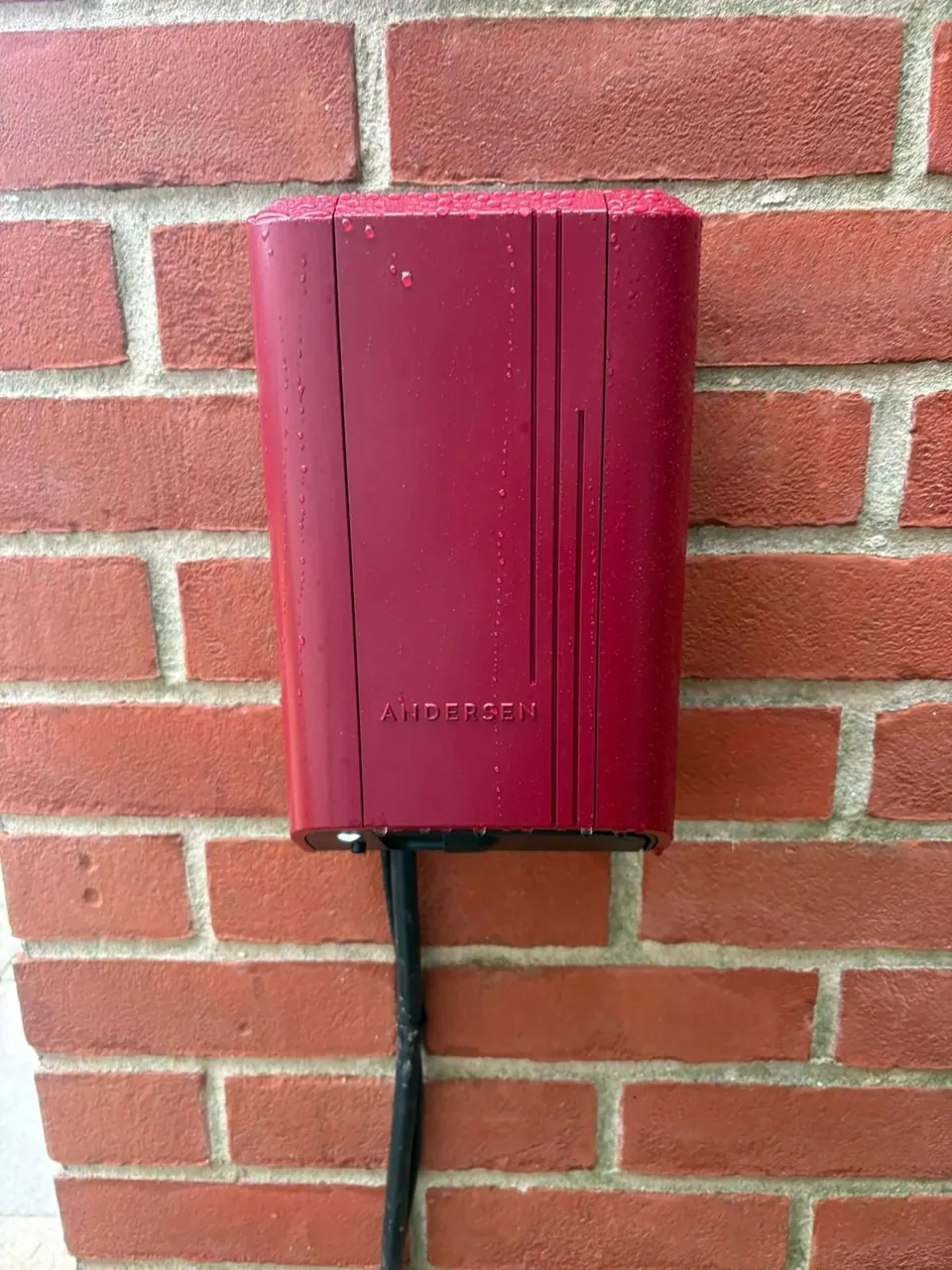
Whichever you choose, keep its statement of compliance. Built-in PEN fault protection can save an earth rod: myenergi says the zappi needs none. Andersen’s A2 is tethered only.
We fit a wide range, including myenergi zappi, Andersen, Fast Amps, Ohme, Wallbox and Rolec, and every home EV charger installation starts with a free survey of your parking, consumer unit and supply.
EV charger regulations: the short version
For a home charger, EV charger regulations mean a smart unit with off-peak defaults you control, a random start delay you can cancel and built-in security, on its own protected circuit, reported to the network operator, and usually no planning application in England. A replacement for the 2021 rules has been proposed but isn’t law yet. Book a free survey and we’ll tell you which rules apply at your home.
Questions we're often asked
- Do the smart charging rules apply to a charger I already have?
- No. They govern chargers sold from 30 June 2022 onwards, so one bought before then can stay as it is, and a private second-hand sale between individuals falls outside them too. A replacement supplied under warranty after that date does have to comply, whenever the original was bought.
- Can I charge at peak times if I need to?
- Yes. The off-peak schedule is only a starting point. You can override it for a single charge, change the hours or delete them altogether, and the random delay can be cancelled each time it applies. Saturdays and Sundays don't count as peak under the regulations' definition.
- Do I need planning permission for a home charger?
- Usually not in England, provided it fits the permitted development limits on size, height and position. Listed buildings are excluded, conservation areas restrict where a charger can go, and an Article 4 direction can take the rights away. If you're unsure, a lawful development certificate gives you a formal answer.
- Does a new-build home have to come with a charger?
- In England, usually. Since 15 June 2022, Part S has required new homes with associated parking to have access to a charge point, which the official guidance says should be at least 7kW. Where connecting one would cost more than an average of £3,600, the developer can fit cable routes instead.
- Who tells the network operator about my new charger?
- Your installer, normally using the ENA's online Connect Direct system: a notification within 28 days if your home stays within 60A per phase, or an application before fitting if it doesn't. Ask for confirmation, since government guidance says it's the owner's job to make sure the DNO received it.