Surge protection devices: does your home need an SPD? (2026)
A surge protection device (SPD) diverts voltage spikes to earth. When the wiring rules expect one in your home, when you can say no, and what it can't do.
Electrical ExchangePublished · Updated · 8 min read


The quick answer
Usually, yes. Under the wiring regulations (BS 7671), a surge protection device (SPD) is the default for new wiring work in a home. It must be fitted where a voltage spike could put lives at risk or cause significant financial or data loss, and in every other case it goes in unless you, as the owner, decline it and accept the risk, which is recorded on the certificate. The rules aren't retrospective: an older consumer unit without an SPD doesn't have to be replaced, and an inspector may note it as C3, 'improvement recommended'.
A surge protection device (SPD) is the module in or beside your consumer unit that catches short voltage spikes, from lightning or from equipment switching, and diverts them to earth before they damage your wiring and appliances. Under the wiring regulations it’s now the default whenever new wiring work is done in a home: required where a spike could put lives at risk or cause significant financial or data loss, and otherwise fitted unless you, as the owner, decide against it. An older board without one doesn’t have to be replaced.
We’re electricians based in Christchurch; the rules below are the UK-wide ones in BS 7671, the IET Wiring Regulations.
What a surge protection device does
An SPD deals with transient overvoltages: very short rises in voltage. BEAMA, the electrotechnical trade association, says they last from microseconds to a few milliseconds and can add anything from a few volts to thousands. There are two causes:
- Lightning. The IET says natural transients come from indirect strikes, most likely on an overhead power or telephone line nearby, with the surge travelling along it.
- Switching. Motors, transformers and some lighting create transients as they switch. The IET says EV charging, heat pumps and speed-controlled washing machines have made them much more likely in homes, and BEAMA’s 2018 guide puts about 65% of all transients down to sources inside homes and other buildings. The IET’s Wiring Matters (May 2023) is more cautious, calling the risk of switching overvoltages in homes unlikely.
By limiting the voltage and diverting the surge current to earth, an SPD protects, the IET says, the consumer unit, wiring and accessories, plus electronics such as computers, televisions and washing machines, and safety circuits such as fire detection. Surge damage can be instant, or only show up over time.
Type 1, Type 2 and Type 3 SPDs compared
There are three types, built for different jobs. Combined Type 1 and 2 devices exist, and the IET says they’re usually installed in consumer units.
| Type 1 | Type 2 | Type 3 | |
|---|---|---|---|
| Built for | Part of a direct lightning strike’s current | Switching and indirect lightning | Sensitive equipment, locally |
| Test surge | 10/350 µs: long, high-energy | 8/20 µs: much shorter | Combination wave; low discharge capacity |
| Where it goes | Origin of the installation | Consumer unit or distribution board | Close to the equipment |
| In a home | With a lightning protection system, or a supply line at risk of a direct strike | The main protection | Only as a supplement to a Type 2 |
When the wiring regulations require an SPD
The rules sit in Section 443 of BS 7671, with Section 534 covering how SPDs are chosen and installed. Amendment 2 (2022) heavily rewrote the key rule, Regulation 443.4.1. Protection against transient overvoltages shall be provided where an overvoltage could:
- result in serious injury to, or loss of, human life, or
- result in significant financial or data loss.
Otherwise, as the IET’s Wiring Matters magazine puts it, the default position is to install SPDs unless the owner declares they aren’t required, because any loss or damage would be tolerable, and accepts the risk.
A third trigger, the failure of a “safety service”, was deleted by a correction published on 15 May 2023: the term covered so many systems that it had unintended consequences for fire safety improvements. Amendment 4 (2026) has been the only current edition since 15 October 2026, and its headline changes are elsewhere: batteries, ICT earthing, Power over Ethernet and medical locations.
Saying no to an SPD
Where the regulations leave it to you, declining an SPD must be recorded on the electrical installation certificate, which the IET says prevents unforeseen liabilities later. Its consumer guidance suggests weighing the SPD’s cost and the safety risk against the value of everything it would protect, from computers and TVs to smoke detection and boiler controls. Check your home insurance first: the IET notes some policies may say equipment must be covered by an SPD or they won’t pay out on a claim.
Good to know Where the rules leave it to you, you can turn an SPD down as the owner, but the decision goes on your electrical installation certificate.
What happened to the risk assessment?
Older guides say a risk assessment can rule an SPD out; that was true until Amendment 2 (2022). The original 2018 edition used a “calculated risk level” based on the setting (rural, suburban or urban), the length of overhead and underground supply lines, and the local lightning flash density, read from a UK map. It also let a single home go without where the value of the installation and equipment didn’t justify the cost. Amendment 2 (2022) removed the calculation, the map and the single-dwelling exemption, so an SPD can no longer be ruled out by a sum.
Does an older home have to be upgraded?
No. BS 7671 isn’t retrospective. Electrical Safety First’s Best Practice Guide 4 (Issue 7.4, August 2026, written for Amendment 4) repeats the standard’s own position: installations built to earlier editions may not comply with the current one in every respect, but that doesn’t necessarily mean they’re unsafe or need upgrading.
The guide also sets out how findings are coded on an electrical installation condition report (EICR). A missing SPD, where Regulation 443.4.1 requires one, is C3, “improvement recommended”: not a source of immediate or potential danger, but worth improving. A report with only C3 observations can still be satisfactory overall.
New work changes things. The IET says a circuit being worked on must comply with the latest edition, and that this only really helps if SPDs protect the whole installation. That’s why the question comes up with a fuse board replacement, a rewire or a new circuit for a charger or battery.
Good to know Where an SPD is required but missing, it’s coded C3, which on its own doesn’t make an inspection report unsatisfactory.
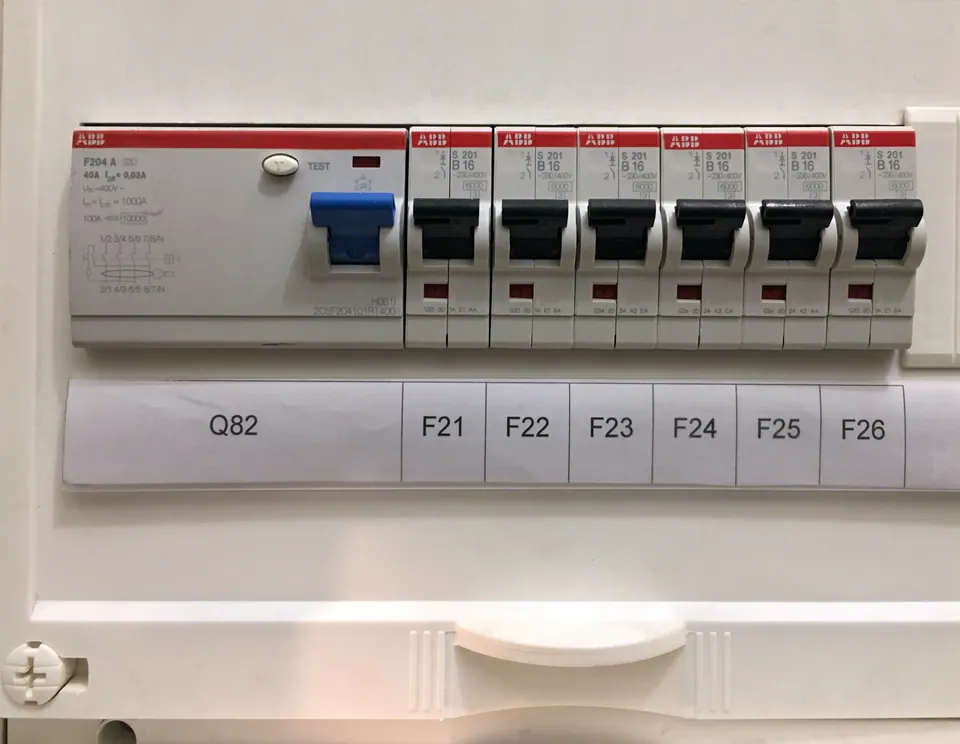
Where the SPD goes: in or beside the consumer unit
The IET says SPDs are usually installed within the consumer unit, or in a separate enclosure next to an existing board that hasn’t the space. If your board is being replaced anyway, the SPD can go in as part of upgrading the consumer unit.
In a fast surge, the SPD’s connecting leads add voltage of their own, about 1 kV per metre in BEAMA’s worked example, so they should be as short as possible, preferably no more than 0.5 m in total. A durable notice should be fixed next to the board.
SPDs have fault indicators that show when the device has been damaged or destroyed by a surge. If yours shows a fault, leave the consumer unit closed and call an electrician.
What an SPD protects, and what it doesn’t
| Problem | Does an SPD help? |
|---|---|
| A spike from lightning striking a line nearby | Yes |
| Switching spikes from motors and appliances | Yes |
| Lightning striking the house itself | Not on its own: that needs a lightning protection system |
| Spikes on telephone or cable TV lines | No: those lines need their own SPDs |
| Equipment over 10 m of cable from the SPD | Partly: a Type 3 nearby may be needed |
| A power cut, a dip or a high voltage lasting seconds | No: those are different disturbances |
| Arcing from a loose connection or damaged cable | No: that’s an AFDD’s job |
Beyond 10 m, BEAMA says, oscillations can push the voltage at the equipment up to double the SPD’s protection level. A direct strike is in a different league: where a lightning protection system is installed or may be required, the IET says the BS EN 62305 series applies. Arcing is a separate problem for a separate device: arc fault detection devices, which the IET describes as protective devices in consumer units that protect against arc faults.
SPDs with solar panels, batteries and EV chargers
- Solar panels. Amendment 2 (2022) extended the rule to the DC side of a PV installation, the wiring from panels to inverter, wherever Section 443 requires surge protection. DC protectors are made to a different standard, typically rated at 1,000 or 1,500 V DC, and industry guidance is that DC solar SPDs must not go into AC systems, or vice versa.
- Batteries. Amendment 4 (2026) gave stationary batteries their own chapter, Chapter 57. BS 7671 covers additions as well as new installations, so an added battery is assessed for transient overvoltage risk like any other new work.
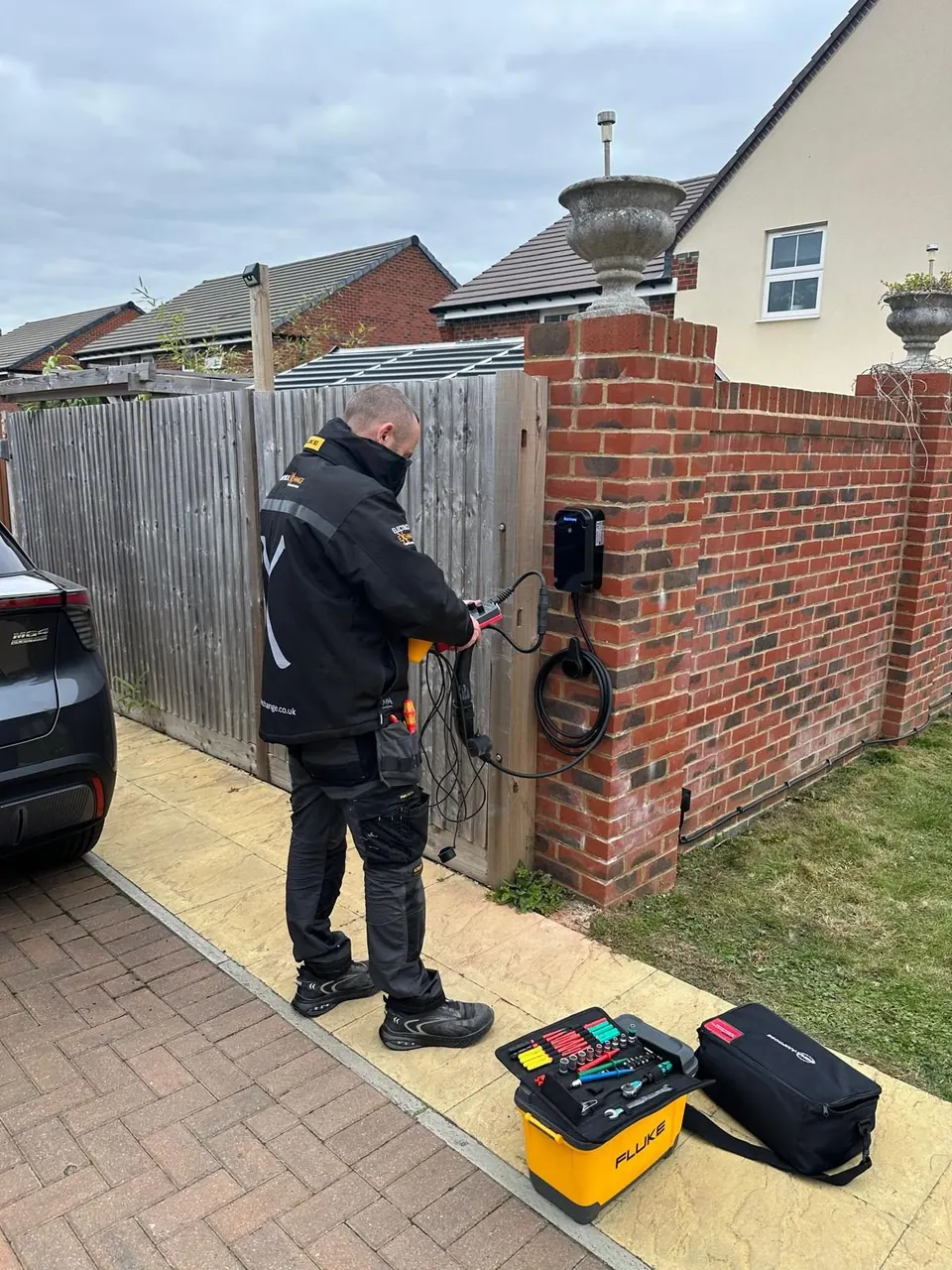
- EV chargers. Section 443 applies to a charger circuit as to any other, and the IET lists EV charging among the technologies making switching transients more likely.
So surge protection is a design question for any solar PV installation, and it comes up when fitting a home charge point on a board without an SPD.
Storms, power cuts and the local network
The Met Office says the UK sees around 200,000 to 300,000 lightning strikes a year on average, with thunderstorms most likely in the summer months, and advises unplugging non-essential electronics before a storm to protect them from power surges.
Around Christchurch the network is run by Scottish and Southern Electricity Networks (SSEN), whose Christchurch bulk supply point serves around 50,000 customers, according to SSEN’s February 2026 plan for the area. If a storm cuts the power, report it online or call 105, the free number for your local network operator, and follow SSEN’s advice: turn off appliances and lights but leave one light on, so you know when the power’s back. Our guide to what to do in a power cut locally covers the rest. If you see a power line down, keep as far away as you can, as electricity can “jump” through the air. If there’s an immediate risk to life or someone is in danger, dial 999. Either way, call 105 straight away to report it.
Good to know An SPD deals with short spikes; it doesn’t help in a power cut, a dip or a high voltage lasting seconds.
So, does your home need a surge protection device?
If you’re having new wiring work done, expect one: since Amendment 2 (2022) an SPD has been the default, and where the rules leave it to you, leaving it out is your decision, put on record. An existing board without one doesn’t have to be changed, though an SPD can be added in or beside it. The rules are the same whether we’re doing consumer unit and rewiring work around Christchurch, near our base on Airfield Way, or further afield.
To find out whether your consumer unit has a surge protection device, or what adding one would involve, ask us for a free quote and we’ll look at your board and explain the options.
Questions we're often asked
- Do plug-in surge protector extension leads do the same job?
- Not on their own. BEAMA counts surge-protected sockets and extension leads as Type 3 protection: local, with a low discharge capacity, and meant to work alongside a Type 2 SPD at the consumer unit rather than replace it. They earn their place beside a computer or TV a long cable run from the board.
- How can I tell if my consumer unit already has an SPD?
- There are two clues. An SPD carries a fault indicator, and where one has been fitted, there should be a durable notice beside the board. If you still can't tell, don't take any covers off: an electrician can check for you, for instance as part of an EICR.
- Can I refuse an SPD when I have new wiring work done?
- Yes, unless a voltage spike could endanger life or cause significant financial or data loss, in which case the regulations require one. Outside those cases you can decline it as the owner, accepting the risk of damage to equipment. Expect that choice to be written on your certificate, and check your insurance terms first.
- Will an SPD protect my home from a direct lightning strike?
- No. Lightning hitting a house with no lightning protection system finds its own way to earth through the building, which can damage it or start a fire. Protection needs a structural system to the BS EN 62305 series, with Type 1 SPDs part of it. A consumer unit SPD handles the more common indirect strikes and switching.
- Does an SPD wear out?
- It can. A surge can damage or destroy an SPD, and its fault indicator then shows that it needs replacing. Before testing an installation that has SPDs, an inspector checks they're still serviceable, so a periodic inspection is a sensible moment to find out whether yours is still doing its job.