Granny charger vs a home charger: is a 3-pin plug enough? (2026)
A granny charger adds about 7 miles of range an hour from a 3-pin socket. When that's enough, the safety rules, and when a 7kW wallbox is worth it.
Electrical ExchangePublished · Updated · 8 min read


The quick answer
A granny charger is enough for occasional top-ups, travel and backup, but not as your everyday charger. From a 3-pin socket it charges at about 2.3kW, roughly 7 miles of range an hour, against about 21 miles an hour from a 7kW wallbox. It can keep pace with average mileage, but the RAC says 3-pin charging is now only recommended for emergency use, and Electrical Safety First warns that hours of heavy load are likely to exceed what a standard socket and its wiring are designed for. A wallbox charges about three times faster, on its own protected circuit, with the smart off-peak settings required of new home chargers since 30 June 2022.
Is a granny charger enough, or do you need a wallbox? For occasional top-ups a granny charger does the job, and on the numbers it can even keep up with average driving: battery-electric cars in England averaged 9,400 miles in 2025, about 26 miles a day, which a granny lead puts back in under four hours. The catch is what that asks of an ordinary 3-pin socket every night, which is why the RAC and Electrical Safety First point everyday charging towards a dedicated charger.
Here’s how they compare, the safety rules behind each, and what we check before fitting a wallbox.
What a granny charger is, and what a wallbox is
A granny charger is a portable lead with a 3-pin plug at one end and your car’s connector at the other. The wiring regulations call this Mode 2 charging: an ordinary socket, with a control box in the cable that talks to the car and provides RCD protection against electric shock.
It’s slow by design. Most carmakers limit the current a car draws from a domestic 3-pin socket to 10A or less, which caps it at about 2.3kW.
A wallbox is Mode 3 charging: dedicated equipment wired permanently into your home’s supply. Home chargers typically deliver around 7kW, and Which? puts the maximum for a typical UK home at 7.4kW, so a wallbox charges about three times faster.
Granny charger vs 7kW wallbox: the charge times
| What you get | Granny charger (3-pin socket) | 7kW wallbox |
|---|---|---|
| Charging power | About 2.3kW (10A) | About 7kW |
| Range added per hour of charging | About 7 miles | About 21 miles |
| Putting back an average day’s driving (26 miles) | About 3¾ hours | About 1¼ hours |
| Adding 100 miles | About 14½ hours | Under 5 hours |
| Octopus Go’s five-hour cheap window | About 35 miles | About 105 miles |
| A full charge for a 2022 Tesla Model Y (Which?) | 38.5 hours (at 2.4kW) | 12 hours |
The range figures use the Energy Saving Trust’s rule of thumb: each kW adds roughly a mile of range for every 20 minutes plugged in. Efficient cars do better, and Fast Amps quotes 30 miles an hour for its 7.4kW charger. No car charges faster than its own maximum rate, though, and for plug-in hybrids that’s often lower.
Slow charging also wastes more. In tests published on 6 August 2026, the German motoring club ADAC measured losses of 12.7% to 15.3% for four of five cars charging from a household socket at 2.3kW, against 5.1% to 7.0% on 11kW and 22kW wallboxes. The car’s electronics draw 100 to 300 watts for as long as it charges, so a longer charge loses more.
When a granny charger makes sense
The arithmetic says a granny lead can keep pace. The safety advice is more cautious. The RAC says three-pin charging is now only recommended for emergency use, when no other means of charging is available, and Zapmap calls it useful occasionally but not recommended, because it’s slow and the socket can overheat under a continuous high current.
So we’d keep a granny charger for:
- charging away from home, when there’s nowhere else to plug in,
- the odd night your wallbox is out of action,
- an occasional top-up from a socket that’s been checked.
As the everyday charger for a full electric car, it’s the wrong tool, however well the hours add up.
Good to know On the Energy Saving Trust’s rule of thumb, a 2.3kW socket adds roughly 7 miles of range an hour, against about 21 on a 7kW wallbox.
Why a 3-pin socket isn’t built for nightly charging
Electrical Safety First warns that the extended load and duration of EV charging are likely to exceed what a standard socket-outlet and standard wiring are designed for, and that old wiring may not cope with overnight charging. Which? recommends asking a qualified electrician to check that the cable and socket are suitable first. If you’ll keep using one, an electrical inspection from our team can check the socket and the wiring behind it.
There’s also a middle route. Where a 13A socket is installed as an EV charging point, BS 7671 expects a BS 1363-2 socket marked “EV”, and Electrical Safety First says these sockets are built and tested to be more robust and should be on a dedicated circuit. It’s still granny-speed charging, but from a socket made for the job.
Extension leads and granny chargers don’t mix
If the lead won’t reach the car, an extension lead isn’t the fix. Electrical Safety First says never to charge through a domestic multi-socket extension lead, and never to plug one extension lead into another, which raises the risk of fire and electric shock. The RAC says to avoid plugging three-pin chargers into an extension lead.
It happens anyway. In a January 2019 survey of 1,500 plug-in car owners for Electrical Safety First, nearly three in four said a lack of nearby public chargers had led them to use a domestic multi-socket extension lead outdoors.
What the wiring regulations say about EV charging
BS 7671, the IET Wiring Regulations, gives EV charging installations their own section, Section 722. In general terms, for any wallbox:
- each charging point is supplied by its own final circuit, with its own overcurrent protection,
- each is protected by an RCD of no more than 30mA, plus DC fault protection in the installation or the charger,
- a charge point used outdoors can’t rely on a PME earth without extra protection, such as an earth electrode or a device that disconnects the car if the supply’s PEN conductor fails, which can be built into the charger.
The IET also publishes a Code of Practice for Electric Vehicle Charging Equipment Installation, now in its 5th edition (2023); BS 7671 itself has since moved on to Amendment 4 (2026). An ordinary garage socket usually wasn’t installed with any of this in mind.
Good to know Charging every night from an ordinary garage socket is the case the wiring rules worry about most, so have the circuit checked before you rely on it.
Smart charging rules every new wallbox meets
Since 30 June 2022, the Electric Vehicles (Smart Charge Points) Regulations 2021 have covered home and workplace chargers sold in Great Britain. A charger that meets them:
- can send and receive information, and change when or how fast it charges in response,
- comes with default charging hours outside peak times, defined as 8am to 11am and 4pm to 10pm on weekdays, which you can accept, change or remove, and override whenever you need,
- applies a random delay of up to 600 seconds when charging starts or changes speed, which you can cancel,
- keeps charging if it loses its connection, and shows you how much electricity it has used.
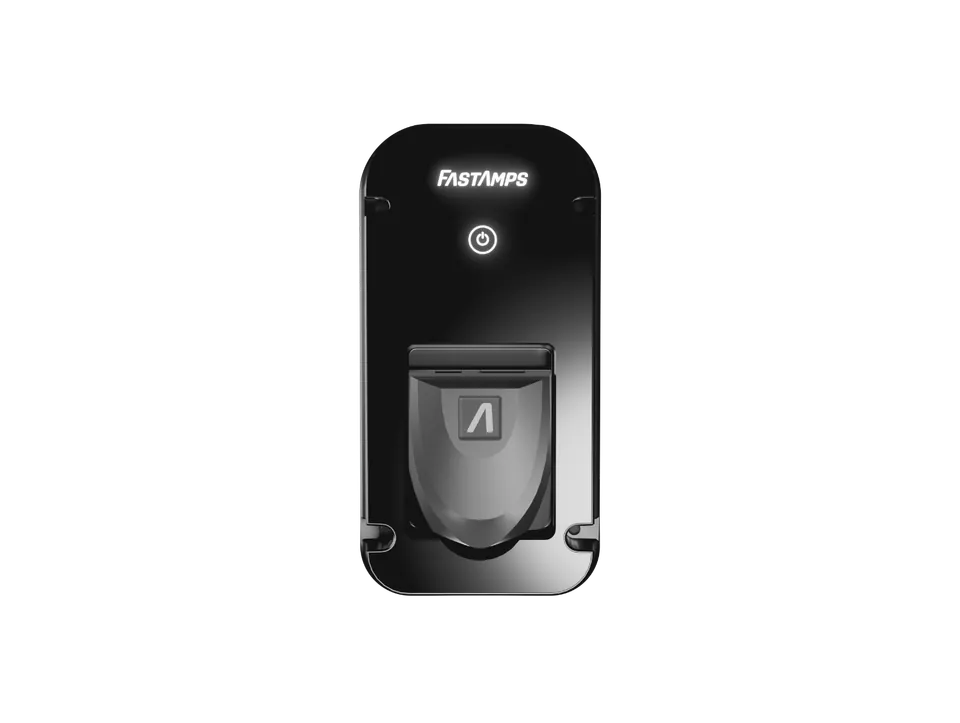
Non-smart cables, which can’t send or receive information, are outside the rules, and that describes a basic granny lead. The Fast Amps Alpha7, for example, comes pre-programmed to charge off-peak, with a “now” button to override.

Does Octopus Go work with a granny charger?
Yes. Octopus says you don’t need a home EV charger to join Octopus Go, and describes it as compatible with all EVs and chargers. You need to be an Octopus customer with a smart meter it can connect to. When we checked in October 2026, the cheap rate ran from 00:30 to 05:30 every night, for your home as well as the car.
The limit is the window: five hours on a granny lead adds about 35 miles of range, against about 105 from a 7kW wallbox. Unless your lead has a timer, starting at 00:30 is down to your car’s own schedule, if it has one.
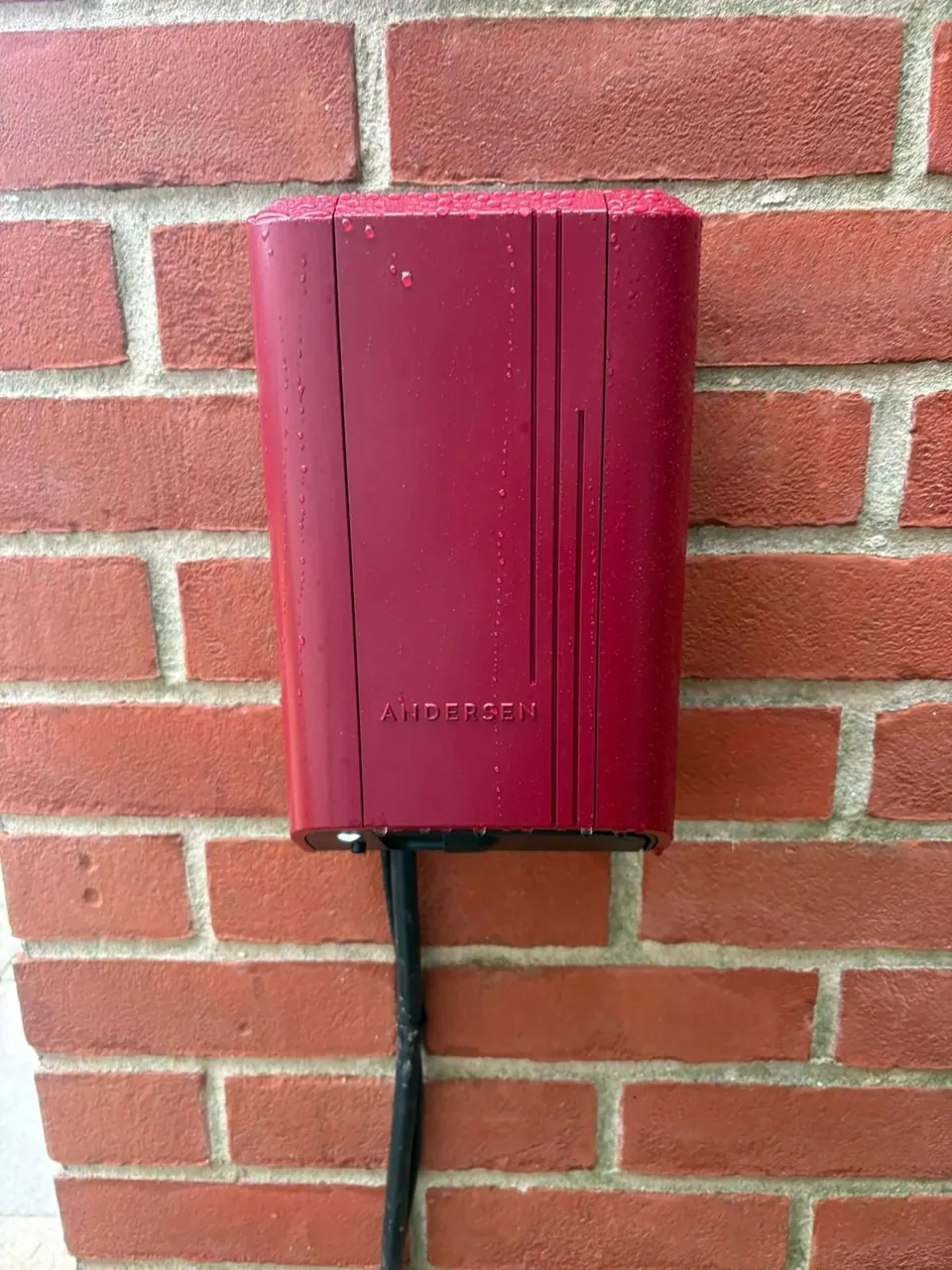
Intelligent Octopus Go works differently. It needs a compatible car or charger, which Octopus then schedules, with up to six hours of cheap smart charging every 24 hours. Andersen’s A2 charger is one we fit, and Andersen says its 7kW units have been integrated with Intelligent Octopus Go since September 2025.
Want a wallbox fitted properly? Ask us about a free survey: we’ll look at your parking, your consumer unit and your supply first.
What we check before fitting a wallbox
A wallbox can draw 32A for hours, so the survey is about what’s behind the wall as much as where the charger goes. It’s the first step in every home EV charger installation we carry out:
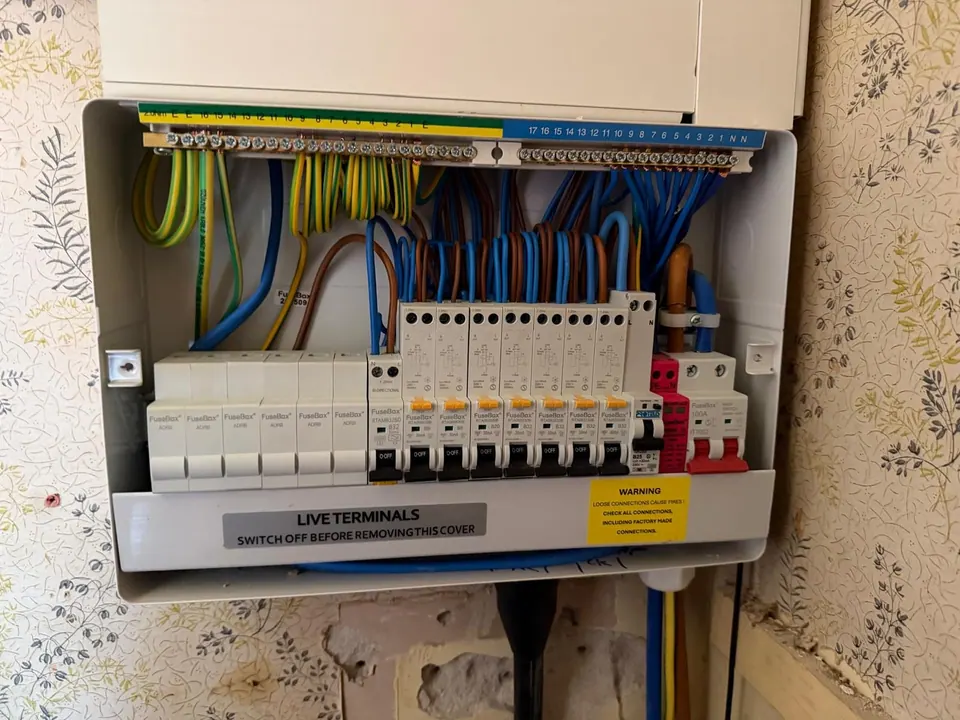
- Your consumer unit. The charger needs its own circuit and RCD protection. If the board needs upgrading, our electricians do it as part of the same installation, with modern RCD/RCBO protection.
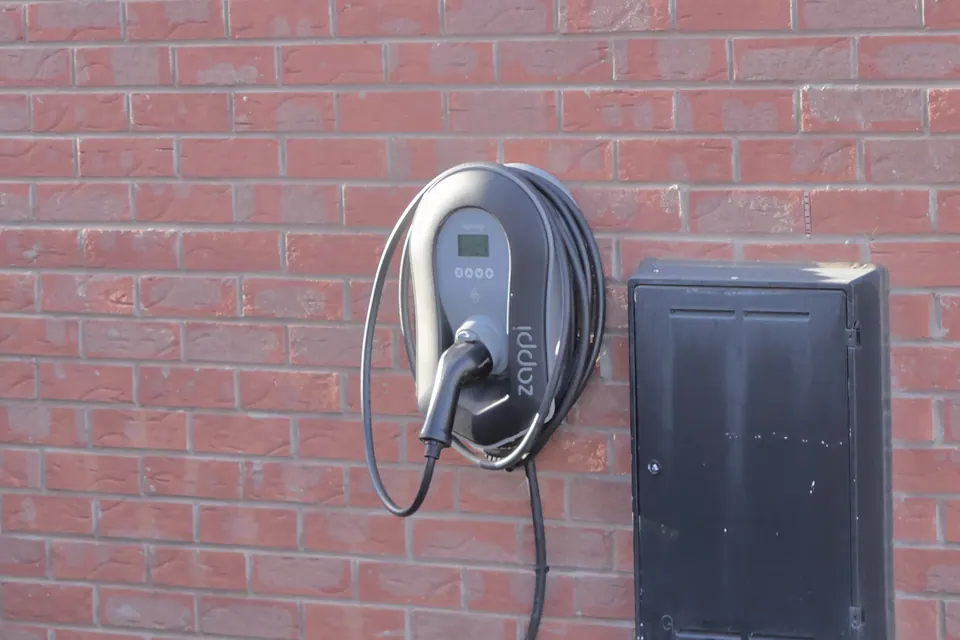
- Your earthing. How your home is earthed decides the protection the charger needs, and chargers can build in what Section 722 asks for on a PME supply: the Fast Amps Alpha7 lists built-in PEN fault detection, and myenergi says the zappi needs no earth rod.
- Your supply. A charger is a big new load, so we check how much capacity there is to spare.
- The spot and the cable run. Where you park decides where the charger goes and how far its cable runs.
- The network operator. Government guidance says a new chargepoint must be registered with your local Distribution Network Operator, applied for before it goes in or notified within 28 days afterwards. We handle the DNO notifications or applications as standard.
Most home installations are then finished in a single visit, and our guide to what happens on installation day walks through it.
Fitting a wallbox in Christchurch: the local network
In Christchurch, as across the wider Bournemouth area, the network operator is SSEN (Scottish and Southern Electricity Networks), so that’s who a new wallbox is registered with. In September 2024 SSEN announced a £12 million upgrade from Christchurch through to Boscombe, running from 30 September 2024 until 2026, to future-proof the local network for almost 200,000 customers. It includes replacing nearly 6km of underground cable, and SSEN says it will contribute to growth in network capacity.
From Airfield Way we’re fitting wallbox chargers around Christchurch, Highcliffe, Mudeford and Burton, and across Dorset and Hampshire.
Granny charger or wallbox: which should you choose?
Keep the granny charger for occasional top-ups, travel and backup, from a socket that’s been checked. Choose a wallbox if you’d otherwise be on the granny lead every night, want the car full inside a cheap overnight window, or want charging on a circuit built for it. If you rent your home, or own and live in a flat, and have private off-street parking, OZEV’s grant for renters and flat owners may help towards one. The chargers we install include Ohme, myenergi, Wallbox, Rolec and Andersen.
Not sure which side of the line you’re on? We’ll tell you straight whether a granny charger will do or a wallbox is worth it. Book your free survey and we’ll check your parking, consumer unit and supply in one visit.
Questions we're often asked
- What is the typical charging speed of a granny charger?
- Around 2.3kW, because the RAC says most carmakers cap a car at 10A or less on a household 3-pin socket. On the Energy Saving Trust's rule of thumb that's roughly 7 miles of range for each hour plugged in, so a ten-hour night from 9pm to 7am on a socket that's been checked adds about 70 miles.
- Should I get a 3kW or a 7kW home charger?
- For most homes, 7kW. Which? says a typical UK home tops out at 7.4kW, and in its example a 2022 Tesla Model Y takes 12 hours to charge on a 7kW charger against 24.5 hours on a 3.6kW one. A lower-powered charger can cost less but is slower, and we'll talk it through at your survey.
- Can I use an extension lead with a granny charger?
- No. Electrical Safety First's advice is never to charge an electric car through a domestic multi-socket extension lead or to plug leads into each other, and the RAC says to keep three-pin chargers off extension leads. If your lead won't reach the car, that usually points to a wallbox mounted by your parking space instead.
- Can I charge from an outside socket?
- Only once it's been checked. A standard socket and the wiring behind it aren't designed for hours of heavy load, and outdoors the earthing matters too, so have an electrician look at the socket, circuit, earthing and lead first. A 13A socket fitted for EV charging should be an 'EV'-marked BS 1363-2 socket on a dedicated circuit.
- Do I have to tell the network operator about a new wallbox?
- Yes, though your installer normally does it for you. Government guidance says EV chargepoints must be registered with the local Distribution Network Operator, either applied for before installation or notified within 28 days, depending on the connection. In Christchurch that's SSEN, and we handle the notification or application as part of the job.