Air conditioning for bedrooms: the quietest units and where to fit them (2026)
The quietest bedroom air conditioning is a wall-mounted split, with Daikin and Bosch units at 19 to 21 dB(A) on silent. Figures, placement and planning.
Electrical ExchangePublished · Updated · 8 min read


The quick answer
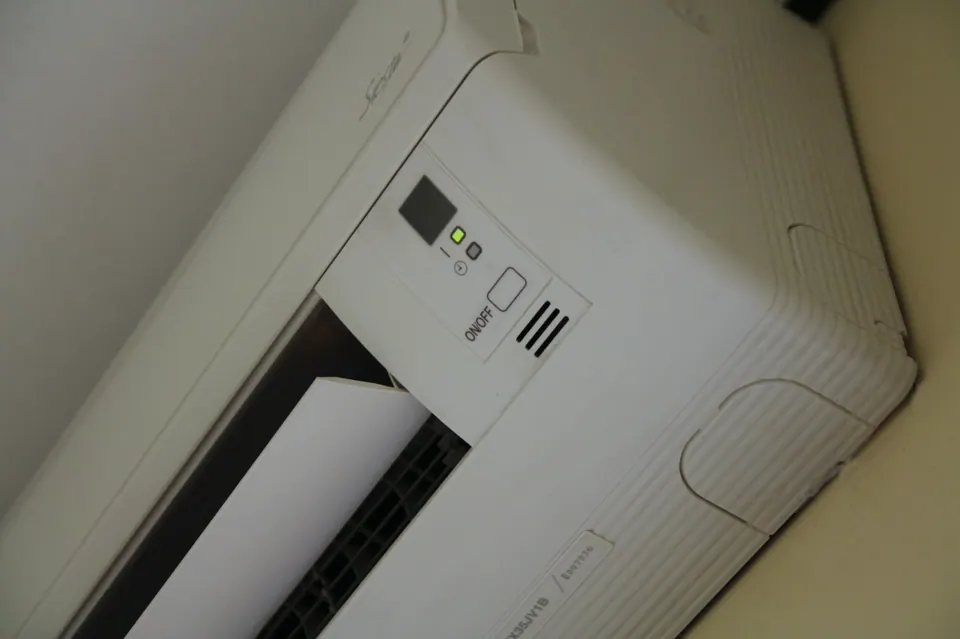
The quietest bedroom air conditioning is a wall-mounted split system, because its compressor sits outside. On silent, the smallest Daikin Perfera, Comfora and Emura indoor units (2.0 to 2.5 kW) are rated at 19 dB(A) and Bosch's 2.6 kW Climate 3200i at 20 dB(A), rising to 37 to 41 dB(A) at full speed. Fit the indoor unit high on a wall, blowing away from the bed, and site the outdoor unit with the neighbours in mind: since 29 May 2025, an air-to-air unit in England can be permitted development if it isn't used solely for cooling, passes the MCS 37 dB(A) noise check and meets the other limits.
Looking at bedroom air conditioning and want the quietest option? Choose a wall-mounted split system: the indoor unit high on your wall, the compressor outside. On silent, the smallest Daikin Perfera, Comfora and Emura units (2.0 to 2.5 kW) are rated at 19 dB(A) and Bosch’s 2.6 kW Climate 3200i at 20 dB(A). Where each half goes matters as much as the model, for your sleep, for the neighbours and, since May 2025, for planning.
Bedroom air conditioning: why a split system is the quiet choice
The government’s Cooling in the UK report (August 2021) describes a single split as “an external compressor unit (often wall mounted) and an internal distribution unit”. A portable unit is self-contained, venting its warm air through a hose, usually out of a window.
Daikin’s bedroom guide sums up the difference: “As the noisy compressor is outside, indoor sound levels are lower”, while portables “tend to be louder”. It’s the kind of system behind our air conditioning installation work: air con that heats as well as cools, fitted across Dorset. Our guide to heating a home with air conditioning covers the winter side.
The quietest Daikin and Bosch wall units, in dB(A)
Daikin and Bosch are the two makes we install. Here are the indoor-unit sound pressure figures each publishes, by fan speed, for a typical bedroom size and a larger one.
| Indoor unit (model) | Cooling capacity | Silent | Low | Medium | High |
|---|---|---|---|---|---|
| Daikin Perfera (FTXM25A) | 2.5 kW | 19 | 25 | 33 | 41 |
| Daikin Comfora (FTXP25N) | 2.5 kW | 19 | 26 | 33 | 40 |
| Daikin Emura (FTXJ20A) | 2.0 kW | 19 | 25 | 32 | 39 |
| Bosch Climate 3200i (CL3200i-Set 26 WE) | 2.6 kW | 20 | 22 | 32 | 37 |
| Daikin Perfera (FTXM35A) | 3.5 kW | 19 | 29 | 37 | 45 |
| Daikin Comfora (FTXP35N) | 3.5 kW | 20 | 27 | 34 | 43 |
| Daikin Emura (FTXJ35A) | 3.4 kW | 19 | 25 | 33 | 41 |
| Bosch Climate 3200i (CL3200i-Set 35 WE) | 3.5 kW | 21 | 22 | 32 | 37 |
All figures are dB(A). Daikin’s are for cooling, and Bosch publishes one set per unit.
On silent it’s a near tie, so the quietest air conditioning unit on paper depends on the speed it runs at. Bosch is lowest on low fan and holds 37 dB(A) at full speed in both sizes, while the Daikin units reach 39 to 45 dB(A), louder as they get bigger. Each maker tests its own units, so treat a decibel or two between brands as a draw. See the Daikin wall units we fit and Bosch’s Climate 3200i.
What those decibels sound like at night
Daikin lists the Perfera at “19 dBA (whisper-quiet)”. Its bedroom guide likens 19 to 30 dB to “a whisper or rustling leaves” and gives 40 dB, “approximately the sound of a quiet library”, as the level to stay below for uninterrupted sleep. Approved Document O, England’s overheating guidance for new homes, in force since 15 June 2022, also uses 40 dB: if bedroom noise averages more than that between 11pm and 7am, windows are likely to stay shut.
The silent and low columns sit well below that line, and the high column straddles it. The catch: in silent mode, Bosch warns, “it may not be possible to achieve the required cooling/heating capacity”.
Sound pressure, sound power and the energy label
The table shows sound pressure: the level at a given point, A-weighted to approximate how the ear hears. Energy labels and data sheets give sound power, which the MCS planning standard defines as “the total sound energy radiated by a source per unit of time”. Both use decibels against different reference values, so one can’t be read against the other: Bosch’s 2.6 kW indoor unit is 20 to 37 dB(A) as sound pressure but 54 dB as sound power, and Daikin gives the 2.5 kW Perfera (FTXM25A) a sound power of 54 dBA in cooling. Compare pressure with pressure at the same fan speed, or label with label.
Where to fit the indoor unit in a bedroom
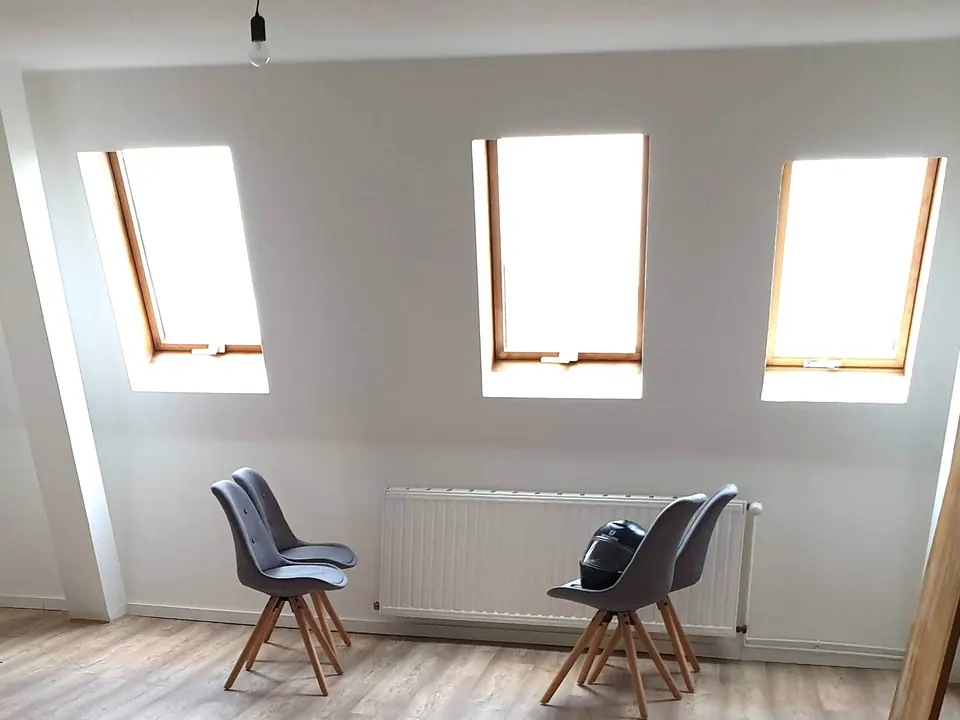
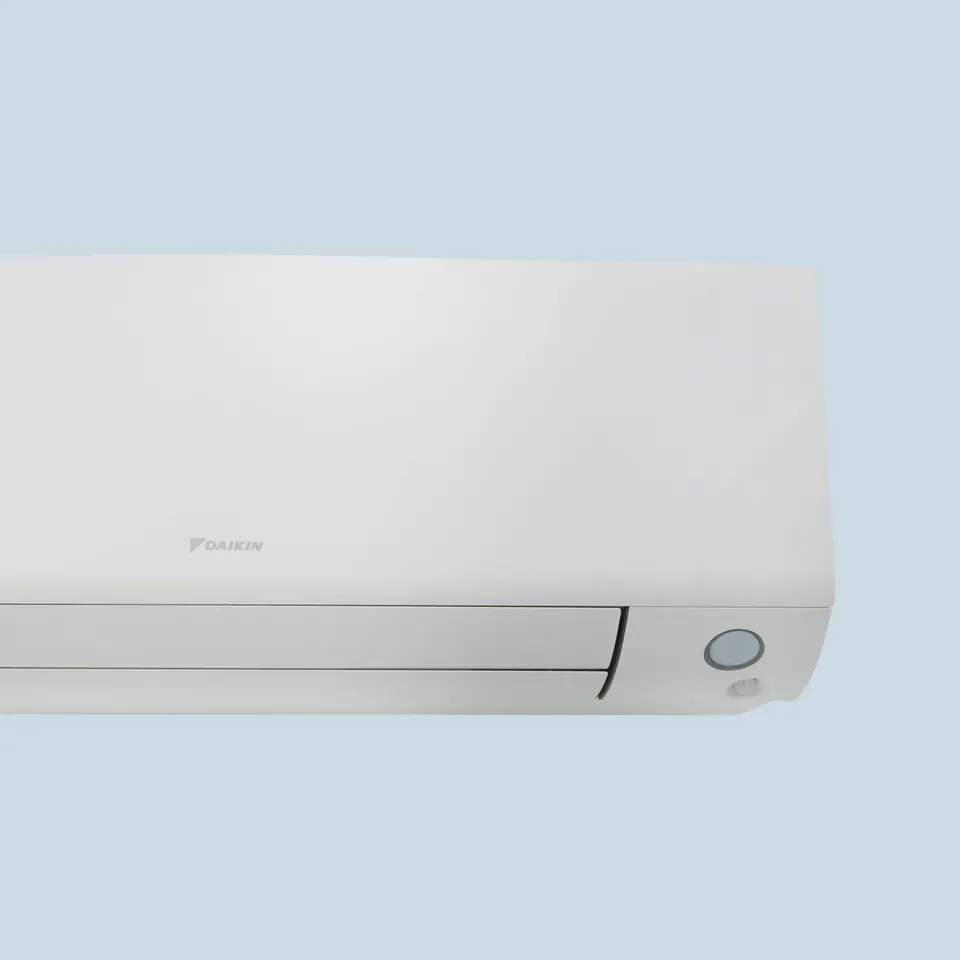
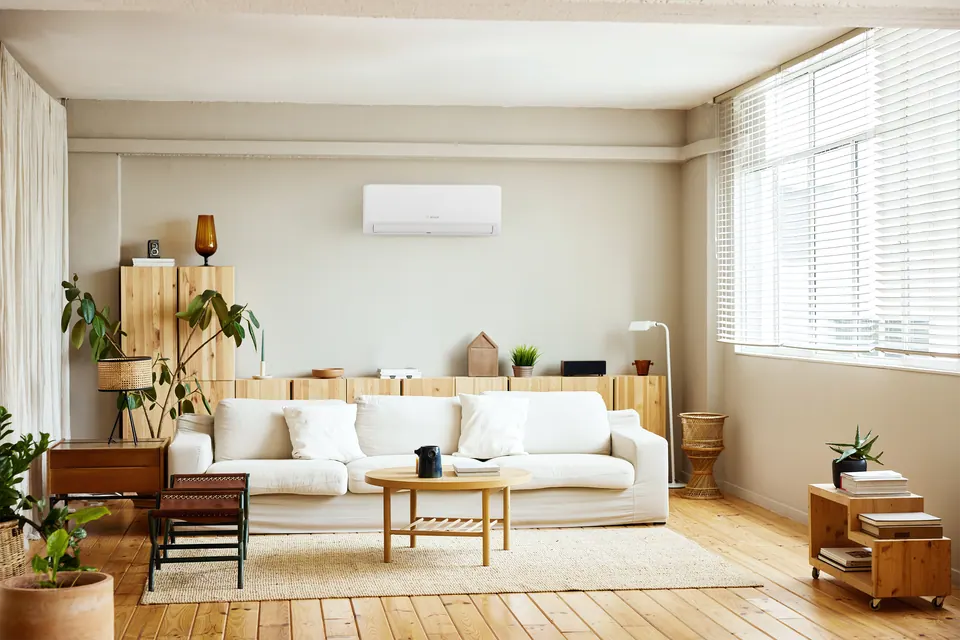
Daikin’s advice is to fit the indoor unit “high on a wall above eye-level, away from direct sunlight and avoiding areas above the bed”, and to mount it “facing away from the bed”. That usually means a side wall or above the door, and Daikin pitches its compact Comfora as “ideal for above-door installation”. The Perfera manual sets a minimum of 1.8 m from the floor, with clearances to the ceiling and side walls. Bosch is blunter: “Do not stand directly in the airflow for any length of time.”
Daikin’s Comfort airflow points the flap upward when cooling, and Bosch’s Wind avoid me “prevents a direct airflow onto the body”, but neither rescues a unit hung over the headboard.
Pipe runs, the wall hole and the condensate
Refrigerant pipes, a connecting cable and a drain hose run from the back of the indoor unit to the outside. For Perfera units up to 5.0 kW, Daikin specifies a 65 mm hole bored “with a downward slope towards the outside”, and condensation water must drain away properly. Outside, the pipes can be boxed into trunking, as below.
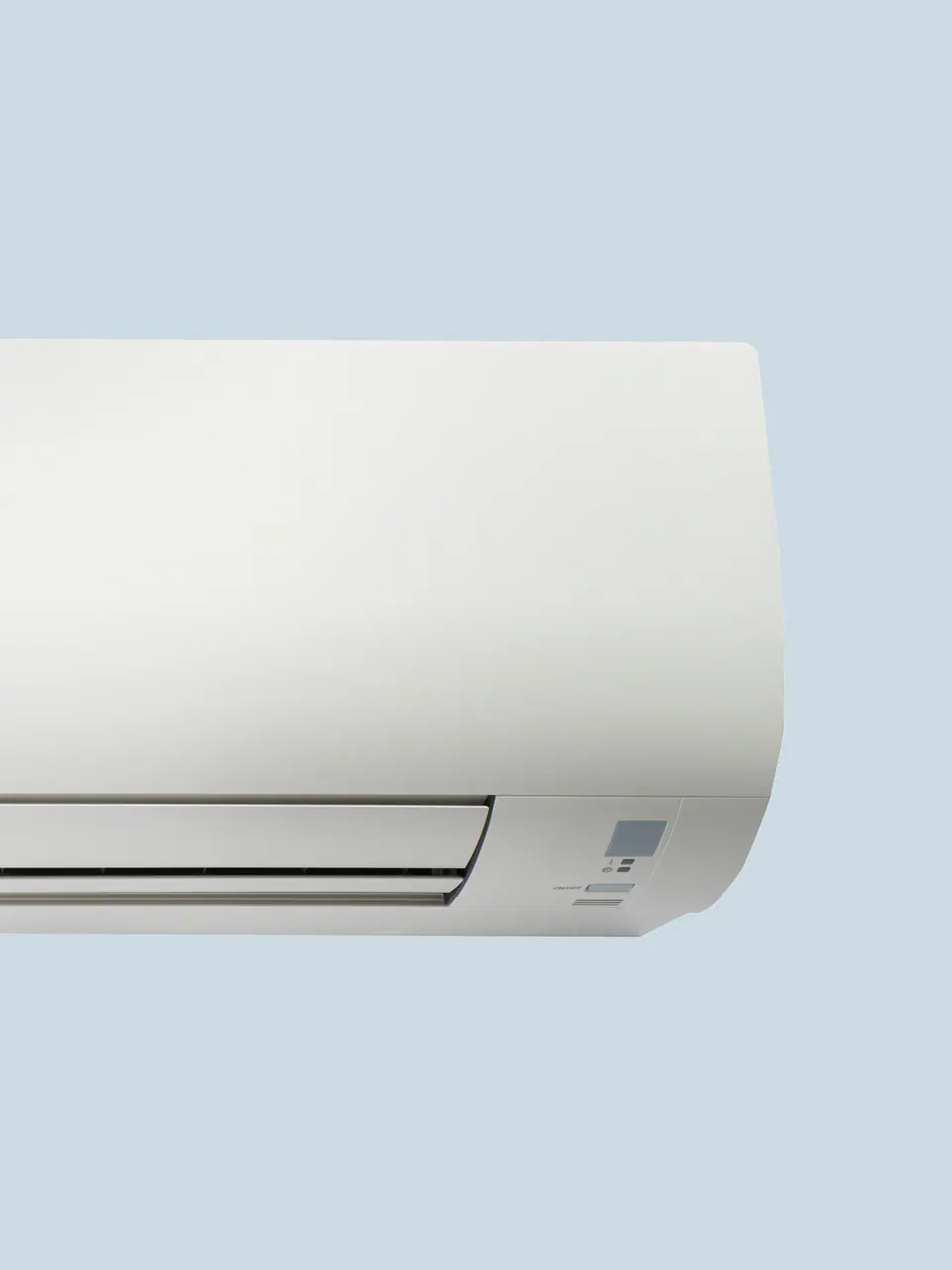
An inside wall means a longer pipe route, so we check the layout and where the outdoor unit can go before recommending a system.
The outdoor unit and the neighbours
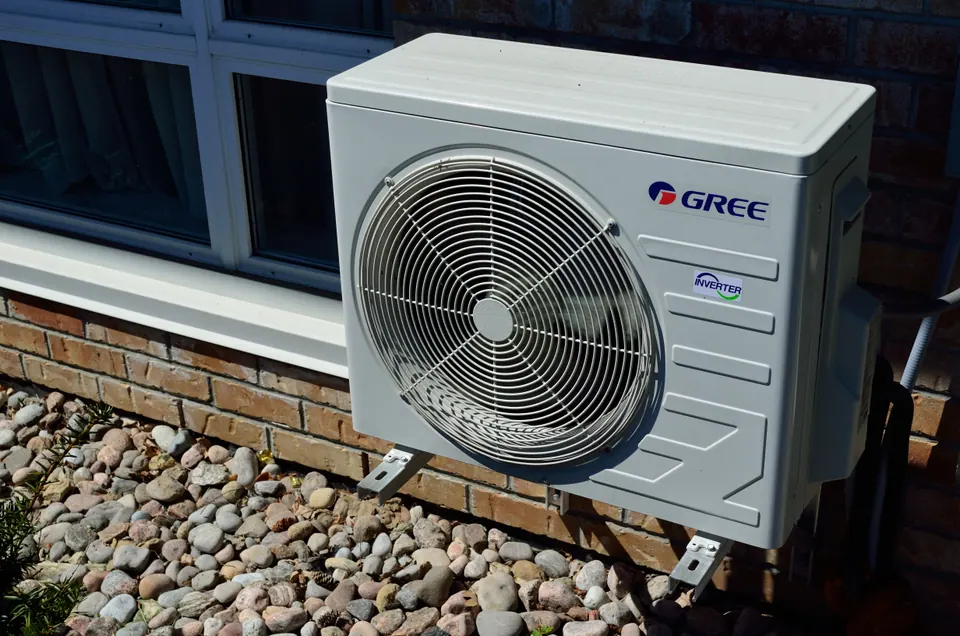
Moving the compressor outside moves its noise outside. Daikin rates the RXM25A, partner to a 2.5 kW Perfera, at 46 dB(A) sound pressure in cooling. Bosch’s data sheet gives the 2.6 kW Climate 3200i’s outdoor unit a sound power of 62 dB, the measure the planning check starts from. Both makes can quieten the outdoor unit: Daikin’s Outdoor unit quiet operation limits the compressor’s speed, with “At night” as its example, and Bosch’s silent mode is “particularly advantageous at night, if you need to show consideration for your neighbours”.
We work out the outdoor unit’s size and exact position at the survey, and our page on air con for Poole homes explains why that matters more on closer-set streets.
Planning rules for air-to-air units in England since May 2025
Until 29 May 2025, England’s permitted development right for air source heat pumps covered heating only, leaving air-to-air units out. Since then it permits heat pumps that can “also, but not solely, provide cooling”, which the government’s explanatory memorandum says “will allow for air-to-air heat pumps to benefit”. Under Class G now:
- the unit can’t be used solely for cooling;
- it must pass the MCS 020 a) sound calculation: no more than 37 dB(A) 1 m outside a door or window of any neighbouring habitable room, bedrooms included, worked out from the outdoor unit’s sound power, never its low-noise mode;
- the old rule keeping units 1 m from the boundary has gone;
- the outdoor unit can be up to 1.5 cubic metres on a house or 0.6 on a block of flats (Daikin’s RXM25A casing is about 0.21);
- a detached house can have two units, and other houses and blocks of flats one;
- it can’t go on a pitched roof, within 1 m of the edge of a flat roof, or on a road-facing wall above ground-floor level, so the wall outside an upstairs bedroom that faces the road is out;
- in a conservation area it can’t go on a road-facing wall or roof, or nearer the road than the house, and listed buildings are excluded.
Anything outside those limits needs a planning application.
Locally, BCP Council says there are 48 conservation areas, from Christchurch Central and Mudeford Quay to Ashley Cross, Sandbanks and Poole Park, where the work you can do without permission “is also more limited than elsewhere”. At the 2021 Census, 26.8% of households in Bournemouth, Christchurch and Poole lived in a purpose-built block of flats, against 17.1% across England, so the one-unit-per-block rule reaches more homes here.
Good to know Since 29 May 2025, an air-to-air unit that also heats can go in without a planning application if it passes the 37 dB noise check at a neighbour’s window and meets the size and location limits.
Night and sleep modes worth knowing
Much of what makes a unit bedroom-friendly sits on the remote:
- Night set (Daikin). With the off timer, it raises the set temperature by 0.5°C in cooling to “ensure a comfortable sleeping temperature”.
- Sleep (Bosch). The set temperature moves 1°C after an hour and another 1°C after two, and the mode ends after 8 hours.
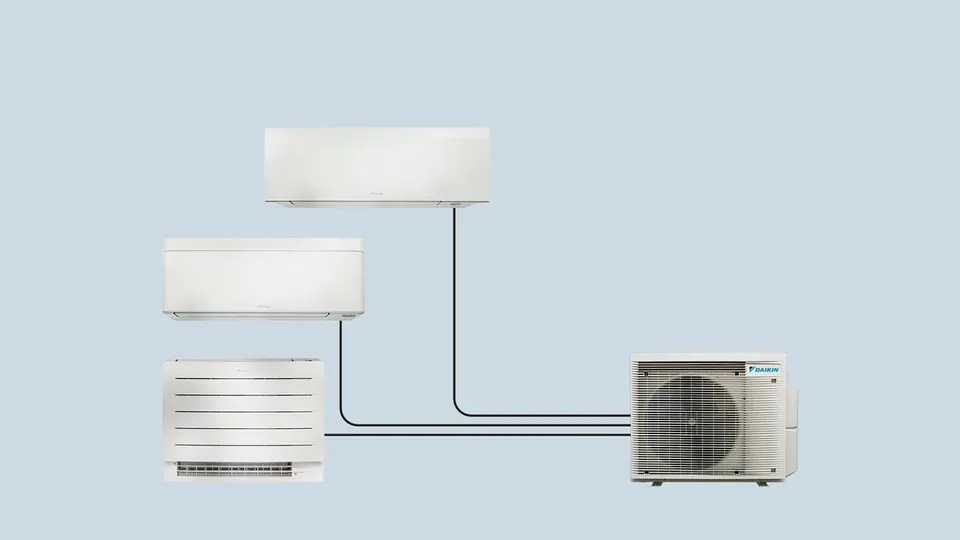
- Night quiet (Daikin multi-split). Set up at installation, it quietens the outdoor unit at some cost to cooling once the temperature falls 5°C below the day’s high.
- Mute (Bosch). It switches off the indoor unit’s display and its buzzer.
On a Bosch multi-split, Silent mode, Wind avoid me and the energy-saving functions aren’t available.
Sizing a bedroom unit in kW
Daikin’s size guide works on around 0.1 kW per square metre for typical UK homes and puts a 20 m² small bedroom at about 2 kW, or 2.5 kW if it’s poorly insulated and sun-facing. Large south- or west-facing windows often add 10 to 20%. The 2.0 to 2.6 kW units in the table cover that.
Bigger isn’t quieter: the larger Daikin units are louder at full speed, and Daikin warns that oversizing “leads to increased running costs and noisy operation”. At the survey we check room sizes and layout and size each unit for its room, whether that’s a single wall unit or a room-by-room air-to-air system.
Cooling a bedroom on summer evenings adds to your electricity use, so if solar is on your list too, it’s part of working out how many panels your home needs.
Why most UK homes still don’t have air conditioning
Most are still cooled by opening windows. The government’s Cooling in the UK report found homes “predominantly kept cool through natural ventilation”, and a University of Reading study published in June 2026 put the share of homes in England using air conditioning at 4.3%.
That’s shifting. In the English Housing Survey for 2024 to 2025, households reported overheating in 12% of homes in 2024, up from 7% in 2019. Of those roughly 3 million homes, 90% opened windows and 7% used air conditioning. Detached houses (15%) and bungalows (14%) were the most likely to get uncomfortably hot, and at the 2021 Census, 35.6% of households in Bournemouth, Christchurch and Poole lived in a detached home, against 22.9% across England.
Want a quiet unit sized for your bedroom? Ask us about a free survey and we’ll measure the room and plan where each half goes.
So, what is the quietest bedroom air conditioning?
A wall-mounted split, run on its lower fan speeds, sized for the room and fitted away from the bed. On paper the Daikin and Bosch units tie at 19 to 21 dB(A) on silent, and Bosch’s Climate 3200i is the quietest of them at full speed. The outdoor unit decides whether it suits the neighbours and the planning rules. Book a free survey and our team will come out from Christchurch, measure the room and find a quiet spot for both halves of your bedroom air conditioning.
Questions we're often asked
- What is the 3-minute rule for air conditioners?
- It's a short built-in pause that protects the system. If a Daikin Perfera is switched back on straight after being turned off, or its mode is changed, its user guide says operation starts after 3 minutes. Bosch's Climate 3200i manual says the same thing: the indoor unit may take 3 minutes before it can restart.
- Can bedroom air conditioning heat the room in winter too?
- Yes. The split systems sold in the UK are reversible, so the same wall unit that cools a bedroom in July can warm it in January, and both Daikin and Bosch rate their units for heating. Heating counts for planning as well, because permitted development won't cover a unit used only for cooling.
- Can one outdoor unit serve two bedrooms?
- Yes, through a multi-split. Daikin's connects up to five indoor units to a single outdoor unit. With Bosch, a multi-split loses some bedroom-friendly functions, Silent mode and Wind avoid me among them, so at the survey we'll weigh one multi-split against separate single splits for your rooms.
- Do I need planning permission for air conditioning in a flat?
- Not always. Since 29 May 2025, permitted development can cover one heat pump per block of flats, with an outdoor unit of up to 0.6 cubic metres, if it heats too and passes the MCS noise check. A second unit on the block, a listed building or a street-facing wall above the ground floor needs permission.
- Is it normal for air conditioning to hiss or creak at night?
- Some of it is. Bosch's Climate 3200i manual calls a quiet hissing normal, caused by refrigerant flowing through the system, and says creaks and squeaks can come from metal and plastic parts expanding and contracting as the unit heats or cools. Anything louder, or a noise that's new, is worth getting checked.